
 Soap Bases
 Scents
 Oils
Oils Dyes
Dyes Equipment and Accessories
 Cosmetic Clays
Oils Used in Soap Making: Properties, Benefits and How to Choose

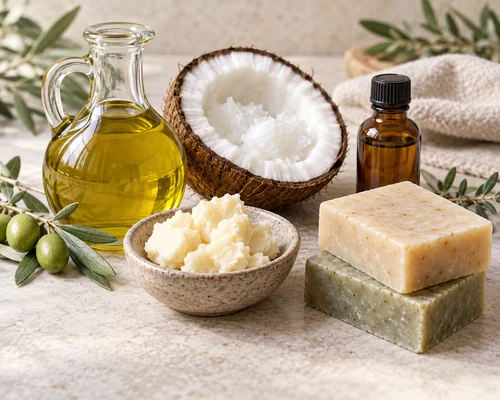
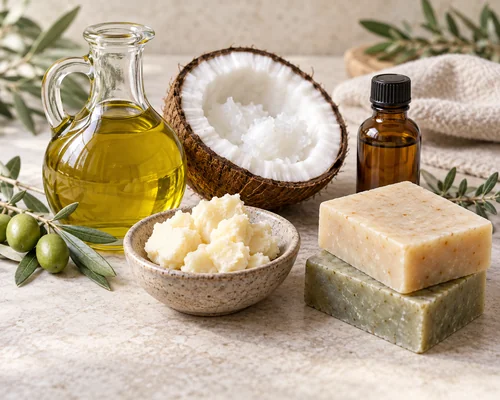
Oils are the foundation of a soap recipe. They influence how firm a bar becomes, how it lathers, how it feels during washing and how much lye is needed to make it. Olive oil, coconut oil and castor oil may all look like simple ingredients on a label, but they behave differently in soap.
This guide explains the most common oils used in soap making, what each one contributes and how to combine them. It also covers fatty acids, SAP values and the questions to ask before replacing an oil in a recipe.
Why Do Oils Matter in Soap Making?
In soap making, oils and fats react with an alkali through a process called saponification. Sodium hydroxide (NaOH) is commonly used for firm bar soap, while potassium hydroxide (KOH) is commonly used for liquid soap.
Each oil contains a different mixture of fatty acids. Those fatty acids help determine the characteristics of the resulting soap. An oil rich in lauric acid behaves differently from one rich in oleic acid, even if both oils are used at the same weight.
This is why soap makers often blend oils. One ingredient can contribute bubbly lather, another can support a firm bar, and another can change the character of the lather or the way the bar feels in use. The result depends on the whole formula, not on a single oil.
Common Oils Used in Soap Making
| Oil or butter | Main contribution to bar soap | Approximate NaOH SAP value |
|---|---|---|
| Olive oil | Mild-feeling soap with modest, creamy lather | 0.135 |
| Coconut oil (76°) | Hardness, strong cleansing and large bubbles | 0.183 |
| Palm oil | Firmness and stable, creamy lather | 0.142 |
| Palm kernel oil | Firmness, cleansing and bubbly lather | 0.176 |
| Castor oil | Support for lather and foam stability | 0.128 |
| Shea butter | Firmness and a creamy character | 0.128 |
| Cocoa butter | Hardness and dense, creamy lather | 0.138 |
| Sweet almond oil | Oleic-rich addition for a mild-feeling bar | 0.139 |
| Avocado oil | Oleic-rich addition to a blended formula | 0.133 |
| Rice bran oil, refined | Versatile addition to a blended formula | 0.133 |
| Sunflower oil | Softness; characteristics depend on the variety | 0.135 |
Olive Oil: A Classic Soap Making Oil
Olive oil is rich in oleic acid. In soap, it is associated with a mild feel and a smaller, creamier lather than the large bubbles produced by coconut oil. It can form a substantial part of a blended recipe or be used on its own to make a traditional olive-oil bar commonly called Castile soap.
A high-olive recipe can take longer to become firm enough to unmold and may benefit from a longer cure. That does not make it an inferior soap; it simply behaves differently from a recipe containing more coconut oil or other hard fats.
Useful when: You want an oleic-rich base and are comfortable allowing adequate time for the bar to harden and cure.
Coconut Oil: Hard Bars and Bubbly Lather
Coconut oil is a popular soap making ingredient because it contributes hardness, strong cleansing and abundant bubbles. Its fatty acid profile is particularly rich in lauric and myristic acids.
Those qualities make coconut oil valuable in a blend, but more is not always better. A recipe with a high proportion of coconut oil may feel too strongly cleansing for its intended use. Evaluate its percentage alongside the other oils and the chosen superfat.
Check the variety: Ordinary coconut oil and fractionated coconut oil are different ingredients with different SAP values. Select the correct entry in your lye calculator.
Palm Oil and Palm Kernel Oil: Two Different Ingredients
Despite their similar names, palm oil and palm kernel oil do different jobs in soap and require different amounts of lye.
Palm oil contributes palmitic acid, which helps create a firm bar and stable, creamy lather. Palm kernel oil has more in common with coconut oil in its soap making behavior: it contributes bubbly lather and stronger cleansing.
They should never be treated as interchangeable entries in a formula. If you choose to replace either one, recalculate the recipe with the exact replacement oil.
Castor Oil: A Small Addition with a Distinct Role
Castor oil stands out because of its high ricinoleic acid content. Soap makers often include it in a modest amount to support the lather produced by the rest of the formula.
Castor oil is generally more useful as part of a balanced blend than as the main oil in a bar. Its role is to complement ingredients such as olive and coconut oil rather than replace them.
Useful when: You want to adjust a recipe’s lather without making castor oil the dominant ingredient.
Shea Butter and Cocoa Butter
Butters can help shape the firmness and texture of a soap bar, but they do not behave identically.
Shea butter contains fatty acids that can support a firmer bar and a creamy character. Cocoa butter is valued for its contribution to hardness and dense, creamy lather. Either may be used as part of a wider oil blend.
It is tempting to assume that adding an expensive butter will automatically make a finished soap “moisturizing.” Soap is a rinse-off product, and much of an oil reacts during saponification. Evaluate a butter by its effect on the finished formula, rather than assuming that the original oil’s properties carry over unchanged.
Avocado, Sweet Almond and Rice Bran Oils
These oils can add variety to a recipe built around more familiar ingredients. Avocado and sweet almond oils are commonly chosen for their oleic-rich profiles. Refined rice bran oil is another versatile option for blended bar soaps.
They may appear similar when planning a formula, but their SAP values are not identical. Cost, availability and the desired fatty acid balance can all influence your choice. When testing a substitute, make one deliberate change at a time and record the result.
Sunflower Oil: Check the Fatty Acid Profile
“Sunflower oil” does not always describe the same fatty acid profile. Standard and high-oleic sunflower oil can have different proportions of oleic and linoleic acids. That distinction matters when considering the balance and storage stability of a soap recipe.
Oils higher in polyunsaturated fatty acids can be more susceptible to oxidation. Use fresh oil, store it appropriately and consider the entire formula rather than judging shelf life by one ingredient alone. Read the supplier’s specification when the variety matters to your recipe.
What Do Fatty Acids Tell You About an Oil?
An oil’s fatty acid profile is often more informative than whether it is liquid or solid at room temperature. The main fatty acids shown in soap making charts include:
- Lauric and myristic acids: Associated with hard bars, strong cleansing and bubbly lather. Found prominently in coconut and palm kernel oils.
- Palmitic and stearic acids: Help create firmness and dense, stable lather. Found in varying amounts in palm oil and butters.
- Oleic acid: Associated with a mild-feeling bar and more restrained lather. Olive oil is a familiar source.
- Ricinoleic acid: The distinctive fatty acid in castor oil that contributes to its role in lather.
- Linoleic and linolenic acids: Polyunsaturated fatty acids that can influence the character of a formula and deserve attention when considering oxidation and shelf life.
These are tendencies, not guarantees. A finished bar reflects the combined fatty acids of every oil in the recipe, along with how the soap is made and cured.
What Is an Oil’s SAP Value?
SAP stands for saponification value. In practical soap making, it helps determine how much alkali is required for a given weight of oil. Each oil has its own reference value, which is why a recipe must be recalculated when an oil is added, removed or replaced.
SAP charts may display values for NaOH, KOH or both. They may also use different units. Before copying a number, confirm the alkali and the unit shown. Published values are averages or ranges because natural oils vary.
For an actual batch, enter the exact oils and their weights into a reliable lye calculator. Check that its settings match your intended alkali and its stated purity. A soap oil chart helps you plan; it does not replace the final calculation.
How to Choose Oils for a Soap Recipe
Begin with the type of bar you want to make. Then consider the contributions of the oils as a group:
- Choose a foundation: An oil such as olive oil can form a significant part of an oleic-rich recipe.
- Consider firmness: Ingredients such as palm oil or cocoa butter can contribute to a harder bar.
- Plan the lather: Coconut oil can add large bubbles, while castor oil may help support the foam.
- Review the whole blend: Look at the combined fatty acid profile, rather than trying to maximize one predicted quality.
- Check practicality: Oil freshness, availability, cost and your intended production method matter.
- Calculate and document: Run the completed blend through a lye calculator and keep a record of the formula and finished result.
You do not need a long list of specialty oils to make a good soap. A small, well-understood blend is often easier to formulate, test and repeat than a recipe with many ingredients.
Can You Substitute One Soap Making Oil for Another?
Yes, but treat a substitution as a recipe change. Two oils can contribute similar qualities while having different SAP values or fatty acid profiles. Replacing 100 g of one oil with 100 g of another does not mean the lye amount stays the same.
After making a substitution, check three things: the new lye calculation, the expected properties of the full blend and any change in how the batter may behave. Keep notes after curing so you can judge the substitution by the finished soap.
Common Mistakes When Selecting Soap Making Oils
- Using the wrong calculator entry: Palm and palm kernel oil are different; so are ordinary and fractionated coconut oil.
- Changing oils without changing the lye calculation: Each oil has its own SAP value.
- Assuming a single oil determines the result: Soap properties come from the full blend.
- Using old or poorly stored oils: Ingredient freshness affects the quality and storage life of the finished soap.
- Judging an ingredient only by its price: A costly oil does not automatically improve a rinse-off bar.
- Confusing base oils with fragrance ingredients: Essential oils are typically used for scent; they do not replace the main fats in a soap recipe.
Frequently Asked Questions
What are the best oils for beginner soap making?
Olive, coconut and palm oils are commonly used to learn how an oil blend affects mildness, bubbles and firmness. Other combinations can work too. Start with a tested recipe and calculate the lye for the exact ingredients you use.
Can soap be made with only olive oil?
Yes. A bar made entirely with olive oil is commonly called Castile soap. It behaves differently from a multi-oil bar and can benefit from a longer cure.
Does more coconut oil always make better soap?
No. Coconut oil can increase hardness, bubbles and cleansing strength, but a high proportion may make a bar feel too strongly cleansing for its intended use. Balance it with the rest of the formula.
Do all liquid oils make soft soap?
No single rule describes every formula. An oil’s fatty acid profile and its proportion in the overall recipe are more useful than its appearance in the bottle.
Are essential oils the same as soap making base oils?
No. Base oils and fats make up the main saponified portion of a soap recipe. Essential oils, when suitable for the product, are generally added in much smaller amounts for scent.
Final Thoughts
The best way to understand oils used in soap making is to look at what each one contributes and how it works with the rest of the formula. Olive oil, coconut oil, castor oil and butters all have useful roles, but none can tell you everything about a finished bar on its own.
Compare fatty acid profiles, select the exact ingredient in your calculator, use fresh materials and record what you learn from each batch. With that approach, an oil list becomes a practical tool for building soap recipes with a clear purpose.