
 Soap Bases
 Scents
 Oils
Oils Dyes
Dyes Equipment and Accessories
 Cosmetic Clays

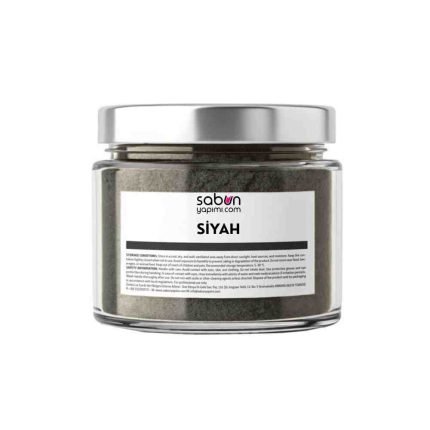
Citric Acid 500 g – Descaler, Soap Making Additive & Cosmetic pH Adjuster
$18,00
Citric Acid Powder is a versatile, water-soluble organic acid used in cleaning products, cosmetic formulations, handmade soap and bath bomb production. Known for its effective descaling and pH-adjusting properties, Citric Acid helps dissolve compatible mineral deposits, supports water-hardness control and contributes to formulation stability.
Ideal for developing limescale removers, bathroom cleaners, shampoos, skincare products and effervescent bath bombs, Citric Acid also reacts with alkalis to form useful citrate salts in soap formulations. Available in crystalline powder form, its exact grade and anhydrous or monohydrate identity should be confirmed before use.
Citric Acid 500 g – Descaler, Soap Making Additive & Cosmetic pH Adjuster
Multi-Purpose Citric Acid Powder for Cleaning, Cosmetics, Bath Bombs and Soap Making
Citric Acid is a versatile, water-soluble organic acid widely used in household cleaning products, cosmetic formulations, soap making, bath bombs and industrial applications. Known for its acidity, metal-binding properties and ability to react with mineral deposits, Citric Acid is an important ingredient in both professional manufacturing and suitable household cleaning applications.
Naturally present in citrus fruits such as lemons and oranges, Citric Acid is commonly produced commercially through controlled fermentation processes. It is typically supplied as a white, crystalline powder or granules that dissolve readily in water.
Citric Acid is particularly valuable in the development of limescale removers, bathroom cleaners, descaling products, shampoos, skincare formulations and effervescent bath products.
In traditional soap making, it can be used to produce citrate salts that help manage metal ions associated with hard water. In modern cosmetic formulations, it is primarily used as a pH-adjusting and chelating ingredient.
Its wide range of applications makes Citric Acid an essential raw material for cosmetic formulators, handmade soap producers, cleaning-product manufacturers and professional laboratories.
What Is Citric Acid?
Citric Acid is a naturally occurring organic acid belonging to the family of tricarboxylic acids. It is also classified chemically as an alpha-hydroxy acid (AHA).
Its molecular structure contains three carboxylic acid groups, allowing it to participate in acid-base reactions and interact with certain metal ions.
These characteristics make Citric Acid useful in pH regulation, mineral-deposit removal and formulation chemistry.
INCI Name: Citric Acid
Chemical Name: 2-Hydroxy-1,2,3-Propanetricarboxylic Acid
Alternative Names: Lemon Salt, Citric Acid Crystals, E330
Molecular Formula: C6H8O7 (Anhydrous)
Molecular Weight: 192.13 g/mol (Anhydrous)
CAS Number: 77-92-9 (Anhydrous) / 5949-29-1 (Monohydrate)
Citric Acid is available in different commercial grades, including food, cosmetic, pharmaceutical and technical grades.
The appropriate grade must be selected according to the intended application.
Citric Acid Anhydrous vs. Citric Acid Monohydrate
One of the most important distinctions when purchasing Citric Acid is whether the material is anhydrous or monohydrate.
Anhydrous Citric Acid contains no water of crystallization in its molecular formula. It is commonly supplied as a white crystalline material and is widely used in dry formulations, bath bombs and various industrial applications.
Citric Acid Monohydrate contains one molecule of water of crystallization for each molecule of Citric Acid.
Although both forms have similar chemical functions, they are not identical on a weight-for-weight basis.
Anhydrous Citric Acid has a molecular weight of approximately 192.13 g/mol, while Citric Acid Monohydrate has a molecular weight of approximately 210.14 g/mol.
This difference becomes particularly important when calculating neutralization reactions, manufacturing bath bombs and adjusting the amount of alkali required in soap making.
Always verify the chemical form from the supplier’s Technical Data Sheet before using Citric Acid in a formulation requiring precise calculations.
Citric Acid for Cleaning
Citric Acid for cleaning is one of the most widely recognized applications of this ingredient.
Its acidic properties make it useful in products designed to remove certain mineral deposits, especially limescale associated with hard water.
When used in a suitable cleaning formulation, Citric Acid can react with calcium carbonate deposits and help loosen or dissolve them.
This makes it valuable in bathroom descalers, compatible sanitary-surface cleaners and equipment descaling formulations.
Citric Acid can also contribute to water-hardness management and the performance of selected cleaning systems through its metal-binding properties.
However, Citric Acid is not a universal cleaner suitable for every material.
Its effectiveness and surface compatibility depend on concentration, contact time, temperature and the complete formulation.
Citric Acid as a Natural Limescale Remover
Limescale is a mineral deposit commonly formed when hard water leaves calcium-containing residues on surfaces.
These deposits may accumulate on bathroom fittings, shower screens, taps and compatible equipment surfaces.
Citric Acid can react with calcium carbonate and help remove the resulting deposits.
This makes it a popular ingredient in both household and professional descaling products.
The cleaning process generally involves applying a suitably formulated acidic solution to a compatible surface, allowing an appropriate contact time and rinsing thoroughly.
The necessary concentration and exposure time depend on the thickness of the deposit and the surface material.
Citric Acid should never be used indiscriminately on acid-sensitive surfaces.
Citric Acid for Bathroom Cleaning
Citric Acid is frequently used in bathroom-cleaning formulations developed for limescale, mineral residues and certain deposits associated with hard water.
It may be incorporated into suitable acidic cleaners for compatible ceramic sanitary ware, certain glass surfaces and selected acid-resistant fittings.
Its effectiveness can be improved through the use of compatible surfactants and other formulation ingredients.
However, cleaning performance is not determined by acidity alone.
A professional bathroom cleaner may also contain surfactants, stabilizers, chelating agents and other components designed to improve wetting, rinsing and overall cleaning performance.
The finished product should be tested on the intended surface before commercial use.
Where Should Citric Acid Not Be Used?
Citric Acid should not be used on marble, limestone, travertine and other acid-sensitive calcium-carbonate-based stones.
Because these surfaces contain minerals that react with acids, exposure may cause etching, dullness or permanent surface damage.
Certain cement-based grouts, decorative coatings, metals and surface finishes may also be vulnerable to acidic cleaning products.
Compatibility should be verified for stainless steel, aluminum, brass, coated surfaces, seals and equipment components according to the relevant manufacturer’s instructions.
Citric Acid is not suitable for every countertop, floor or household appliance.
When cleaning expensive or sensitive surfaces, always follow the surface manufacturer’s recommendations.
Citric Acid and Water Hardness
Hard water contains dissolved minerals, particularly calcium and magnesium ions.
These minerals can interfere with the performance of certain soaps and cleaning formulations.
Citric Acid and citrate salts can interact with metal ions, helping formulators manage some of the effects associated with water hardness.
This characteristic is particularly useful in detergent chemistry and traditional soap formulation.
However, Citric Acid does not automatically remove every dissolved mineral from water or function as a complete replacement for industrial water-softening equipment.
Its performance depends on pH, concentration and the chemical composition of the system.
Citric Acid in Detergent Formulations
Citric Acid may be used in the development of liquid detergents, specialty cleaning products and powder formulations.
Its main functions can include pH adjustment, metal-ion management and the creation of citrate-based formulation systems.
In certain acidic cleaners, Citric Acid may also serve as an active descaling ingredient.
In other formulations, neutralized citrate salts may be more appropriate.
For example, Sodium Citrate is used as a buffering and chelating ingredient in various cleaning and cosmetic systems.
The choice between Citric Acid and Sodium Citrate depends on the desired final pH and formulation performance.
A detergent manufacturer’s selection should consider ingredient compatibility, viscosity, cleaning requirements and storage stability.
Citric Acid for Soap Making
Citric Acid for soap making is particularly useful when the objective is to reduce the effects of hard-water minerals.
In traditional cold process soap, Citric Acid reacts with Sodium Hydroxide to produce Sodium Citrate.
Sodium Citrate can help bind certain metal ions, including calcium and magnesium.
This may reduce the formation of insoluble soap deposits commonly associated with hard water.
It can also support certain aspects of soap quality by helping manage metal-ion interactions.
However, Citric Acid must be incorporated into the soap formulation with the correct alkali calculation.
Citric Acid and Sodium Citrate in Soap
Citric Acid and Sodium Citrate are chemically related but have different formulation functions.
Citric Acid is an acidic raw material.
Sodium Citrate is a sodium salt formed through neutralization of Citric Acid.
In soap making, the citrate salt is often the desired functional ingredient because it can act as a chelating agent.
When Citric Acid is introduced into an alkaline soap-making mixture, it consumes a portion of the available Sodium Hydroxide.
This consumption must be included in the overall formulation.
Otherwise, the amount of alkali available for saponifying the oils may be lower than intended.
How Much Extra Sodium Hydroxide Does Citric Acid Require?
Citric Acid contains three acidic groups that can react with alkali.
The exact amount of additional Sodium Hydroxide depends on whether the Citric Acid is anhydrous or monohydrate.
For chemically pure Anhydrous Citric Acid, the theoretical requirement is approximately:
0.6245 g of pure NaOH per 1 g of Citric Acid.
For Citric Acid Monohydrate, the corresponding theoretical requirement is approximately:
0.5710 g of pure NaOH per 1 g of Citric Acid Monohydrate.
As an example, 10 g of pure anhydrous Citric Acid consumes approximately 6.25 g of pure Sodium Hydroxide during complete neutralization.
This additional alkali requirement must be included in a validated soap formulation.
These values are theoretical chemical calculations, not a complete soap-making recipe.
Actual manufacturing requires consideration of raw-material purity, the full oil composition, superfat target and the complete alkali balance.
Can Citric Acid Lower the pH of Cold Process Soap?
Citric Acid should not simply be added to finished traditional soap with the expectation of safely reducing its pH to that of a mildly acidic skincare cleanser.
Traditional soap is based on alkaline fatty acid salts.
Adding sufficient acid may convert some soap salts back into free fatty acids, altering the product’s cleansing properties and physical stability.
This may result in separation, reduced lather or other undesirable changes.
For products intended to have a mildly acidic pH, a properly developed syndet formulation may be a more appropriate approach.
Citric Acid should therefore be used in traditional soap according to its intended citrate-forming function rather than as an uncontrolled pH-reduction treatment.
Citric Acid for Bath Bombs
Citric Acid for bath bombs is one of its most popular applications in handmade cosmetic production.
Bath bombs are typically developed using Citric Acid and Sodium Bicarbonate, commonly known as Baking Soda.
When these ingredients come into contact with water, they undergo an acid-base reaction that releases carbon dioxide.
The escaping gas produces the characteristic fizzing or effervescent effect.
Citric Acid is therefore a principal functional ingredient in many bath bomb formulations.
Its particle size, water content and concentration can affect the manufacturing process and finished-product performance.
How Does Citric Acid Make Bath Bombs Fizz?
The reaction between Citric Acid and Sodium Bicarbonate produces Sodium Citrate, water and carbon dioxide.
The carbon dioxide is responsible for the visible bubbles released when the bath bomb is placed in water.
This reaction does not require soap surfactants.
Therefore, the fizz generated by a bath bomb should not be confused with conventional cleansing foam.
Some bath bomb formulations also include surfactants to produce a separate foaming effect.
A bath bomb can be developed with cosmetic fragrances, appropriate colorants and other compatible ingredients, but these materials must be evaluated for skin safety and product stability.
Citric Acid and Baking Soda Ratio
A commonly used practical starting point for bath bombs is approximately two parts Sodium Bicarbonate to one part Citric Acid by weight.
However, this is a formulation convention rather than the exact stoichiometric ratio of the chemical reaction.
For anhydrous Citric Acid, complete theoretical neutralization requires approximately 1.31 parts Sodium Bicarbonate per part Citric Acid by weight.
Manufacturers may deliberately use a different ratio to influence hardness, fizzing performance and finished-product characteristics.
The ideal formulation depends on the chosen Citric Acid grade, other ingredients and desired consumer experience.
Because premature exposure to moisture can start the reaction during manufacturing, humidity control is particularly important.
Citric Acid for Cosmetic Formulations
Citric Acid for cosmetics is widely used as a pH regulator and chelating agent.
Many cosmetic ingredients perform best within specific pH ranges.
The finished-product pH can influence viscosity, preservative effectiveness, chemical stability and consumer compatibility.
Citric Acid provides a convenient way to reduce pH in suitable aqueous formulations.
It is commonly used in shampoos, shower gels, facial cleansers, toners, cosmetic creams and lotions.
Its concentration is often relatively low when used primarily for pH adjustment.
The exact amount depends on the other ingredients and the target pH.
Citric Acid for Shampoo
Citric Acid is frequently used in shampoo manufacturing to adjust the finished-product pH.
Modern shampoos may contain anionic, amphoteric and nonionic surfactants, conditioning polymers, fragrances and other functional ingredients.
The correct pH can be important for maintaining the performance of these components.
Citric Acid may be added as a diluted aqueous solution during an appropriate stage of manufacturing.
The product should then be mixed uniformly and its pH measured using a calibrated pH meter.
The appropriate pH target depends on the shampoo concept and formulation requirements.
Citric Acid is not a hair-conditioning polymer or a primary cleansing surfactant.
Its main role is to help establish the desired acidity and contribute to formulation stability.
Citric Acid for Facial Cleansers and Skincare
Citric Acid may be used in facial cleansing products, toners and selected skincare formulations.
In many of these products, its main purpose is pH adjustment rather than exfoliation.
It may also contribute to the chelation of metal ions that could otherwise affect the appearance or stability of a formulation.
Although Citric Acid belongs to the alpha-hydroxy acid family, its exfoliating performance depends on concentration, final pH and other formulation conditions.
The inclusion of a small quantity of Citric Acid as a pH adjuster does not automatically make a cosmetic product an exfoliating treatment.
Citric Acid as an Alpha Hydroxy Acid
Citric Acid is chemically classified as an alpha-hydroxy acid.
At appropriate concentrations and pH levels, alpha-hydroxy acids may influence the shedding of surface skin cells.
However, concentrated acidic materials can cause irritation or chemical injury when used improperly.
The use of Citric Acid in exfoliating skincare requires professional formulation development and appropriate safety assessment.
The raw powder should not be applied directly to the face, and unvalidated concentrated acid solutions should not be used as homemade chemical peels.
For general cosmetic formulation, Citric Acid is most commonly positioned as a pH-adjusting and chelating ingredient.
Citric Acid as a Chelating Agent
Citric Acid and citrate salts can interact with certain metal ions present in water and cosmetic raw materials.
These ions may influence product appearance, oxidation behavior and stability.
By binding some metal ions, citrate systems can support the overall quality of a formulation.
This function is particularly relevant in shampoos, liquid cleansers, cosmetic emulsions and detergent systems.
However, chelation should not be confused with antimicrobial preservation.
Citric Acid does not automatically replace a dedicated preservative or antioxidant system.
Citric Acid and Sodium Benzoate
In certain cosmetic formulations, Citric Acid can be used to establish the acidic pH conditions required for Sodium Benzoate to function effectively as a preservative.
The antimicrobial performance of Sodium Benzoate depends strongly on the finished-product pH.
Citric Acid may therefore contribute indirectly to an effective preservation system through pH control.
However, adding Citric Acid and Sodium Benzoate together does not guarantee adequate microbiological protection.
The finished formulation must undergo appropriate preservation testing and safety evaluation.
Citric Acid vs. Sodium Citrate
Citric Acid and Sodium Citrate are often used together in cosmetic formulations.
Citric Acid is the acidic component, while Sodium Citrate contributes citrate ions and buffering characteristics.
A properly balanced Citric Acid/Sodium Citrate system can help control pH within a selected range.
Sodium Citrate is also valuable for its chelating function.
The correct ingredient ratio depends on the desired pH and buffering capacity.
These materials should not automatically be substituted at identical percentages.
Citric Acid vs. Lactic Acid
Citric Acid and Lactic Acid are both organic acids used in cosmetic formulations.
Citric Acid contains three carboxylic acid groups, while Lactic Acid contains one.
Both can be used for pH adjustment, but they have different molecular structures, acid-base behavior and formulation characteristics.
Lactic Acid may also be used in certain skincare products as a humectant-related or exfoliating ingredient depending on its concentration and the finished product.
The selection between these acids depends on the intended function, formulation compatibility and desired final pH.
How to Use Citric Acid for pH Adjustment
In professional cosmetic manufacturing, Citric Acid is often prepared as a diluted aqueous solution before being incorporated into the finished product.
For example, a formulator may prepare a 10% aqueous Citric Acid solution for controlled pH adjustment.
This allows small amounts of acid to be added gradually rather than introducing concentrated dry powder directly into the main batch.
After each addition, the product is mixed and its pH checked.
The final pH should be measured under consistent conditions using suitable equipment.
The amount of acid required cannot be determined solely from the starting pH because different formulas have different buffering capacities.
Excessive acid addition may destabilize the formulation or cause skin irritation.
Water Solubility
Citric Acid is highly soluble in water.
This makes it convenient for aqueous cosmetic, cleaning and industrial formulations.
It can be dissolved in deionized water to prepare stock solutions for manufacturing or controlled laboratory use.
It is not a conventional oil-soluble ingredient.
In anhydrous systems, its behavior depends on the available moisture and the complete ingredient composition.
For bath bombs, the dry crystalline form is particularly useful because the main acid-base reaction is intended to occur after the finished product comes into contact with water.
Citric Acid and pH
Citric Acid is an acidic ingredient.
However, the pH of a Citric Acid solution depends on its concentration, temperature and the other materials present.
A single universal pH value should not be assigned to the dry powder.
Likewise, a stated pH range such as 2.0–6.0 is not a universal specification for the raw material.
The finished product’s target pH depends on whether it is a shampoo, skincare formula, bathroom cleaner or another application.
Typical Usage Levels
The appropriate amount of Citric Acid depends on the intended function and chemical form.
In shampoos and cosmetic cleansers, Citric Acid is often used in small quantities as needed to achieve the target pH. Preliminary amounts may be below 1% of the finished formula, but there is no universal dosage suitable for every product.
In bath bombs, Citric Acid may represent approximately 15–30% of the formulation in selected conventional product concepts.
In cold process soap, small additions may be used to generate citrate salts, but the exact amount must be incorporated into the complete alkali calculation.
In descaling and cleaning formulations, the concentration varies substantially according to the target deposit, surface compatibility and product design.
These figures are formulation starting points, not universal legal limits or guaranteed effective concentrations.
The final amount should follow the supplier’s technical guidance and appropriate testing.
Product Details
Product Name: Citric Acid
INCI Name: Citric Acid
Alternative Names: Lemon Salt, E330, Citric Acid Crystals
Package Size: 500 g
Chemical Family: Organic Tricarboxylic Acid
Typical Appearance: White Crystalline Powder or Granules
Water Solubility: Highly Soluble
Primary Cosmetic Functions: pH Adjuster / Buffering / Chelating
Primary Cleaning Functions: Descaling / Acidity Regulation / Metal-Ion Management
Bath Product Function: Effervescent Acid Component
Chemical Form: Anhydrous or Monohydrate – Verify Supplier Grade
CAS Number: 77-92-9 or 5949-29-1, Depending on Form
Purity: Refer to Supplier COA
Food Grade: Confirm with Supplier Documentation
Cosmetic Grade: Confirm with Supplier Documentation
Recommended Usage Level: Application-Dependent
Food-Grade Citric Acid
Citric Acid is also widely used in the food industry as an acidity regulator and flavoring-related ingredient.
The international food additive designation for Citric Acid is E330.
However, the fact that Citric Acid is used in food does not mean that every commercially available product is suitable for consumption.
Industrial-grade and technical-grade Citric Acid should not automatically be treated as food-grade material.
Any food-use claims require verified supplier documentation establishing the appropriate purity, food-grade quality and regulatory compliance.
Unless the actual supplied product is confirmed as suitable for food use, it should be marketed according to its verified cosmetic or technical applications.
Is Citric Acid Natural?
Citric Acid occurs naturally in citrus fruits and many biological systems.
Commercial Citric Acid is commonly manufactured by controlled microbial fermentation of suitable carbohydrate sources.
Although it is chemically identical to Citric Acid naturally present in citrus fruits, this does not mean every commercial batch is extracted directly from lemons.
Claims such as 100% Lemon-Derived, Organic Certified or Extracted from Citrus Fruits should only be used when supported by appropriate documentation.
The product may be described as a fermentation-derived organic acid when that origin is verified.
Biodegradability and Environmental Considerations
Citric Acid is generally considered a readily biodegradable ingredient and is used in various cleaning formulations.
Its ability to remove limescale can make it useful in the development of cleaning products based on organic acids.
However, the environmental performance of a finished cleaner depends on all ingredients, their concentrations, packaging and product usage.
A cleaner containing Citric Acid should not automatically be marketed as completely environmentally harmless, non-toxic or suitable for every surface.
Environmental claims should be supported by relevant data for the complete product.
Cosmetic Safety
Citric Acid is widely used in cosmetic products under appropriate formulation conditions.
However, concentrated Citric Acid can cause skin and eye irritation.
The potential for irritation depends on concentration, pH, exposure time and the other ingredients.
Products containing higher levels of Citric Acid require particular attention to finished-product safety and appropriate labeling.
The concentrated raw material should not be applied directly to the skin or used as a homemade exfoliating treatment.
Cleaning Safety and Chemical Compatibility
Citric Acid must never be mixed with chlorine bleach or products containing Sodium Hypochlorite.
Combining acids with hypochlorite solutions may release hazardous chlorine gas.
Citric Acid should also not be mixed indiscriminately with other cleaning chemicals.
Avoid use on acid-sensitive natural stones such as marble, limestone and travertine.
Other surfaces, equipment and finishes should be checked for compatibility before use.
When preparing cleaning solutions, follow suitable handling procedures and wear protective equipment according to the supplier’s Safety Data Sheet.
Raw Material Quality Control
Professional manufacturers should obtain reliable technical documentation for Citric Acid.
Important quality parameters may include chemical identity, assay, water content, particle size, appearance and relevant impurity specifications.
For soap and bath bomb production, confirming whether the raw material is anhydrous or monohydrate is particularly important.
For food-related applications, the appropriate food-grade specification must be verified separately.
The selected material should be supported by a Technical Data Sheet (TDS), Safety Data Sheet (SDS) and Certificate of Analysis (COA).
Storage
Store Citric Acid in tightly closed packaging in a cool, dry environment.
Protect the material from moisture and contamination.
Because Citric Acid is highly water-soluble, exposure to humidity may cause clumping and affect processing characteristics.
For bath bomb production, moisture protection is particularly important to prevent premature reactions with alkaline ingredients.
Always follow the supplier’s recommended storage conditions and shelf life.
Wholesale, Private Label & Contract Manufacturing
We supply Citric Acid, Sodium Citrate, cleaning-product raw materials, cosmetic pH adjusters, chelating agents, surfactants and other soap-making and formulation ingredients in wholesale quantities for cosmetic brands, cleaning-product manufacturers, laboratories, retailers and professional formulators.
We also provide custom formulation development services for bathroom cleaners, limescale removers, acidic cleaning products, shampoos, cosmetic cleansers, bath bombs and selected specialty formulations.
Our formulation development services may include acid-system selection, pH optimization, chelating-agent selection, cleaning-performance development, surfactant compatibility assessment, stability recommendations and manufacturing procedures.
For soap-making projects, we can evaluate citrate-based formulations and provide guidance on the correct calculation of alkaline ingredients.
Private label and contract manufacturing services are available for selected liquid detergents, descalers, bathroom cleaners, surface cleaners and other cleaning products within our manufacturing capabilities. Cosmetic formulation development is offered separately from finished cosmetic manufacturing.
For bulk Citric Acid orders, custom cleaning-product formulation development, soap-making projects, private label or contract manufacturing inquiries, please contact us with your required quantity, chemical grade, purity specifications, intended application, packaging preferences and target market.
KARGO & İADE
SabunYapimi.com olarak müşteri memnuniyetini ön planda tutuyoruz. Siparişlerinizin güvenli ve hızlı bir şekilde size ulaşmasını sağlamak için en iyi lojistik firmalarıyla çalışıyoruz. Ayrıca, herhangi bir sebepten dolayı ürününüzden memnun kalmazsanız, iade ve değişim sürecimizi kolay ve hızlı hale getirdik.
Kargo Firması & Gönderim Süresi
- Siparişleriniz, ödeme onaylandıktan sonra 1-2 iş günü içinde kargoya verilir.
- Kargo firmaları: [Aras & Yurtiçi]
- Ortalama teslimat süresi 2-3 iş günü arasındadır.
Kargo Ücretleri & Ücretsiz Kargo Şartları
- [1000 TL ve üzeri alışverişlerde kargo ücretsizdir.]
- Standart kargo ücreti sipariş aşamasında ödeme sayfasında belirtilir.
Kargo Takibi
Siparişiniz kargoya verildiğinde e-posta veya SMS ile takip numarası paylaşılır. Kargo takip bağlantısını kullanarak siparişinizi kolayca takip edebilirsiniz.
📌 Siparişiniz belirlenen süre içinde ulaşmazsa, bize aşağıdaki iletişim bilgileriyle ulaşabilirsiniz:
📧 E-Posta: sabunyapimi@gmail.com
📞 WhatsApp Destek: +90 532 059 15 71
Geri Ödeme ve İade Süreçleri
Geri Ödeme ve İade Politikası Sayfamızı Okuyun