
 Soap Bases
 Scents
 Oils
Oils Dyes
Dyes Equipment and Accessories
 Cosmetic Clays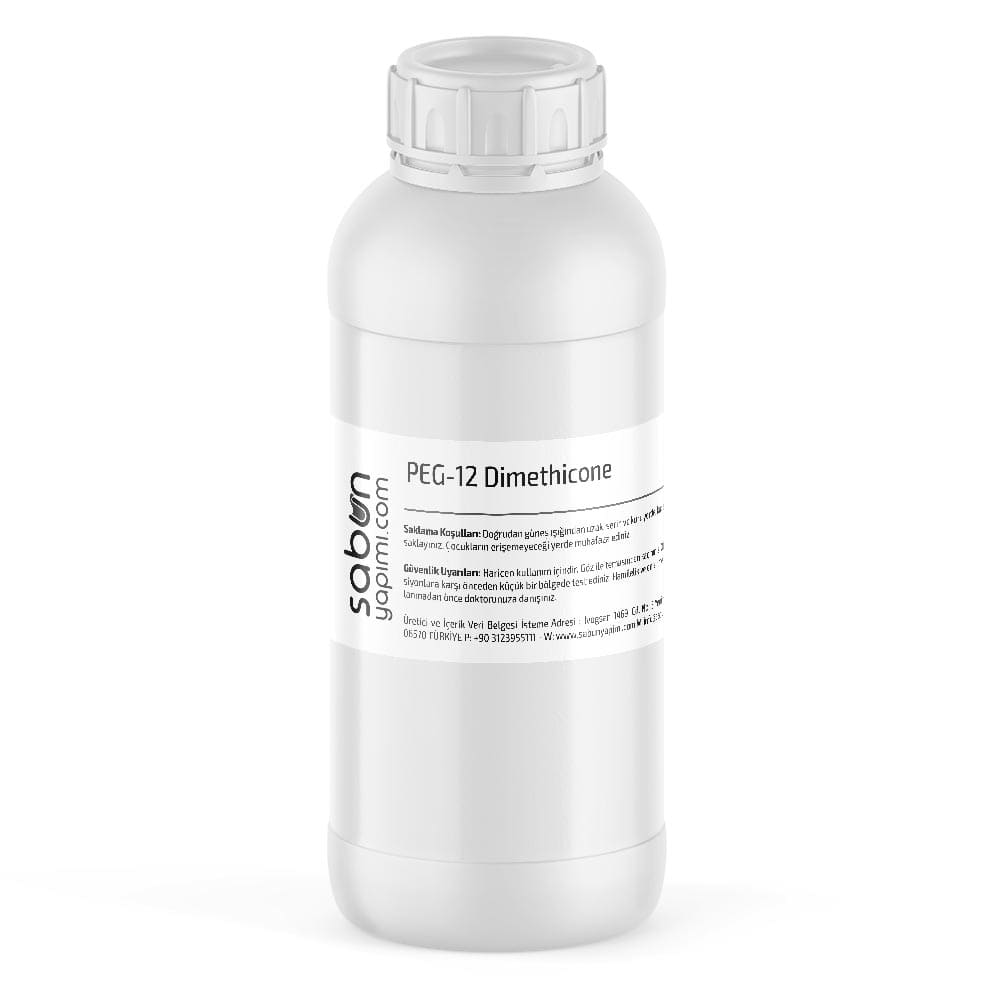
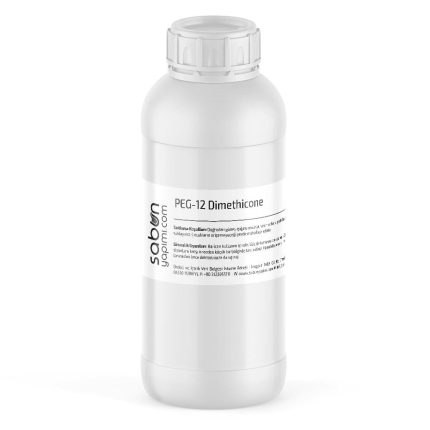
PEG-12 Dimethicone – Water-Soluble Silicone & Cosmetic Conditioning Agent
$29,00
PEG-12 Dimethicone is a polyether-modified silicone used as a conditioning agent, wetting agent and emulsification aid in cosmetic formulations. Its water-compatible structure helps deliver silky smoothness, improved spreadability and a lightweight feel in shampoos, conditioners, creams, lotions and selected makeup products. Depending on the commercial grade, it can support water-soluble or water-dispersible silicone systems and oil-in-water emulsions.
PEG-12 Dimethicone – Water-Compatible Silicone for Cosmetic Formulations
Silicone Conditioning Agent, Emulsification Aid & Sensory Modifier for Skin and Hair Care
PEG-12 Dimethicone is a polyether-modified silicone widely used in skincare, hair-care and personal-care formulations.
Unlike conventional water-insoluble Dimethicone fluids, PEG-12 Dimethicone contains hydrophilic polyethylene glycol groups attached to a silicone structure.
This modification provides useful properties for cosmetic formulations requiring water compatibility, conditioning performance and improved sensory characteristics.
PEG-12 Dimethicone is commonly used in:
- Shampoos
- Hair conditioners
- Leave-in hair treatments
- Hair styling sprays
- Facial creams
- Body lotions
- Cosmetic emulsions
- Makeup primers
- Liquid foundations
- Makeup removers
- Shaving products
- Selected cleansing formulations
Its main advantages include improved slip, softness, spreadability, wetting and formulation compatibility.
What Is PEG-12 Dimethicone?
PEG-12 Dimethicone belongs to a group of silicone polyether copolymers.
These ingredients combine silicone-based segments with polyethylene glycol chains.
The number 12 refers to the average number of ethylene oxide units associated with the PEG modification.
INCI Name: PEG-12 Dimethicone
Ingredient Family: Polyether-Modified Silicone
Typical Functions: Hair Conditioning / Skin Conditioning / Wetting / Emulsification Aid / Sensory Modification
Typical Form: Liquid
Unlike conventional silicone oils, PEG-12 Dimethicone can exhibit water-soluble or water-dispersible characteristics depending on its molecular structure and commercial grade.
The exact properties must be confirmed from the supplier’s Technical Data Sheet.
Main Cosmetic Benefits
PEG-12 Dimethicone can help improve:
- Silky skin feel
- Hair softness
- Wet and dry combing
- Product spreadability
- Surface wetting
- Cosmetic slip
- Formulation uniformity
- Lightweight sensory properties
- Compatibility between silicone and aqueous phases
Certain commercial grades can also contribute to foam quality in cleansing formulations.
PEG-12 Dimethicone vs. Regular Dimethicone
PEG-12 Dimethicone and conventional Dimethicone belong to the silicone family, but they have different formulation properties.
PEG-12 Dimethicone
- Polyether-modified silicone
- Water-compatible, depending on grade
- May be water-soluble or water-dispersible
- Suitable for selected aqueous formulations
- Can provide wetting and emulsification benefits
- Commonly used in hair-care and water-based cosmetic systems
Dimethicone 100 cSt
- Conventional silicone fluid
- Insoluble in water
- Provides slip and smoothness
- Relatively lightweight sensory profile
- Commonly used in creams, conditioners and hair serums
Dimethicone 350 cSt
- Conventional silicone fluid
- Insoluble in water
- Higher viscosity than Dimethicone 100
- Richer conditioning feel
- Used for more substantial slip and surface conditioning
These ingredients should not be substituted directly without evaluating formulation compatibility.
Water Compatibility
One of the most important characteristics of PEG-12 Dimethicone is its improved compatibility with water-containing formulations.
Certain PEG-12 Dimethicone grades are fully miscible with water, while others are designed primarily for water dispersion and emulsification.
This characteristic makes the ingredient useful in products such as:
- Clear or translucent shampoos
- Hair sprays
- Water-based styling products
- Cosmetic lotions
- Water-containing silicone emulsions
- Certain cleansing systems
However, not every PEG-12 Dimethicone grade will produce a transparent solution.
Always verify the water compatibility of the actual commercial product.
Silicone Conditioning Properties
PEG-12 Dimethicone can provide a smooth and silky sensory profile.
Its silicone segments contribute lubricity and softness, while its hydrophilic modification allows incorporation into suitable aqueous systems.
In hair-care products, this combination may contribute to:
- Easier combing
- Reduced friction
- Softer hair feel
- Improved manageability
- Better product distribution
- A more conditioned appearance
The degree of conditioning depends on the complete formulation.
Use in Shampoo
PEG-12 Dimethicone is particularly useful in selected shampoo formulations.
It may be incorporated to improve:
- Hair feel
- Slip
- Wetting
- Application
- Foam characteristics
- Compatibility with other ingredients
Some commercial grades can contribute to the formation of dense, stable foam.
However, this effect should be verified in the actual shampoo formula.
Is PEG-12 Dimethicone a Cleansing Surfactant?
PEG-12 Dimethicone is a silicone-based surfactant, but it is not normally used as the primary cleansing ingredient in shampoo or shower gel.
Primary cleansing systems commonly contain ingredients such as:
- Sodium Laureth Sulfate
- Cocamidopropyl Betaine
- Decyl Glucoside
- Coco Glucoside
- Sodium Cocoyl Glutamate
PEG-12 Dimethicone may be used as a supporting ingredient to modify the finished product’s sensory and functional properties.
Use in Hair Conditioners
PEG-12 Dimethicone may be incorporated into compatible hair conditioners and masks.
It can help improve:
- Hair softness
- Combing
- Smoothness
- Product spreading
- Sensory feel
It may be combined with suitable:
- Cationic conditioning agents
- Fatty alcohols
- Hydrolyzed proteins
- Panthenol
- Cosmetic emollients
- Other silicone ingredients
The ideal combination depends on the desired hair-care performance.
Use in Leave-In Hair Products
PEG-12 Dimethicone is also suitable for selected leave-in hair products.
Possible applications include:
- Detangling sprays
- Styling lotions
- Hair styling sprays
- Leave-in conditioners
- Lightweight hair serums
It can help create a smooth, manageable feel without necessarily requiring a conventional oil-based silicone serum system.
Frizz Control
PEG-12 Dimethicone may help improve the appearance of frizzy hair through its conditioning and lubricating properties.
It can contribute to:
- Reduced surface friction
- Smoother-feeling hair
- Improved manageability
- More uniform product distribution
It should not be described as permanently repairing hair or changing the natural structure of the hair fiber.
Use in Facial Creams
PEG-12 Dimethicone may be incorporated into compatible facial cream formulations.
Depending on grade, it can support:
- Emulsion development
- Softness
- Spreadability
- Smooth skin feel
- Lightweight sensory characteristics
It is particularly useful where formulators want to combine silicone sensory properties with a water-containing cosmetic formulation.
Use in Body Lotions
PEG-12 Dimethicone may also be used in:
- Body lotions
- Hand lotions
- Skin-conditioning emulsions
- Lightweight moisturizing products
Its presence can help improve product application and the sensory profile.
However, the complete moisturizing system should contain suitable ingredients for hydration and emolliency.
Is PEG-12 Dimethicone a Moisturizer?
PEG-12 Dimethicone is primarily used for its conditioning, wetting and emulsification-related properties.
Some commercial grades also provide humectant or emollient benefits.
However, it should not automatically be considered a replacement for conventional moisturizing ingredients such as:
- Glycerin
- Panthenol
- Hyaluronic Acid
- Sodium PCA
- Betaine
Its role depends on the commercial grade and finished formulation.
Skin-Conditioning Effect
PEG-12 Dimethicone may contribute to:
- Softer skin feel
- Smoother application
- Reduced tackiness
- Better spreadability
- Improved sensory comfort
It should not automatically be described as strengthening the skin barrier, treating irritation or preventing skin diseases.
Use in Makeup
PEG-12 Dimethicone can be incorporated into selected decorative cosmetic products.
Possible applications include:
- Foundations
- BB creams
- Makeup primers
- Liquid makeup
- Tinted moisturizers
- Cream-based cosmetics
It may help improve:
- Application uniformity
- Pigment distribution
- Spreadability
- Smooth texture
- Skin feel
Its suitability depends on the complete formulation and selected grade.
Use in Sunscreen Formulations
Certain PEG-12 Dimethicone grades are used as emulsifiers or formulation aids in professionally developed sunscreen products.
They may help with the dispersion and incorporation of selected oils and silicone components.
However:
PEG-12 Dimethicone is not a UV filter.
It does not independently provide SPF, UVA or UVB protection.
It also does not automatically make a sunscreen water-resistant.
Sun protection and water resistance must be demonstrated through appropriate finished-product testing.
PEG-12 Dimethicone as an Emulsifier
Certain PEG-12 Dimethicone grades are designed to support oil-in-water emulsification.
Depending on their molecular structure, they may help emulsify:
- Silicone fluids
- Cosmetic esters
- Vegetable oils
- Mixed oil phases
- Selected cosmetic emollients
This makes the ingredient useful in emulsion development.
However, not all PEG-12 Dimethicone grades have identical emulsifying performance.
Co-Emulsifier vs. Primary Emulsifier
Some commercial PEG-12 Dimethicone products function as supporting emulsifiers.
Others are specifically developed as primary emulsifiers for certain oil-in-water systems.
The required concentration and additional ingredients depend on the actual grade.
For example, a formula may require:
- PEG-12 Dimethicone
- Additional emulsifier
- Thickening agent
- Emulsion stabilizer
- Appropriate processing conditions
The correct system should be selected through formulation testing.
Does PEG-12 Dimethicone Have a Fixed HLB Value?
No single HLB value should be assigned to every PEG-12 Dimethicone material.
Commercial grades with the same INCI may differ in their molecular design and emulsification characteristics.
The HLB value, if relevant, should be obtained from the supplier’s technical documentation.
Use in Cleansing Products
PEG-12 Dimethicone may be incorporated into selected liquid cleansers and shower products.
Potential functions include:
- Wetting
- Sensory modification
- Conditioning
- Foam modification
- Surface tension reduction
It does not replace an appropriate primary cleansing system.
Does PEG-12 Dimethicone Increase Foam?
Some commercial PEG-12 Dimethicone grades are marketed as foam builders.
They can contribute to dense or stable foam in compatible surfactant systems.
However, foam enhancement depends on:
- Primary surfactants
- Ingredient concentration
- Product pH
- Electrolytes
- Fragrance
- Other additives
The effect should always be confirmed experimentally.
Use in Shaving Products
PEG-12 Dimethicone may be useful in selected shaving formulations.
It can contribute to:
- Slip
- Lubricity
- Wetting
- Sensory feel
- Foam properties
Suitable applications may include shaving foams, shaving creams and specialty cleansing systems.
PEG-12 Dimethicone in Soap Making
PEG-12 Dimethicone is not required for traditional soap production.
Cold process soap is produced through saponification using fats, oils and sodium hydroxide.
PEG-12 Dimethicone is not a conventional soap-making oil and does not replace:
- Sodium Hydroxide
- Potassium Hydroxide
- Vegetable Oils
- Correct SAP Calculations
Its functional advantages are generally more useful in modern liquid cleansing and emulsified cosmetic formulations.
Cold Process Soap
The high alkalinity of conventional cold process soap creates a challenging environment for certain specialty cosmetic ingredients.
PEG-12 Dimethicone is not a standard cold process soap additive.
Adding it does not automatically improve:
- Moisturizing performance
- Bar hardness
- Lather
- Skin conditioning
- Soap stability
Any experimental use should be evaluated for processing compatibility and finished-product performance.
Melt & Pour Soap
Small experimental amounts may be evaluated in selected compatible melt and pour bases.
However, changes in the surfactant and silicone balance may affect:
- Lather
- Clarity
- Hardness
- Texture
- Stability
Always follow the soap-base manufacturer’s recommended additive limits.
Typical Usage Levels
The appropriate concentration varies according to the commercial grade and finished-product type.
General formulation starting ranges may include:
Shampoos & Liquid Cleansers
0.5–3%
Hair Conditioners & Styling Products
0.5–3%
Skin-Care Lotions
0.5–3%
Oil-in-Water Emulsion Systems
Certain specialized grades may be evaluated at approximately 1.5–5%, according to supplier guidance.
Makeup & Specialty Cosmetics
Grade-dependent and determined by the complete formulation.
These ranges are starting points rather than universal concentration limits.
Always follow the TDS supplied with the actual raw material.
How to Use PEG-12 Dimethicone
The incorporation method depends on the commercial grade.
Some products can be incorporated through cold processing, while others are also suitable for heated manufacturing processes.
A general approach for a compatible water-based system may include:
- Accurately weigh the PEG-12 Dimethicone.
- Prepare the main formulation phase.
- Add the ingredient according to the supplier’s recommended procedure.
- Mix until uniformly incorporated.
- Add remaining compatible ingredients.
- Adjust the finished-product pH where required.
- Evaluate appearance and viscosity.
- Complete stability and compatibility testing.
Do not assume every commercial grade must be added below a fixed temperature.
Cold Processing
Certain commercial PEG-12 Dimethicone grades can be used in cold-process formulations.
This may provide advantages such as:
- Reduced energy use
- Simplified manufacturing
- Compatibility with heat-sensitive ingredients
- Flexible processing
However, cold-process suitability must be confirmed for the actual grade and complete formulation.
Processing Temperature
PEG-12 Dimethicone does not have a universal processing temperature applicable to every supplier.
The appropriate temperature depends on:
- Molecular structure
- Commercial grade
- Product viscosity
- Emulsion system
- Other ingredients
- Manufacturing equipment
Always follow the supplier’s validated processing recommendations.
Physical Appearance
PEG-12 Dimethicone is commonly supplied as a clear to slightly hazy liquid.
Color may range from colorless to light amber depending on the grade.
Viscosity can vary significantly between products carrying the same INCI name.
Therefore, product appearance and viscosity should be verified from the actual supplied material.
Water Solubility
Water compatibility is one of the defining characteristics of many PEG-12 Dimethicone grades.
However, commercial materials may be:
- Water-soluble
- Water-miscible
- Water-dispersible
depending on their structure.
Water solubility should not be confused with compatibility with every vegetable oil or silicone fluid.
Actual behavior should be confirmed through supplier documentation and laboratory testing.
Is PEG-12 Dimethicone Oil-Soluble?
PEG-12 Dimethicone contains both hydrophilic and silicone-compatible structural segments.
Its compatibility with oils varies according to the commercial grade.
It should not automatically be described as freely soluble in every vegetable oil, ester or silicone.
Professional formulators should perform compatibility tests with the selected oil phase.
pH Compatibility
A universal statement such as:
pH 4.5–7.0
should not be used as the technical specification for every PEG-12 Dimethicone grade.
The relevant pH range depends on:
- The commercial material
- Finished formulation
- Surfactant system
- Emulsion type
- Stability requirements
The pH of the finished water-containing formulation should be measured and evaluated.
PEG-12 Dimethicone vs. PEG-10 Dimethicone
Both ingredients belong to the polyether-modified silicone family.
However, the polyethylene glycol modification and silicone structure may differ.
They can have different:
- HLB values
- Water compatibility
- Emulsification behavior
- Viscosity
- Processing requirements
- Sensory characteristics
They should not automatically be substituted at the same concentration.
Is PEG-12 Dimethicone Natural?
PEG-12 Dimethicone is a chemically modified silicone polymer.
It is generally considered a synthetic cosmetic ingredient.
It should not automatically be described as:
- 100% Natural
- Organic Certified
- COSMOS Approved
- Biodegradable
- Plant-Derived
Claims about vegan suitability or animal-free manufacturing should be supported by the supplier’s current documentation.
Is PEG-12 Dimethicone Non-Comedogenic?
PEG-12 Dimethicone should not automatically be described as non-comedogenic.
The potential for a finished formulation to contribute to pore blockage depends on the complete product.
Products intended for acne-prone skin should be evaluated using appropriate methods.
Is PEG-12 Dimethicone a Preservative?
No.
PEG-12 Dimethicone is not an antimicrobial preservative.
Its presence does not independently protect cosmetic products against:
- Bacteria
- Yeasts
- Molds
Water-containing formulations may require appropriate preservatives and microbiological testing.
Cosmetic Grade & Ingredient Quality
PEG-12 Dimethicone is produced through chemical manufacturing processes involving silicone and polyether chemistry.
Professional raw-material quality control may include monitoring of relevant residual manufacturing impurities.
Depending on the production process and specification, these may include:
- Residual ethylene oxide
- 1,4-dioxane
- Volatile cyclic siloxanes
- Other process-related impurities
The relevant limits must be assessed according to the actual grade, intended use and applicable regulations.
Product Details
Product Name: PEG-12 Dimethicone
INCI Name: PEG-12 Dimethicone
Ingredient Family: Silicone Polyether Copolymer
Typical Form: Liquid
Typical Appearance: Clear to Slightly Hazy
Primary Functions: Conditioning / Wetting / Emulsification Aid / Sensory Modification
Water Compatibility: Grade-Dependent
Applications: Shampoo, Conditioner, Hair Spray, Cream, Lotion, Makeup and Liquid Cleansing Formulations
Package Size: Refer to Product Packaging
Active Concentration: Refer to Supplier COA
Viscosity: Refer to Supplier Specification
HLB Value: Grade-Dependent
Processing Conditions: Refer to Supplier TDS
Purity
Only describe the product as:
100% Pure PEG-12 Dimethicone
if the actual material composition supports this claim.
Some commercial grades are supplied as undiluted silicone polyether fluids, while others may have different carrier or active-content characteristics.
Always check the complete supplier documentation.
Cosmetic Safety
PEG-12 Dimethicone belongs to a family of silicone polyether ingredients evaluated for cosmetic use.
However, the safety of a finished product depends on:
- Raw-material quality
- Concentration
- Product type
- Application area
- Exposure
- Other ingredients
- Intended consumer group
A raw material should not automatically be described as hypoallergenic or suitable for every skin type.
Safety Information
PEG-12 Dimethicone is intended for use as a cosmetic formulation raw material.
During professional handling:
- Avoid direct eye contact.
- Avoid ingestion.
- Wear suitable protective equipment where appropriate.
- Prevent contamination.
- Avoid unnecessary aerosol formation.
- Follow the supplier SDS and TDS.
- Keep out of reach of children and pets.
The concentrated raw material should not automatically be considered a ready-to-use cosmetic product.
Stability Testing
Professional formulations containing PEG-12 Dimethicone should undergo suitable testing.
Depending on the product category, this may include:
- Appearance
- Clarity
- pH
- Viscosity
- Emulsion stability
- Temperature stability
- Foam performance
- Packaging compatibility
- Microbiological quality
- Preservative efficacy
Emulsion stability should be evaluated separately from antimicrobial preservation.
Storage
Store PEG-12 Dimethicone:
- In tightly closed packaging
- In a cool and dry environment
- Protected from contamination
- Away from excessive heat
- Away from direct sunlight where recommended
- According to the supplier’s storage instructions
Keep the container closed after dispensing.
Wholesale, Private Label & Contract Manufacturing
We supply PEG-12 Dimethicone, Dimethicone 100, Dimethicone 350, cosmetic silicones, emulsifiers, surfactants and other formulation raw materials in wholesale quantities for cosmetic brands, laboratories, manufacturers, retailers and professional formulators.
We also provide custom cosmetic formulation development services for shampoos, conditioners, hair styling products, creams, lotions, makeup formulations and selected specialty personal-care products.
Formulation development services may include:
- Silicone selection
- Conditioning system development
- Emulsifier optimization
- Raw-material compatibility assessment
- Texture and viscosity development
- Manufacturing procedures
- Stability recommendations
- Technical documentation
- Quality-control specifications
Private label and contract manufacturing services are available for selected liquid soaps, detergents and cleansing products within our manufacturing capabilities. Cosmetic formulation development projects can be evaluated separately from physical manufacturing.
Custom formulations can be developed with different silicone systems, surfactants, conditioning ingredients, fragrances, viscosities, packaging formats and private label designs.
For bulk PEG-12 Dimethicone orders, custom cosmetic formulation development, private label or contract manufacturing inquiries, please contact us with your required raw-material grade, quantity, product concept, packaging requirements, target market and estimated production volume.
KARGO & İADE
SabunYapimi.com olarak müşteri memnuniyetini ön planda tutuyoruz. Siparişlerinizin güvenli ve hızlı bir şekilde size ulaşmasını sağlamak için en iyi lojistik firmalarıyla çalışıyoruz. Ayrıca, herhangi bir sebepten dolayı ürününüzden memnun kalmazsanız, iade ve değişim sürecimizi kolay ve hızlı hale getirdik.
Kargo Firması & Gönderim Süresi
- Siparişleriniz, ödeme onaylandıktan sonra 1-2 iş günü içinde kargoya verilir.
- Kargo firmaları: [Aras & Yurtiçi]
- Ortalama teslimat süresi 2-3 iş günü arasındadır.
Kargo Ücretleri & Ücretsiz Kargo Şartları
- [1000 TL ve üzeri alışverişlerde kargo ücretsizdir.]
- Standart kargo ücreti sipariş aşamasında ödeme sayfasında belirtilir.
Kargo Takibi
Siparişiniz kargoya verildiğinde e-posta veya SMS ile takip numarası paylaşılır. Kargo takip bağlantısını kullanarak siparişinizi kolayca takip edebilirsiniz.
📌 Siparişiniz belirlenen süre içinde ulaşmazsa, bize aşağıdaki iletişim bilgileriyle ulaşabilirsiniz:
📧 E-Posta: sabunyapimi@gmail.com
📞 WhatsApp Destek: +90 532 059 15 71
Geri Ödeme ve İade Süreçleri
Geri Ödeme ve İade Politikası Sayfamızı Okuyun