
 Soap Bases
 Scents
 Oils
Oils Dyes
Dyes Equipment and Accessories
 Cosmetic Clays
Soap Making Oils and Their Properties: A Detailed Guide

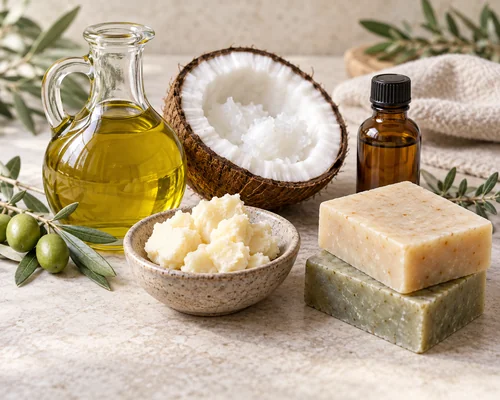
Choosing oils is one of the most important parts of designing a soap recipe. Olive oil can give a bar a mild feel and creamy lather. Coconut oil can add firmness and large bubbles. Castor oil can support the foam, while butters can change the bar’s hardness and texture.
These effects are useful, but no oil works in isolation. The finished soap depends on the entire oil blend, the amount and type of alkali, the production method and the curing conditions. This detailed guide explains the properties of common soap making oils, how to read their SAP values and how to combine them with a clear purpose.
How Do Oils Turn into Soap?
Soap forms through saponification: a reaction between oils or fats and an alkali. Sodium hydroxide (NaOH) is commonly used for firm soap bars, while potassium hydroxide (KOH) is commonly used for liquid soap.
Oils are largely made up of triglycerides, which contain different fatty acids. During saponification, those fatty acids form soap. Because each oil has its own fatty acid composition, replacing one oil with another can change both the qualities of the bar and the amount of alkali required.
A soap recipe is therefore more than a list of attractive ingredients. It is a calculated blend designed to produce a particular result.
What Properties Should You Compare?
When selecting oils, consider these four questions:
- Hardness: Will the blend produce a bar that becomes firm and holds up well in use?
- Lather: Will the bubbles be large and abundant, small and creamy, or somewhere between the two?
- Cleansing strength: How strongly will the resulting soap remove oils during washing?
- Processing behavior: Will the batter stay fluid long enough for a design, or thicken quickly?
You may also want to consider oil freshness, cost, availability, whether your formula must be vegan, and how easily you can obtain a consistent supply.
Soap Making Oils and SAP Values Chart
The table below gives approximate NaOH SAP values for common ingredients. A value of 0.135 means that approximately 0.135 g of pure NaOH is needed to fully saponify 1 g of that oil at 0% superfat. These are planning figures, not instructions to measure lye for a batch without using a calculator.
| Oil, fat or butter | Approximate NaOH SAP | Main role in bar soap |
|---|---|---|
| Olive oil | 0.135 | Oleic-rich base; mild feel and creamy lather |
| Olive pomace oil | 0.134 | Oleic-rich base; may behave differently at trace |
| Coconut oil (76°) | 0.183 | Firmness, strong cleansing and large bubbles |
| Fractionated coconut oil | 0.232 | Distinct ingredient; does not behave like regular coconut oil |
| Palm oil | 0.142 | Firmness and stable, creamy lather |
| Palm kernel oil | 0.176 | Firmness, bubbles and strong cleansing |
| Castor oil | 0.128 | Lather support |
| Shea butter | 0.128 | Creamy character and support for firmness |
| Cocoa butter | 0.138 | Hardness and dense, creamy lather |
| Mango butter | 0.136 | Firmness and a creamy character |
| Sweet almond oil | 0.139 | Oleic-rich supporting oil |
| Avocado oil | 0.133 | Oleic-rich supporting oil |
| Rice bran oil, refined | 0.133 | Versatile oil for blended formulas |
| Sunflower oil | 0.135 | Softness; profile depends on the variety |
| Babassu oil | 0.175 | Firmness, bubbles and cleansing |
| Lard | 0.141 | Firmness and creamy lather |
| Beef tallow | 0.143 | Firmness and dense, creamy lather |
Understanding Fatty Acids in Soap Making
An oil’s fatty acid profile helps explain what it contributes to soap. The most commonly discussed fatty acids are:
- Lauric and myristic acids: Associated with firm bars, stronger cleansing and bubbly lather. Coconut, palm kernel and babassu oils are important sources.
- Palmitic and stearic acids: Support hardness and a stable, creamy foam. They are found in varying amounts in palm oil, cocoa butter and animal fats.
- Oleic acid: Associated with a mild-feeling bar and restrained, creamy lather. Olive, avocado and some sunflower oils are oleic-rich.
- Ricinoleic acid: The characteristic fatty acid of castor oil, valued for its contribution to lather.
- Linoleic and linolenic acids: Polyunsaturated fatty acids present in various seed oils. Their proportion is relevant when evaluating an oil’s oxidation and storage stability.
These descriptions are guides, not promises about a finished bar. A calculator can estimate the combined fatty acid profile of your whole recipe, which is more useful than judging each oil separately.
Olive Oil: The Traditional Foundation
Olive oil is one of the most familiar soap making oils. Its high oleic acid content helps produce a bar with a mild feel and a modest, creamy lather. It works well as a substantial part of a multi-oil blend and can also be used as the sole oil in a Castile-style bar.
High-olive recipes may stay soft longer after pouring and often benefit from an extended cure. A 100% olive oil bar does not need to imitate the large bubbles of a coconut-rich soap; its appeal lies in a different character.
Pure olive oil and olive pomace oil are separate calculator entries. They can also behave differently while the soap batter is being mixed, so check which material you actually have.
Coconut Oil: Bubbles and Cleansing
Regular coconut oil is valued for producing a firm bar with large bubbles and pronounced cleansing strength. It helps many blended recipes lather readily.
Its strength also calls for balance. Increasing coconut oil can make a formula feel more strongly cleansing. The appropriate amount depends on the intended use and the other oils in the recipe; there is no percentage that suits every bar.
Fractionated coconut oil is different. It remains liquid and has a markedly different SAP value and soap-making behavior. Never substitute it for regular coconut oil without reformulating and recalculating the recipe.
Palm Oil and Palm Kernel Oil: Do Not Confuse Them
Palm oil helps create a firm bar and stable, creamy lather. Palm kernel oil contributes more of the bubbly, cleansing character associated with coconut oil.
These ingredients come from different parts of the oil palm and are not interchangeable in a soap calculation. Palm stearin, palm olein and other palm-derived ingredients may also have their own properties and calculator entries.
When using palm oil that can separate into fractions during storage, follow the supplier’s handling instructions. Thoroughly melting and mixing the material before weighing a portion can help keep batches consistent.
Castor Oil: Supporting the Lather
Castor oil is usually a supporting ingredient rather than the main oil in a bar. Its ricinoleic acid content helps give the foam a fuller character when it is paired with other oils.
A modest percentage is common. At high levels, castor oil may make a bar softer or sticky, so adding more does not necessarily mean better lather. Evaluate it as part of the complete blend.
Shea, Cocoa and Mango Butters
Butters add variety to soap formulations, especially when you want to adjust firmness and the character of the lather.
- Shea butter: Often included as a supporting ingredient for a creamy-feeling bar.
- Cocoa butter: Can contribute substantial hardness and dense lather. A high amount may affect processing and increase the risk of cracking in some formulas.
- Mango butter: Another solid butter that can support a firm, creamy bar.
Butters are not identical substitutes for one another. They differ in fatty acid composition and SAP value. They can also change how quickly soap batter thickens.
Remember that soap is a rinse-off product. The feel of an unsaponified butter on skin does not prove that a finished soap bar will have the same effect. Judge the completed, cured formula.
Avocado and Sweet Almond Oils
Avocado and sweet almond oils can add an oleic-rich component to a blended soap. They are commonly chosen when a maker wants to vary a recipe that would otherwise rely heavily on olive oil.
They do not automatically improve a bar simply because they cost more. Compare their SAP values, fatty acid profiles, price and availability, then make a small test batch to see whether the difference is useful for your particular formula.
Rice Bran and Sunflower Oils
Rice bran oil is a versatile option for blended recipes. It can fill part of the role of other liquid oils, but an exact substitution still requires a new lye calculation.
Sunflower oil needs a closer look at its specification. Standard and high-oleic sunflower oils can have different fatty acid profiles. High-oleic versions generally offer greater oxidation stability than versions with a higher proportion of polyunsaturated fatty acids.
Whatever the variety, store oils according to the supplier’s guidance and check their freshness before making soap. An old or oxidized oil can affect the quality and scent of the finished batch.
Babassu Oil: A Cleansing Alternative
Babassu oil is another ingredient that can contribute hardness and bubbly, cleansing lather. It is sometimes considered when developing alternatives to a recipe containing coconut or palm kernel oil.
Similar soap-making roles do not make oils mathematically interchangeable. Babassu has its own SAP value. Recalculate the alkali, review the whole blend and test how the substitution changes the finished bar.
Animal Fats: Lard and Beef Tallow
Traditional soap making also uses animal fats. Lard and beef tallow can contribute a firm bar and creamy, stable lather. Their inclusion depends on the goals of the recipe and whether the product is intended to be vegan.
Use a properly prepared fat from a reliable source and select the correct entry in the lye calculator. Lard and tallow are different materials with different SAP values.
Why Oil Freshness Matters
Even a carefully calculated recipe can disappoint if an oil is already deteriorating. Check the supplier’s shelf-life information, keep containers closed and protect ingredients from unsuitable heat and light.
Oils rich in polyunsaturated fatty acids deserve particular attention to freshness and storage. Oxidation can contribute to unpleasant odors or discoloration over time. A finished soap’s storage life depends on the complete formula and how it is stored, not on a universal expiration date assigned to one ingredient.
How to Build a Balanced Oil Blend
A practical way to design a soap is to give each ingredient a job:
- Choose a base oil for the general character of the bar, such as olive oil.
- Add a source of hardness where needed, such as palm oil, an appropriate butter or a suitable animal fat.
- Consider bubbly lather with an ingredient such as coconut or babassu oil.
- Consider lather support with a modest amount of castor oil.
- Review the full recipe for cost, availability, processing behavior and intended use.
- Calculate the alkali for the exact ingredient weights and chosen superfat.
More ingredients do not necessarily create a better bar. A short oil list can make testing, troubleshooting and repeat production easier.
Illustrative Example: A Five-Oil Blend
Suppose you want to plan a batch containing 1,000 g of oils. One possible starting blend for discussion is:
| Ingredient | Percentage of oils | Weight | Intended role |
|---|---|---|---|
| Olive oil | 45% | 450 g | Oleic-rich base |
| Coconut oil | 25% | 250 g | Bubbles and cleansing |
| Palm oil | 20% | 200 g | Firmness and creamy lather |
| Shea butter | 5% | 50 g | Supporting butter |
| Castor oil | 5% | 50 g | Lather support |
| Total | 100% | 1,000 g | — |
This table shows how percentages become weights and how each oil has a purpose. It is not a complete production recipe: it does not specify your actual alkali purity, water amount, process conditions or verified lye weight. Enter the precise ingredients into a trusted soap calculator before making any batch.
What Happens When You Substitute an Oil?
Changing an oil changes the formula, even if the total oil weight remains 1,000 g. Suppose you replace the palm oil in the example with cocoa butter. You have changed the fatty acid profile, likely changed the processing behavior and changed the SAP calculation.
For every substitution:
- Confirm the exact identity of the new ingredient.
- Recalculate the lye using its correct SAP value.
- Review predicted hardness, cleansing and lather for the entire blend.
- Consider whether the batter may thicken faster or slower.
- Make a small test batch and assess the cured soap.
A “one-for-one” swap by weight is only a change to the oil weights. It is never permission to reuse the old lye amount without checking it.
Common Questions About Soap Making Oils
Which oil makes the hardest soap?
There is no single answer for every formula. Coconut oil, palm oil, cocoa butter and some animal fats can contribute hardness in different ways. Their effects on lather and cleansing are also different, so assess the full blend.
Is olive oil enough to make a soap bar?
Yes. A 100% olive oil soap can make a firm bar after adequate curing, but it behaves differently from a mixed-oil recipe and generally produces modest, creamy lather.
Does adding more castor oil always create more bubbles?
No. Castor oil is typically used to support lather in a blend. Using a large amount can leave the bar soft or sticky.
Are expensive oils always better for soap?
No. The value of an oil depends on its contribution to the finished soap, its cost and whether the difference is noticeable in your tested formula.
Can I use the same amount of lye when I change oils?
No. Each oil has a SAP value, and natural values can vary. Recalculate the complete recipe whenever an oil or its weight changes.
Are essential oils included in the base oil percentages?
Typically, no. Essential oils are usually considered fragrance ingredients used in much smaller amounts. Follow the appropriate usage guidance for the particular essential oil and product.
Final Thoughts
The properties of soap making oils become most useful when you understand how they work together. Olive oil can establish the character of a bar; coconut oil can add bubbles; palm oil or butters can support firmness; and castor oil can contribute to the lather. Other oils give you more ways to adjust the formula.
Use oil charts to compare possibilities, but calculate every real batch with the exact materials you will weigh. Start with a manageable blend, record your process and evaluate the soap after curing. That is how a list of oils becomes a recipe you understand and can repeat.