

 Soap Bases
 Scents
 Oils
Oils Dyes
Dyes Equipment and Accessories
 Cosmetic Clays
Natural Oils
Discover our collection of natural oils for soap making, skincare and cosmetic formulations. Explore vegetable oils and carrier oils used in handmade soaps, body oils, balms, creams and other personal care products.
Natural oils play an important role in cosmetic formulation, contributing fatty acids, emollient properties and distinctive textures. Whether you are making cold process soap, developing DIY skincare products or creating professional cosmetic formulations, choosing the right oils helps achieve the desired product characteristics.
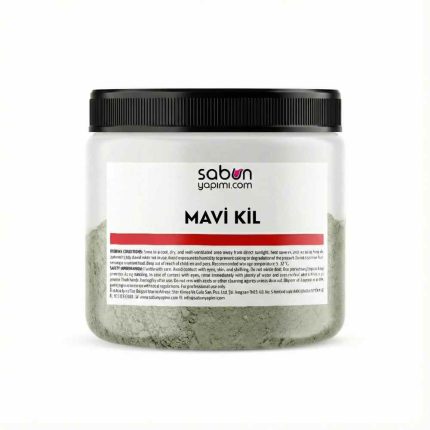
Blue Clay 50 g – Mineral Clay for Soap Making & Face Masks
Original price was: $299,00.$269,00Current price is: $269,00.Natural Oils for Soap Making, Skincare & Cosmetic Formulations
Natural oils are essential raw materials in handmade soap production, skincare and cosmetic formulation. Derived from various plant sources, these oils contain different combinations of fatty acids and other naturally occurring components that influence their properties and performance.
From traditional olive oil soaps to rich body butters and nourishing-feeling cosmetic balms, vegetable oils provide an important foundation for numerous personal care products.
At SabunYapimi, explore natural oils suitable for different soap-making and cosmetic formulation projects.
Whether you are a beginner experimenting with handmade skincare or a professional formulator developing a new product, understanding the properties of vegetable oils helps you make better ingredient choices.
Natural Oils for Handmade Soap Making
Natural oils for soap making are among the most important ingredients in traditional cold process and hot process soap formulations.
During saponification, oils and fats react with an alkali, typically Sodium Hydroxide for solid soap or Potassium Hydroxide for traditional liquid soap.
The fatty acid composition of each oil influences the hardness, solubility, lather and overall characteristics of the finished soap.
For example, Olive Oil is valued in traditional soap making for its high Oleic Acid content, while Coconut Oil contributes fatty acids associated with firm bars and abundant cleansing lather.
Castor Oil is commonly incorporated into selected soap formulations to influence lather characteristics.
Combining oils with different fatty acid profiles allows soap makers to develop products with specific performance targets.
However, each oil has a different saponification value. The required alkali must always be calculated according to the exact oil composition and formulation.
Vegetable Oils for Skincare Products
Vegetable oils for skincare are widely used in cosmetic creams, lotions, body oils, balms and other personal care formulations.
Depending on their composition, these oils can provide emollient properties, influence spreading and contribute to the overall sensory feel of a cosmetic product.
Some oils produce a light, easily spreadable texture, while others create a richer or more occlusive feel.
Natural oils can be combined with compatible emulsifiers, humectants and other cosmetic ingredients to develop different product textures.
For water-containing creams and lotions, an appropriate emulsification and preservation system is generally required.
The suitability of an oil depends on its fatty acid composition, purity, oxidation stability and intended cosmetic application.
Carrier Oils for DIY Cosmetics
Carrier oils are vegetable-derived oils commonly used in body oils, massage products and compatible cosmetic formulations.
They may also be used to dilute suitable essential oils when preparing topical products.
However, dilution requirements depend on the essential oil, the intended application and the relevant safety recommendations.
Carrier oils and essential oils are chemically different categories of ingredients.
Carrier oils generally consist primarily of fatty materials, while essential oils contain concentrated volatile aromatic compounds.
Choosing the correct carrier oil helps establish the desired texture, spreading characteristics and application experience.
How to Choose the Best Natural Oil for Soap Making
Selecting a suitable natural oil depends on the type of soap you want to create.
For solid soap bars, formulators should consider fatty acid composition, hardness, cleansing performance and lather characteristics.
A formulation containing a high proportion of liquid oils may behave differently from one containing substantial amounts of solid fats.
The choice of oil also influences processing conditions and the finished soap's curing characteristics.
For professional results, soap makers should evaluate the complete oil blend and use an accurate lye calculator.
No single natural oil provides every desired characteristic in all soap formulations.
Natural Oils for Creams, Lotions and Body Balms
Natural oils are also valuable ingredients in cosmetic products where texture and skin feel are important.
In anhydrous balms, vegetable oils may be combined with suitable waxes and butters to obtain the desired firmness.
In creams and lotions, natural oils form part of the oil phase and may contribute to the overall emollient properties of the product.
The finished formulation must be evaluated for emulsion stability, oxidation, appearance and compatibility with other ingredients.
Different oils also have different sensitivities to heat, oxygen and light, making appropriate processing and packaging important.
Refined vs. Unrefined Natural Oils
Natural oils are available in different commercial grades.
Unrefined oils may retain more of their characteristic color, odor and minor components, depending on the processing method.
Refined oils are processed to modify or reduce certain impurities, odors and colors.
Neither type is automatically superior for every formulation.
The appropriate choice depends on the finished product's desired appearance, fragrance compatibility, oxidative stability and quality requirements.
Cosmetic manufacturers should also verify whether an oil is suitable for their intended use rather than assuming that every food-grade or industrial-grade oil is interchangeable.
Quality and Storage of Cosmetic Oils
The quality of natural oils has a significant influence on the finished cosmetic product.
Important characteristics may include fatty acid composition, acid value, peroxide value, appearance, odor and relevant impurity specifications.
Some oils are more susceptible to oxidation than others.
Exposure to heat, air and light may accelerate deterioration, leading to changes in odor, color and product quality.
Natural oils should therefore be stored according to the supplier's technical recommendations, generally in tightly closed containers protected from excessive heat and direct sunlight.
Professional manufacturers should use appropriate technical documentation, including a Technical Data Sheet, Safety Data Sheet and Certificate of Analysis where available.
Buy Natural Oils for Soap Making and Cosmetics
Whether you are creating handmade soaps, experimenting with DIY skincare or developing professional cosmetic products, selecting the right natural oils and carrier oils is an essential part of successful formulation.
Explore our Natural Oils category to discover ingredients for handmade soap, body care, cosmetic emulsions and other personal care applications.
Choose suitable oils according to your formulation requirements and create high-quality products with the right combination of raw materials.