
 Soap Bases
 Scents
 Oils
Oils Dyes
Dyes Equipment and Accessories
 Cosmetic Clays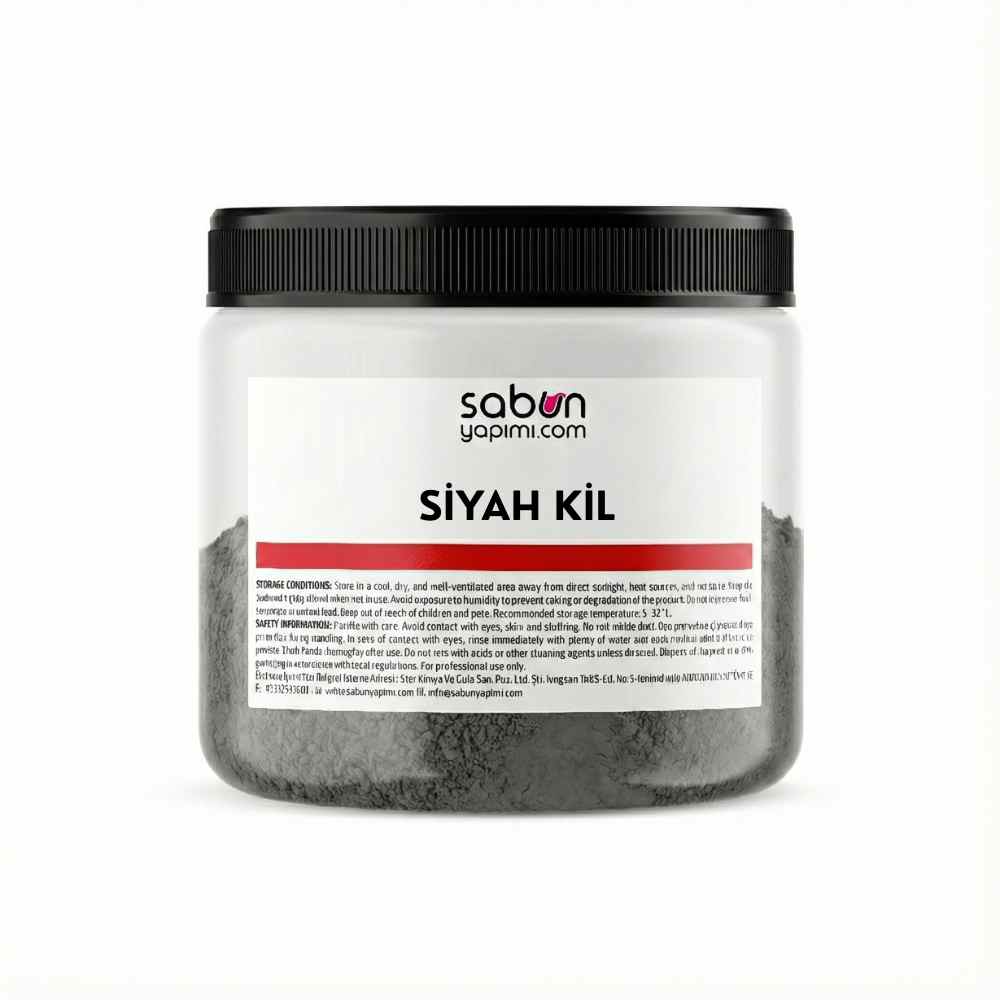
Black Clay 50 g – Mineral Clay Powder for Soap Making & Face Masks
$18,00
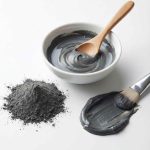
Black Clay is a mineral-based cosmetic ingredient used in handmade soaps, facial masks and specialty skincare formulations. Its absorbent properties help remove excess surface oil and create a cleaner, smoother-looking complexion, while its natural mineral texture adds character to cosmetic products.
Ideal for cold process soap, melt and pour soap, wash-off clay masks and selected cleansing formulations, Black Clay can also provide attractive dark-gray to black tones depending on its composition. The exact mineral content, INCI declaration and coloring performance vary by commercial grade.
Black Clay 50 g – Mineral Clay for Soap Making & Face Masks
Natural-Inspired Mineral Clay for Handmade Soap, Facial Masks and Cosmetic Formulations
Black Clay is a mineral-based cosmetic ingredient used in handmade soaps, facial masks and specialty skincare formulations. Known for its distinctive dark appearance and absorbent properties, Black Clay is particularly popular in products designed for oily-looking skin, mineral cleansing and decorative soap making.
In suitable cosmetic formulations, Black Clay can help absorb excess surface oil, improve product texture and provide a smooth, refreshed skin feel. Its dark mineral color also makes it an attractive ingredient for soap makers developing charcoal-inspired, volcanic-inspired or spa-style product concepts.
Unlike conventional cleansing surfactants, Black Clay does not produce foam or independently wash away oils. Its primary cosmetic functions are associated with physical absorption, texture modification and, where applicable, product coloration.
The exact mineral composition of Black Clay varies according to its source and commercial grade. Selecting a suitable cosmetic-grade material is therefore important for both formulation performance and consumer safety.
What Is Black Clay?
Black Clay is a commercial name used for mineral-rich cosmetic powders with a dark-gray or black appearance.
It is not a single standardized chemical compound.
Depending on its geological origin and manufacturing process, a commercial Black Clay may contain minerals such as Montmorillonite, Illite, Kaolin and related naturally occurring mineral components.
Certain products may contain additional mineral pigments or other coloring ingredients that contribute to the final black appearance.
This variation means that Black Clay products from different suppliers can have different absorption capacities, textures, colors and processing characteristics.
Professional formulators should always verify the actual mineral composition and INCI declaration before using the material in commercial cosmetic products.
Black Clay Benefits for Skincare
Black Clay is commonly selected for skincare formulations designed to remove excess surface oil and provide a refreshing cleansing experience.
Its mineral particles may absorb or adsorb substances present on the skin surface, depending on the structure and composition of the clay.
In wash-off masks, these characteristics can help reduce the appearance of surface oiliness and leave the skin feeling cleaner.
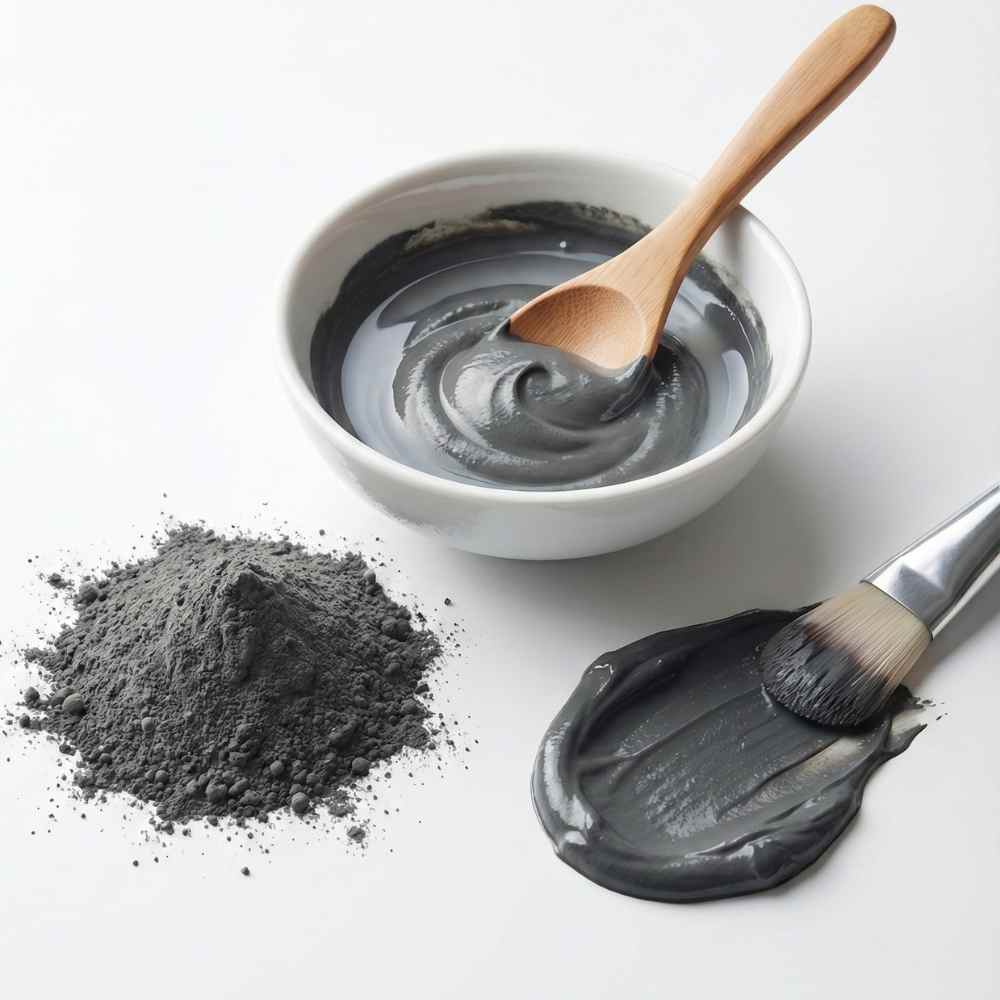
The mineral powder also influences the physical consistency of a formulation. When combined with a suitable liquid, certain grades create a smooth, creamy paste that spreads over the skin and can be rinsed away after use.
These properties make Black Clay useful in facial masks, cleansing pastes and selected skin-conditioning products.
However, its cosmetic benefits should not be confused with medical treatment or biological skin regeneration.
Black Clay for Oily and Combination Skin
Black Clay for oily skin is a popular ingredient concept in cosmetic formulation.
Oily-looking skin is commonly associated with excess sebum present on the surface.
Certain mineral clays can absorb some of this surface oil, temporarily reducing the appearance of shine.
This makes Black Clay useful in wash-off products designed to leave the skin feeling refreshed and less greasy.
However, absorbing surface oil is different from regulating sebum production within the skin.
Black Clay should not automatically be described as stopping excess oil production, preventing acne or permanently balancing the skin.
An appropriate cosmetic claim is:
“Helps absorb excess surface oil and supports a fresh, matte-looking complexion.”
Black Clay for Face Masks
Black Clay for face masks is one of the most popular applications of this cosmetic raw material.
Mineral clay masks are designed to provide a cleansing experience by combining absorbent mineral particles with a suitable liquid phase.
When the clay is mixed with water, a paste or suspension forms.
The consistency depends on the type of mineral present, its particle size and its ability to absorb water.
In a properly developed facial mask, Black Clay may help remove excess surface oil and contribute to a smooth, clean after-feel.
Depending on the formulation, additional ingredients may be included to improve spreadability and comfort.
For example, Glycerin or Panthenol may be incorporated into certain ready-to-use clay mask systems to support a more comfortable sensory experience.
The complete formulation must be evaluated for stability, preservation and skin compatibility.
Is Black Clay Suitable for Acne-Prone Skin?
Black Clay is often marketed for acne-prone skin because of its oil-absorbing characteristics.
It may be appropriate for certain cosmetic products designed to reduce the appearance of oiliness and surface congestion.
However, Black Clay is not automatically an acne-treatment ingredient.
There is insufficient justification to claim that ordinary cosmetic Black Clay cures acne, prevents all pimples or treats inflammatory skin conditions.
For commercial cosmetic marketing, descriptions should focus on improving the appearance and feel of oily-looking skin.
The suitability of a finished product for blemish-prone skin depends on its complete composition and supporting performance evidence.
Does Black Clay Clean Pores?
Black Clay may help absorb surface oil and remove some cosmetic residue during rinsing.
This can contribute to a cleaner-looking complexion.
However, the material does not physically remove impurities from every level of the skin, and it cannot permanently change pore size.
The phrase “deep pore detoxification” should therefore be avoided unless supported by specific, scientifically appropriate evidence.
A more accurate description is:
“Helps remove excess surface oil and leaves pores looking cleaner.”
Black Clay as a Soap-Making Ingredient
Black Clay for soap making is especially popular among handmade soap manufacturers looking for distinctive mineral colors and specialty product concepts.
Black Clay can be incorporated into selected cold process soaps, melt and pour bases and other compatible cleansing formulations.
Its mineral particles may influence the finished bar’s color, opacity and surface texture.
Depending on the commercial grade, it may produce a dark-gray, charcoal-gray or black appearance.
However, the color of the powder does not always match the final color in soap.
The soap base, mineral composition, concentration and manufacturing conditions can all influence the finished appearance.
Black Clay in Cold Process Soap
Cold process soap is produced through saponification using fats, oils and Sodium Hydroxide.
Black Clay is added as a supplementary mineral ingredient rather than as a saponifiable oil.
It does not replace the soap-making fats or contribute to the required alkali calculation in the same manner as a triglyceride oil.
Its main roles are related to color, texture and cosmetic product positioning.
For even distribution, Black Clay can be premixed with a small amount of water reserved from the original soap recipe.
The prepared dispersion is then incorporated into the soap mixture under suitable mixing conditions.
This method may help reduce clumping and uneven coloration.
Excessive amounts of mineral powder may alter the consistency of the soap batter and influence the finished product’s texture.
How Much Black Clay Should Be Used in Soap?
The appropriate concentration depends on the mineral grade, particle size and desired color.
For preliminary cold process soap development, a starting concentration of approximately 0.5–2% based on the total weight of soap-making oils may be evaluated.
For example, a small laboratory batch using 1,000 g of oils could be tested with approximately 5–20 g of Black Clay.
This is an experimental starting range, not a universal recommendation.
Some black clay blends contain strong pigments and may require significantly lower amounts.
A naturally gray mineral clay may require a different concentration to achieve the desired appearance.
Small-batch testing is recommended before commercial manufacturing.
Black Clay as a Natural Soap Colorant
Black Clay is frequently used to develop mineral-inspired colors in handmade soap.
It may be particularly suitable for product concepts featuring dark, earthy or charcoal-like visual effects.
However, the exact color depends on the composition of the material.
A naturally dark mineral powder may produce a muted gray tone, while a pigment-containing blend may create a stronger black appearance.
These differences should be considered during product design.
If the commercial Black Clay contains added cosmetic pigments, those pigments must be identified correctly and their permitted uses verified for the target market.
Not every dark mineral material is automatically an approved cosmetic colorant.
Black Clay in Melt and Pour Soap
Black Clay may also be incorporated into selected melt and pour soap bases.
In these formulations, the mineral particles remain dispersed rather than truly dissolving in the soap.
Depending on the grade and concentration, the clay may produce a gray or black appearance.
In transparent melt and pour bases, it can reduce transparency and create an opaque or cloudy effect.
It is important to distribute the powder evenly and avoid adding more mineral material than the base can accommodate.
Excessive additions may affect bar texture, foam and appearance.
Always follow the soap-base manufacturer’s additive recommendations.
Does Black Clay Increase Soap Foam?
Black Clay is not a foaming surfactant.
It does not independently generate cleansing foam or increase a soap’s detergent activity.
The lather produced by traditional soap is determined primarily by its fatty acid composition and manufacturing characteristics.
The addition of mineral clay may influence texture and sensory feel, but an increase in foam volume should not be assumed.
A Black Clay soap should therefore be marketed primarily around its appearance, mineral composition and cleansing experience.
Black Clay vs. Activated Charcoal
Black Clay and Activated Charcoal are sometimes confused because both materials can produce dark-colored cosmetic products.
However, they are chemically different.
Black Clay generally refers to a mineral-based material containing one or more clay minerals.
Activated Charcoal is a carbon-rich material processed to obtain a highly porous structure.
The cosmetic INCI name for activated charcoal powder is generally Charcoal Powder.
Both ingredients may have absorbent or adsorbent properties, but they differ in particle structure, composition and formulation behavior.
A product consisting of Black Clay should not automatically be labeled Activated Charcoal.
Similarly, a blend containing both Black Clay and Charcoal Powder must be declared according to its actual composition.
Black Clay vs. Bentonite Clay
Bentonite is a mineral material composed primarily of smectite clay minerals, often including Montmorillonite.
Depending on the grade, Bentonite can absorb substantial amounts of water and develop high viscosity.
Some Black Clay products may contain Montmorillonite or other swelling clay minerals.
However, not every Black Clay is Bentonite.
The mineral composition affects water absorption, paste consistency and formulation behavior.
Therefore, the two materials should not automatically be substituted at identical concentrations.
Black Clay vs. Kaolin Clay
Kaolin is a widely used mineral ingredient in cosmetics, particularly in facial masks, powders and cleansing formulations.
It is commonly valued for its absorbent and texture-modifying characteristics.
Black Clay may contain Kaolin, but its overall composition may include additional minerals or colorants.
These differences can influence absorbency, texture, drying behavior and color.
White Kaolin and Black Clay may be used for similar types of cosmetic products, but their performance is not necessarily identical.
Black Clay for Facial Scrubs
Black Clay may be used in selected wash-off exfoliating formulations.
However, clay is primarily an absorbent mineral ingredient rather than a dedicated exfoliating active.
Any physical exfoliation effect depends on particle size, particle shape and how the finished product is applied.
Excessive rubbing can irritate the skin.
For this reason, Black Clay should not automatically be described as a gentle exfoliant without supporting formulation and particle-size information.
Products designed for sensitive skin require particular care.
How to Prepare a Black Clay Face Mask
A simple single-use mask can be prepared by mixing a small amount of cosmetic-grade Black Clay with clean water.
For example, approximately one teaspoon of Black Clay may be combined with enough water to create a smooth, spreadable paste.
The amount of liquid required will vary according to the mineral composition.
Apply a thin layer to clean, intact skin, avoiding the eyes and lips.
A short initial application period of approximately 5–10 minutes may be considered, depending on skin tolerance and the material’s instructions.
Rinse gently with lukewarm water before the mask becomes excessively dry or uncomfortable.
Do not allow the mask to cause significant irritation or a strong tightening sensation.
Prepare only the amount needed for immediate use and discard any remaining wet mixture.
This is a general cosmetic-use example, not a validated commercial formulation.
Black Clay in Shower Gels and Cleansers
Black Clay may also be incorporated into selected liquid cleansing products.
In these formulations, its principal role is as a dispersed mineral ingredient.
The actual cleansing performance comes from the surfactant system.
Because Black Clay does not dissolve in water, it can create challenges in liquid formulations.
Without a suitable suspension system, the particles may settle during storage.
Manufacturers should therefore evaluate sedimentation, viscosity, foam behavior and packaging compatibility.
The finished product should remain sufficiently uniform throughout its intended shelf life.
Black Clay in Shampoo Formulations
Some cosmetic clays are used in specialty shampoo and scalp-cleansing products.
Depending on its composition, Black Clay may help absorb certain oily residues and create a distinctive cosmetic texture.
However, poor dispersion may result in sedimentation or unwanted deposits.
The clay should not automatically be claimed to prevent hair loss, treat dandruff or stimulate hair growth.
These claims require separate evidence and may be subject to additional regulatory requirements.
Is Black Clay a Moisturizer?
Black Clay is not primarily a moisturizing ingredient.
Its main cosmetic characteristics are related to absorption, physical texture and mineral composition.
Unlike conventional humectants, such as Glycerin and Sodium PCA, mineral clay does not directly function as a water-binding skincare active.
A clay mask may be formulated with moisturizing ingredients to improve comfort.
However, the addition of Black Clay alone does not guarantee that the finished product will prevent skin dryness or strengthen the skin barrier.
Is Black Clay Suitable for Sensitive Skin?
Black Clay may be incorporated into carefully developed skincare products for different skin types.
However, the natural origin of a mineral ingredient does not guarantee that it is non-irritating.
Highly absorbent formulations can leave the skin feeling tight or dry.
The particle size, mineral composition, impurities and other ingredients can also influence skin compatibility.
For this reason, the suitability of Black Clay for sensitive skin must be evaluated in the finished formulation.
Individuals with reactive skin should exercise caution and discontinue use if discomfort occurs.
Water Solubility and Dispersion
Black Clay is generally insoluble in water.
When combined with water, the mineral particles form a dispersion or suspension.
Depending on the mineral composition, the particles may absorb water, swell or influence viscosity.
Different grades can therefore produce substantially different paste consistencies.
A product made with one Black Clay grade may require a different water ratio when the material is replaced with another grade.
This is particularly important in commercial facial masks and liquid cleansers.
pH of Black Clay
Dry Black Clay does not have a meaningful conventional standalone pH value.
Some suppliers specify the pH of a prepared aqueous clay suspension.
The measured value depends on mineral composition, impurities, concentration and laboratory test conditions.
A universal pH range should not be assigned to every Black Clay product.
The finished cosmetic formulation must be evaluated separately.
Typical Usage Levels
For cold process soap, a preliminary development concentration of approximately 0.5–2% based on the total oil weight may be evaluated.
For melt and pour soap, small initial additions are generally advisable, depending on the soap base and color intensity.
In dry powder facial masks, Black Clay may represent a substantial portion of the mixture. An initial development range such as 10–30% of a blended dry mask formulation may be evaluated, although the appropriate amount is highly grade-dependent.
For water-containing creams, gels and cleansers, lower concentrations may be suitable because the mineral can influence viscosity and suspension stability.
These percentages are formulation starting points rather than universal limits.
The correct amount must be selected according to the supplied material, intended application and product safety assessment.
Product Details
Product Name: Black Clay
Alternative Name: Cosmetic Black Clay
Package Size: 50 g
Ingredient Family: Mineral Clay
Typical Physical Form: Fine Powder
Typical Appearance: Dark Gray to Black
Water Solubility: Insoluble; Dispersible in Water
Primary Functions: Absorbent / Bulking Agent / Texture Modifier
Possible Coloring Function: Depends on Composition
Applications: Handmade Soap, Facial Masks, Wash-Off Cleansers and Specialty Cosmetic Formulations
INCI Name: Refer to Supplier Documentation
Mineral Composition: Grade-Dependent
Colorant Composition: Confirm with Supplier
Particle Size: Refer to Supplier TDS
Cosmetic Grade: Confirm with Supplier Documentation
Purity: Refer to Supplier COA
Natural Origin and Ingredient Identification
Black Clay may originate from natural mineral deposits.
However, its commercial name does not establish that it consists entirely of a single natural mineral.
Some commercial materials may contain additional pigments or processing aids.
Claims such as 100% Natural, No Added Pigments, Organic Certified or Pure Mineral Clay should only be used when supported by appropriate documentation.
The full ingredient declaration should reflect the actual raw-material composition.
Mineral Quality and Heavy Metal Testing
Naturally sourced mineral clays may contain trace impurities associated with their geological origin.
For professional cosmetic manufacturing, the selected material should be evaluated for identity, particle size, microbiological quality and relevant contaminants.
Depending on the source, testing may include Lead, Arsenic, Cadmium, Mercury and other elements.
Certain clay deposits may also contain crystalline silica.
Its presence is particularly relevant when evaluating materials that may generate respirable dust.
A cosmetic-grade designation should therefore be supported by appropriate testing and supplier documentation.
Inhalation Safety
Black Clay is supplied as a fine mineral powder.
During manufacturing, weighing, blending and packaging, dust formation should be minimized.
Avoid inhaling airborne clay particles.
Professional operations should use appropriate ventilation and dust-control procedures.
Black Clay should not automatically be considered suitable for aerosol cosmetics, airbrush products or other applications that may produce inhalable particles.
These uses require specific safety evaluation based on particle size, composition and exposure.
Microbiological Safety
Dry mineral powders and ready-to-use water-containing cosmetics have different microbiological safety requirements.
Once Black Clay is combined with water, the resulting formulation may become susceptible to microbial contamination.
Commercial facial masks, gels and other water-containing formulations may require suitable preservatives and microbiological testing.
The mineral ingredient itself does not replace an antimicrobial preservative system.
Any prepared mask containing water should be stored only under conditions supported by validated preservation and stability testing.
Safety Information
Black Clay is supplied as a cosmetic formulation raw material.
Avoid direct contact with the eyes and prevent unnecessary inhalation of powder.
Do not apply clay masks to open wounds or severely irritated skin.
Individuals with sensitive skin should test a new formulation on a small area before wider use.
If irritation, redness or discomfort occurs, discontinue application.
Black Clay should not be ingested or used as an internal detoxification product.
The suitability of the material depends on its verified quality and the intended cosmetic application.
Storage
Store Black Clay in tightly closed packaging in a cool, dry environment.
Protect the powder from humidity, contamination and unsuitable storage conditions.
Use clean, dry utensils when dispensing the product.
Moisture exposure may cause clumping and affect processing characteristics.
The shelf life should be determined according to the actual supplier specifications.
Wholesale, Private Label & Contract Manufacturing
We supply Black Clay, Pink Clay, Blue Clay, Kaolin Clay, Bentonite Clay, cosmetic mineral powders, soap-making colorants and other formulation raw materials in wholesale quantities for soap makers, cosmetic brands, laboratories, retailers and professional formulators.
We also provide custom cosmetic formulation development services for clay masks, mineral-based cleansing products, skincare formulations and specialty personal-care concepts.
Our formulation development services may include mineral selection, powder dispersion, ingredient compatibility assessment, texture optimization, color development, stability recommendations, manufacturing procedures and supporting technical documentation.
For handmade soap projects, we can evaluate different clay and pigment systems according to the desired color, surface texture, processing characteristics and finished-product performance.
Private label and contract manufacturing services are available for selected liquid soaps, detergents, surface cleaners and other cleansing products within our manufacturing capabilities. Custom cosmetic formulation development is offered separately from finished cosmetic manufacturing.
For bulk Black Clay orders, custom cosmetic formulation development, soap-making projects, private label or contract manufacturing inquiries, please contact us with your required quantity, mineral composition, intended application, packaging requirements, target market and estimated production volume.
KARGO & İADE
SabunYapimi.com olarak müşteri memnuniyetini ön planda tutuyoruz. Siparişlerinizin güvenli ve hızlı bir şekilde size ulaşmasını sağlamak için en iyi lojistik firmalarıyla çalışıyoruz. Ayrıca, herhangi bir sebepten dolayı ürününüzden memnun kalmazsanız, iade ve değişim sürecimizi kolay ve hızlı hale getirdik.
Kargo Firması & Gönderim Süresi
- Siparişleriniz, ödeme onaylandıktan sonra 1-2 iş günü içinde kargoya verilir.
- Kargo firmaları: [Aras & Yurtiçi]
- Ortalama teslimat süresi 2-3 iş günü arasındadır.
Kargo Ücretleri & Ücretsiz Kargo Şartları
- [1000 TL ve üzeri alışverişlerde kargo ücretsizdir.]
- Standart kargo ücreti sipariş aşamasında ödeme sayfasında belirtilir.
Kargo Takibi
Siparişiniz kargoya verildiğinde e-posta veya SMS ile takip numarası paylaşılır. Kargo takip bağlantısını kullanarak siparişinizi kolayca takip edebilirsiniz.
📌 Siparişiniz belirlenen süre içinde ulaşmazsa, bize aşağıdaki iletişim bilgileriyle ulaşabilirsiniz:
📧 E-Posta: sabunyapimi@gmail.com
📞 WhatsApp Destek: +90 532 059 15 71
Geri Ödeme ve İade Süreçleri
Geri Ödeme ve İade Politikası Sayfamızı Okuyun