
 Soap Bases
 Scents
 Oils
Oils Dyes
Dyes Equipment and Accessories
 Cosmetic Clays
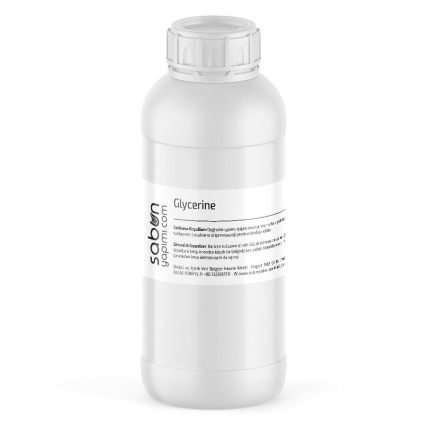
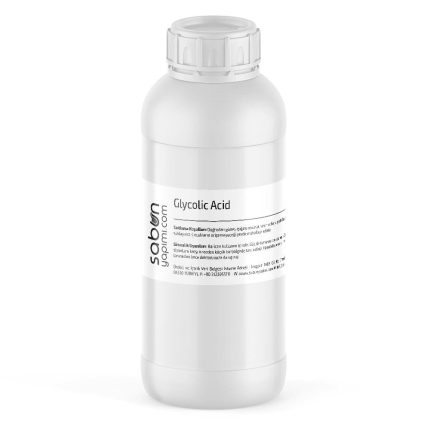
Hydrolyzed Wheat Protein 100 g – Conditioning Protein for Hair & Skincare
$445,00
Hydrolyzed Wheat Protein is a water-soluble, wheat-derived cosmetic protein used in shampoos, conditioners, creams, lotions and other personal-care formulations. Its low-molecular-weight peptides help improve hair conditioning, body and manageability while supporting moisture retention and a smoother skin and hair feel.
3368 in stock
Hydrolyzed Wheat Protein 100 g
Conditioning Protein for Hair, Skin & Cosmetic Formulations
Hydrolyzed Wheat Protein is a wheat-derived cosmetic ingredient produced by breaking larger wheat proteins into smaller peptides through hydrolysis.
The resulting material is more water-compatible than untreated wheat protein and is widely used in:
- Shampoos
- Hair conditioners
- Hair masks
- Leave-in products
- Styling products
- Creams
- Lotions
- Facial products
- Body washes
- Selected cleansing formulations
Its primary cosmetic functions are related to hair conditioning, skin conditioning, film formation and moisture retention.
What Is Hydrolyzed Wheat Protein?
Hydrolyzed Wheat Protein is obtained by controlled hydrolysis of wheat-derived proteins.
Hydrolysis breaks large protein molecules into smaller:
- Peptides
- Polypeptides
- Amino-acid-containing fractions
This makes the ingredient easier to disperse or dissolve in water-based cosmetic formulations.
INCI Name: Hydrolyzed Wheat Protein
Source: Wheat-derived protein
Primary Functions: Hair Conditioning / Skin Conditioning / Film Forming
Solubility: Generally Water Soluble
The exact composition depends on the commercial grade supplied.
Hair Conditioning Benefits
Hydrolyzed Wheat Protein is particularly popular in hair-care formulations.
It can help improve the sensory characteristics of hair by contributing to:
- Improved manageability
- Softer hair feel
- Increased body
- Fuller-looking hair
- Improved shine
- Smoother surface feel
- Reduced dry-feeling texture
Its film-forming properties can leave a thin conditioning layer on the hair surface.
Does Hydrolyzed Wheat Protein Repair Hair?
The word “repair” should be used carefully.
Hair fiber is biologically dead and cannot literally regenerate itself.
Hydrolyzed proteins may instead:
- Deposit onto the hair surface
- Temporarily improve surface smoothness
- Fill irregularities in damaged areas
- Improve hair feel
- Support the appearance of stronger, healthier hair
Therefore, more technically accurate language is:
“Helps improve the appearance and feel of damaged hair.”
rather than claiming permanent structural repair.
Adds Body & Volume
Hydrolyzed Wheat Protein can form a lightweight film around the hair fiber.
This may contribute to:
- Fuller hair feel
- Increased body
- Improved styling properties
- More manageable hair
For this reason, it is frequently used in shampoos and conditioners designed for fine or damaged-looking hair.
Moisture Retention
Hydrolyzed Wheat Protein can support moisture retention through its film-forming and water-binding properties.
In hair-care formulations, this may help produce a softer and less dry-feeling result.
It should not be confused with a conventional humectant such as glycerin, but it can complement humectant systems.
Use in Shampoos
Hydrolyzed Wheat Protein may be incorporated into:
- Daily shampoos
- Conditioning shampoos
- Volumizing shampoos
- Dry-hair shampoos
- Damaged-hair products
- Sulfate-free cleansing systems
Its main role is conditioning rather than primary cleansing.
The actual cleansing action comes from the surfactant system.
Use in Conditioners
It can be especially useful in:
- Rinse-off conditioners
- Hair masks
- Leave-in conditioners
- Detangling sprays
- Styling creams
where it can support:
- Slip
- Smoothness
- Manageability
- Fuller feel
- Surface conditioning
Use in Hair Masks
Hydrolyzed Wheat Protein can be combined with ingredients such as:
- Panthenol
- Glycerin
- Cationic conditioners
- Vegetable oils
- Fatty alcohols
- Cosmetic silicones
to develop richer conditioning formulas.
Use in Skincare
Hydrolyzed Wheat Protein may also be incorporated into:
- Facial creams
- Body lotions
- Hand creams
- Serums
- Cleansing products
- Masks
In skincare, its film-forming properties can help support:
- Softer skin feel
- Smoother sensory properties
- Moisture retention
- Improved surface feel
Skin Tightening Claims
Some formulations containing film-forming proteins can create a temporary tightening sensation as the film dries.
However, Hydrolyzed Wheat Protein should not be marketed as permanently:
- Tightening skin
- Increasing skin elasticity
- Removing wrinkles
- Rejuvenating skin
without appropriate finished-product substantiation.
Use in Soap
Hydrolyzed Wheat Protein can be used in selected cleansing formulations, but traditional cold process soap is not necessarily the ideal system for this ingredient.
Cold process soap exposes raw materials to:
- Strong alkalinity
- Saponification chemistry
- Potential heat
These conditions can alter sensitive protein ingredients.
For this reason, Hydrolyzed Wheat Protein is generally more effective and predictable in:
- Shampoos
- Body washes
- Liquid cleansers
- Conditioners
- Creams
- Lotions
than in traditional cold process soap.
Cold Process Soap
If Hydrolyzed Wheat Protein is used experimentally in cold process soap:
- Use a tested formulation.
- Keep the concentration conservative.
- Add at a suitable later processing stage.
- Avoid unnecessary heat exposure.
- Evaluate color, odor and finished-product stability.
Do not assume the ingredient will retain exactly the same conditioning properties after exposure to highly alkaline soap chemistry.
Melt & Pour Soap
Small amounts may be evaluated in melt and pour bases.
However, additional water-soluble or protein ingredients can affect:
- Transparency
- Sweating
- Hardness
- Lather
- Microbiological stability
Always stay within the additive limits recommended by the soap-base manufacturer.
Typical Usage Levels
Usage depends strongly on the commercial grade.
For example:
Liquid Hydrolyzed Wheat Protein
A common supplier recommendation may be approximately:
1–5%
Concentrated or Powder Grades
Some concentrated products may be used at approximately:
0.2–2%
The correct dosage depends on:
- Active protein content
- Molecular weight
- Liquid or powder form
- Preservative system
- Finished product
- Supplier specification
Always follow the TDS for the exact raw material supplied.
Do Not Assume Every Grade Is the Same
Commercial Hydrolyzed Wheat Protein may be supplied as:
- Aqueous solution
- Preserved liquid concentrate
- Powder
- High-active powder
- Low-molecular-weight peptide solution
Therefore, two products carrying the same INCI name can require very different usage percentages.
How to Use
For water-soluble liquid grades, a typical formulation procedure is:
- Prepare the water phase.
- Complete the main manufacturing process.
- Cool the formulation if necessary.
- Add Hydrolyzed Wheat Protein during an appropriate cool-down stage.
- Mix gently until homogeneous.
- Complete pH adjustment and final quality control.
Exact processing temperature should follow the supplier TDS.
Water Solubility
Most cosmetic Hydrolyzed Wheat Protein grades are designed to be water-soluble or readily dispersible in water.
They are normally incorporated into:
- Water phase
- Cool-down phase
- Aqueous cosmetic systems
rather than directly into an oil phase.
pH
Do not assign a universal pH specification to all Hydrolyzed Wheat Protein products.
Commercial grades vary significantly.
The relevant specifications may include:
- Raw-material pH
- Recommended formulation pH
- Stability range
These values should always be taken from the actual supplier TDS.
Film-Forming Properties
Hydrolyzed Wheat Protein can form a lightweight film on skin and hair.
This film may help:
- Improve smoothness
- Reduce dry-feeling sensation
- Improve hair manageability
- Support moisture retention
- Provide a conditioned sensory profile
The effect is temporary and cosmetic rather than permanent biological repair.
Wheat Allergy Consideration
Hydrolyzed Wheat Protein is a wheat-derived ingredient.
Although it is widely used in cosmetic products, allergy considerations are important.
Rare cases of immediate hypersensitivity and contact urticaria associated with certain Hydrolyzed Wheat Protein ingredients have been reported.
For professional formulations, particular attention should be paid to:
- Molecular weight
- Hydrolysis method
- Supplier allergen information
- Finished-product exposure route
Molecular Weight & Safety
The Cosmetic Ingredient Review Expert Panel evaluated Hydrolyzed Wheat Protein and Hydrolyzed Wheat Gluten and concluded they are safe for cosmetic use when formulated so that the hydrolysates have an average molecular weight of approximately 3,500 Da or less.
Therefore, for professional cosmetic production, molecular-weight information from the supplier is valuable.
Celiac Disease vs. Wheat Allergy
These should not be confused.
Celiac Disease
Celiac disease primarily involves an immune response to gluten after ingestion.
Wheat Allergy
Wheat allergy may involve immediate allergic responses to wheat-derived proteins, including through skin exposure in susceptible individuals.
Therefore, a cosmetic product containing Hydrolyzed Wheat Protein should not automatically be marketed as:
“safe for people with wheat allergy.”
Gluten-Free Claims
Do not describe a Hydrolyzed Wheat Protein ingredient as:
“gluten-free”
unless the specific raw material has been analytically verified and documented as such.
Some commercial low-molecular-weight grades may meet particular gluten specifications, while others may not.
Product Details
Product Name: Hydrolyzed Wheat Protein
INCI Name: Hydrolyzed Wheat Protein
Weight: 100 g
Source: Wheat-Derived Protein
Form: Refer to Product Specification
Solubility: Generally Water Soluble
Primary Functions: Hair Conditioning / Skin Conditioning / Film Forming
Applications: Shampoo, Conditioner, Hair Mask, Cream, Lotion, Serum and Cleansing Formulations
Cosmetic Quality Documentation
For professional use, the supplier documentation should ideally include:
- INCI name
- Active content
- Molecular weight
- Protein concentration
- pH
- Preservative system
- Microbiological specification
- Heavy metal limits
- Allergen information
- SDS
- TDS
- COA
These specifications are especially important for protein-derived cosmetic ingredients.
Is Hydrolyzed Wheat Protein Natural?
Hydrolyzed Wheat Protein is derived from a natural plant source, but it undergoes a controlled hydrolysis process.
Terms such as:
Plant-Derived Protein
or
Wheat-Derived Cosmetic Protein
are therefore generally more technically precise than simply claiming the ingredient is “100% natural.”
Preservation
Liquid Hydrolyzed Wheat Protein products may already contain preservatives.
For example, some commercial grades contain combinations such as:
- Benzyl Alcohol
- Sodium Benzoate
- Potassium Sorbate
Always check the full INCI composition.
The presence of a preservative in the raw material does not automatically preserve the entire finished cosmetic formulation.
Storage
Store Hydrolyzed Wheat Protein:
- In tightly closed packaging
- In a cool and dry location
- Away from direct sunlight
- Protected from contamination
- According to the supplier’s recommended temperature
Liquid grades should be protected from microbiological contamination during handling.
Safety Information
- For cosmetic formulation use.
- Avoid direct eye contact.
- Avoid inhaling powder grades.
- Keep out of reach of children.
- People with known wheat-protein allergy should exercise caution.
- Do not ingest unless specifically supplied for food use.
- Follow the supplier SDS and TDS.
- Evaluate the complete finished formulation before commercial use.
Wholesale, Private Label & Contract Manufacturing
We also supply Hydrolyzed Wheat Protein, cosmetic proteins, humectants, conditioning ingredients and other cosmetic raw materials in wholesale quantities for cosmetic brands, laboratories, manufacturers, retailers and professional formulators.
In addition to raw material supply, we provide private label and contract manufacturing services for shampoos, conditioners, hair masks, leave-in products, creams, lotions, cleansers and other customized personal-care formulations.
Custom products can be developed with different protein systems, botanical extracts, oils, conditioning ingredients, fragrances, textures, viscosities, packaging formats and private label designs.
For bulk Hydrolyzed Wheat Protein orders, private label products or contract manufacturing, please contact us with your required grade, quantity, intended application, packaging requirements, target market and estimated production volume.
KARGO & İADE
SabunYapimi.com olarak müşteri memnuniyetini ön planda tutuyoruz. Siparişlerinizin güvenli ve hızlı bir şekilde size ulaşmasını sağlamak için en iyi lojistik firmalarıyla çalışıyoruz. Ayrıca, herhangi bir sebepten dolayı ürününüzden memnun kalmazsanız, iade ve değişim sürecimizi kolay ve hızlı hale getirdik.
Kargo Firması & Gönderim Süresi
- Siparişleriniz, ödeme onaylandıktan sonra 1-2 iş günü içinde kargoya verilir.
- Kargo firmaları: [Aras & Yurtiçi]
- Ortalama teslimat süresi 2-3 iş günü arasındadır.
Kargo Ücretleri & Ücretsiz Kargo Şartları
- [1000 TL ve üzeri alışverişlerde kargo ücretsizdir.]
- Standart kargo ücreti sipariş aşamasında ödeme sayfasında belirtilir.
Kargo Takibi
Siparişiniz kargoya verildiğinde e-posta veya SMS ile takip numarası paylaşılır. Kargo takip bağlantısını kullanarak siparişinizi kolayca takip edebilirsiniz.
📌 Siparişiniz belirlenen süre içinde ulaşmazsa, bize aşağıdaki iletişim bilgileriyle ulaşabilirsiniz:
📧 E-Posta: sabunyapimi@gmail.com
📞 WhatsApp Destek: +90 532 059 15 71
Geri Ödeme ve İade Süreçleri
Geri Ödeme ve İade Politikası Sayfamızı Okuyun