
 Soap Bases
 Scents
 Oils
Oils Dyes
Dyes Equipment and Accessories
 Cosmetic Clays
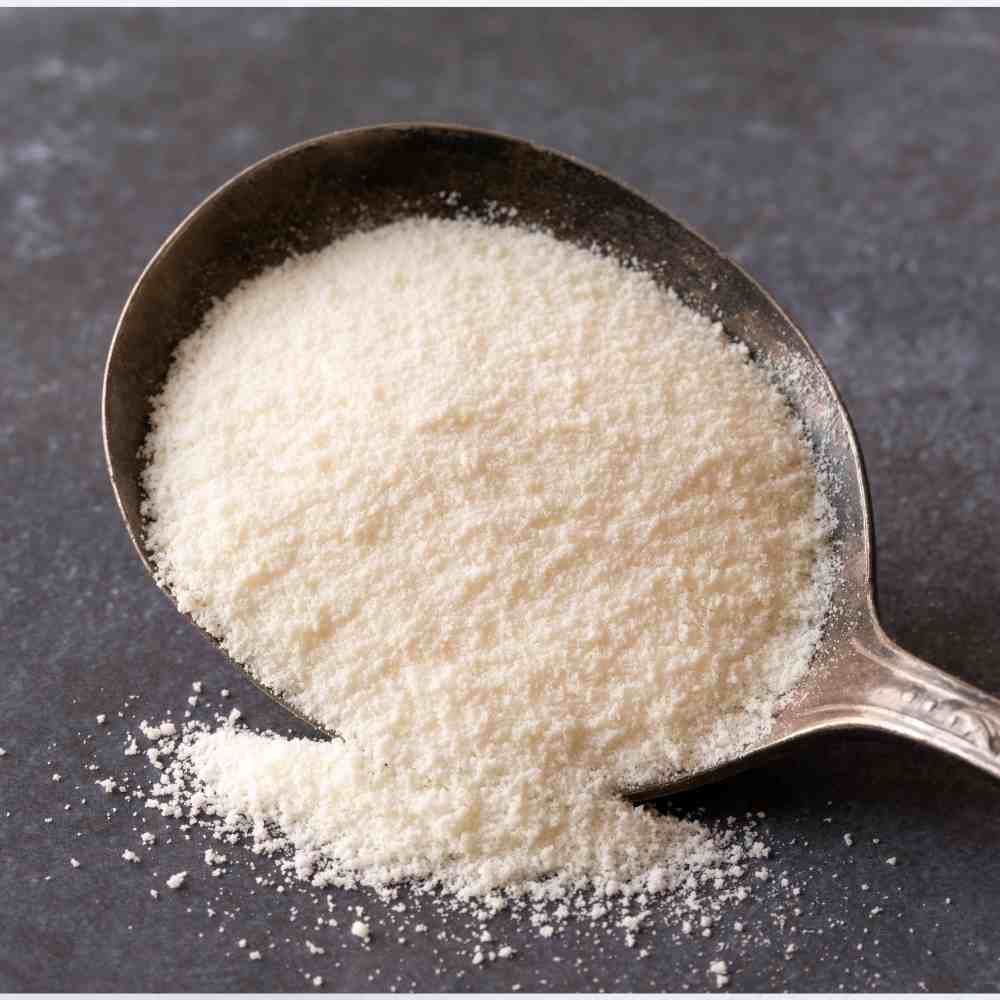
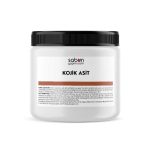
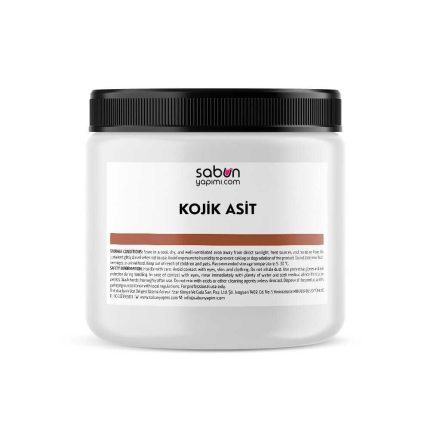
Kojic Acid 20 g – Skin Brightening Active for Cosmetic Formulations
$26,00
Kojic Acid is a water-soluble cosmetic active used in professionally developed skin-brightening formulations. It is valued for its role in helping improve the appearance of uneven skin tone and dark spots. Suitable for compatible face and hand-care formulations, subject to applicable concentration limits, stability testing and cosmetic safety requirements.
Kojic Acid 20 g – Skin Brightening Active for Cosmetic Formulations
Cosmetic Ingredient for Even-Looking Skin Tone & Brightening Formulations
Kojic Acid is a cosmetic active widely used in professionally developed skin-brightening products.
It is valued for its ability to interact with tyrosinase, an enzyme involved in melanin production, making it useful in formulations designed to improve the appearance of uneven skin tone.
Kojic Acid is particularly relevant to cosmetic products designed for:
- Brighter-looking skin
- More even-looking skin tone
- The appearance of dark spots
- Dull-looking skin
- Skin-tone uniformity
- Targeted facial skincare
Because Kojic Acid requires careful formulation and concentration control, it is primarily recommended for professional cosmetic developers.
What Is Kojic Acid?
Kojic Acid is an organic compound naturally produced by certain microorganisms during fermentation.
It is associated with the fermentation activity of selected fungal species, including Aspergillus oryzae.
Commercial Kojic Acid can be manufactured using controlled fermentation and purification processes.
INCI Name: Kojic Acid
Chemical Formula: C6H6O4
CAS Number: 501-30-4
EC Number: 207-922-4
Primary Cosmetic Function: Skin Brightening / Antioxidant
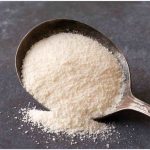
Typical Appearance: White to Off-White Crystalline Powder
The exact purity and physical specifications should be verified against the supplier’s Certificate of Analysis.
How Does Kojic Acid Work?
Kojic Acid is known for its interaction with tyrosinase, an enzyme involved in melanin synthesis.
Melanin is the natural pigment that contributes to skin color.
By influencing this process, Kojic Acid can support cosmetic formulations designed to improve the appearance of uneven pigmentation.
The actual visible effect depends on:
- Active concentration
- Finished-product formulation
- Application frequency
- Skin characteristics
- Product stability
- Exposure to sunlight
Results vary between individuals and should not be guaranteed.
Skin Brightening Applications
Kojic Acid is commonly used in cosmetic formulations focused on:
- Uneven-looking skin tone
- Dull complexion
- Visible dark spots
- Uneven facial pigmentation
- Skin radiance
Appropriate cosmetic wording includes:
“Helps improve the appearance of uneven skin tone.”
or
“Supports a brighter and more uniform-looking complexion.”
It should not be marketed as permanently removing pigmentation, curing melasma or eliminating acne scars without the relevant evidence and regulatory authorization.
Use in Facial Creams
Kojic Acid may be incorporated into appropriately formulated facial creams intended to support a more even-looking complexion.
A successful formula requires consideration of:
- Active concentration
- Final pH
- Emulsion stability
- Ingredient compatibility
- Antioxidant protection
- Preservative system
- Packaging
The finished product must comply with the cosmetic regulations of the intended sales market.
Use in Facial Serums
Kojic Acid can be used in compatible water-based or emulsified serum systems.
It may be combined with suitable cosmetic ingredients such as:
- Glycerin
- Panthenol
- Betaine
- Selected botanical extracts
- Compatible humectants
- Appropriate stabilizing ingredients
Compatibility and irritation potential must be evaluated for the complete formulation.
Combining multiple strong cosmetic actives does not automatically produce better results.
Use in Hand-Care Products
Kojic Acid may also be used in specifically developed hand-care formulations.
These products may be positioned around:
- Uneven-looking hand skin tone
- Dark spot appearance
- Brighter-looking skin
- Improved skin-tone uniformity
The concentration and product type must comply with the applicable market regulations.
European Union Cosmetic Regulation
Kojic Acid is regulated under Annex III, Entry 375 of Regulation (EC) No 1223/2009, as amended by Commission Regulation (EU) 2024/996.
For the European Union, the permitted conditions specify:
Product Category: Face and Hand Products
Maximum Concentration: 1% in the ready-to-use cosmetic product
The permitted-use conditions must be followed when developing products intended for the EU market.
This restriction should not be interpreted as general authorization to use Kojic Acid in every cosmetic product category.
For products outside the specified face and hand categories, obtain a market-specific regulatory assessment before proceeding.
Recommended Usage Considerations
There is no universal percentage suitable for every cosmetic formulation or market.
For compliant EU face and hand products, formulators must remain within the applicable maximum concentration of:
1% Kojic Acid in the finished product.
Lower concentrations may be evaluated according to:
- Product design
- Raw-material purity
- Skin compatibility
- Target consumer
- Finished-product stability
- Cosmetic safety assessment
Do not use the original recommendation of 1–3% for soap or 0.5–2% for skincare as a universal rule.
Kojic Acid in Soap Making
Although Kojic Acid is sometimes marketed as an ingredient for skin-brightening soap, traditional soap presents important technical limitations.
Cold process soap is naturally alkaline, while Kojic Acid is sensitive to certain formulation conditions, particularly elevated pH and oxidation.
Consequently, traditional soap is not generally the preferred system for maximizing the stability or performance of Kojic Acid.
Cold Process Soap
Cold process soap exposes ingredients to:
- Sodium hydroxide
- Strongly alkaline conditions
- Saponification chemistry
- Potential heat generation
- Extended curing time
These conditions can affect Kojic Acid stability and lead to undesirable color changes.
Simply adding Kojic Acid at trace does not guarantee that the ingredient will remain stable or provide measurable skin-brightening benefits.
For professional product development, a compatible, appropriately regulated formulation should be selected instead.
Melt & Pour Soap
Melt and pour soap bases are already saponified, but they are still generally alkaline.
Adding Kojic Acid to these bases may cause:
- Discoloration
- Reduced ingredient stability
- Changes in appearance
- Formulation incompatibility
It is therefore not appropriate to recommend a standard percentage without dedicated compatibility, safety and regulatory evaluation.
Kojic Acid vs. Kojic Acid Dipalmitate
These are two different cosmetic ingredients.
Kojic Acid
- Water-soluble
- Typically supplied as crystalline powder
- Sensitive to oxidation and unfavorable pH conditions
- Used in skin-brightening cosmetic formulations
Kojic Acid Dipalmitate
- Oil-soluble derivative
- Different chemical structure
- Different processing and solubility characteristics
- Different safety and regulatory considerations
Kojic Acid Dipalmitate should not automatically be treated as interchangeable with Kojic Acid.
The EU SCCS assessment for Kojic Acid does not automatically establish the safety of its derivatives.
Solubility
Kojic Acid is soluble in water.
It is typically incorporated into suitable aqueous cosmetic systems.
Its exact solubility depends on:
- Temperature
- Concentration
- Solvent system
- Other dissolved ingredients
The material should be completely incorporated before the finished product is evaluated.
Formulation pH
Kojic Acid is sensitive to pH conditions.
Its stability is generally more favorable in appropriately designed mildly acidic formulations than in strongly alkaline systems.
A practical formulation may be developed in a mildly acidic range, but the exact target pH must be established by laboratory testing and supplier recommendations.
Do not assign a universal stability range to every Kojic Acid formulation.
Oxidation & Discoloration
Kojic Acid can undergo oxidation and discoloration during storage.
Possible appearance changes include:
- Yellowing
- Orange coloration
- Brown discoloration
Factors that may accelerate instability include:
- Light exposure
- Oxygen
- Elevated temperatures
- Alkaline pH
- Trace metal contamination
- Incompatible formulation ingredients
Product color changes may indicate degradation and should be investigated through appropriate quality-control testing.
Formulation Stability
Professional formulations may consider:
- Suitable chelating agents
- Compatible antioxidant systems
- Controlled pH
- Low-metal processing conditions
- Reduced oxygen exposure
- Light-protective packaging
No stabilizing ingredient can guarantee indefinite stability.
The complete formulation must be evaluated through appropriate testing.
Processing Recommendations
For professional cosmetic formulation:
- Confirm the raw-material identity and purity.
- Establish the permitted concentration for the target market.
- Incorporate Kojic Acid into an appropriate compatible aqueous phase.
- Avoid unnecessary prolonged heat exposure.
- Minimize excessive air incorporation.
- Adjust and verify final formulation pH.
- Complete stability, microbiological and packaging compatibility testing.
The exact manufacturing procedure must follow the validated product formulation and raw-material TDS.
Packaging Recommendations
Because Kojic Acid can be sensitive to light and oxidation, suitable packaging may include:
- Opaque containers
- Amber packaging
- Airless dispensers
- Well-sealed cosmetic packaging
Packaging should be selected through compatibility and stability testing.
Kojic Acid & Sensitive Skin
Kojic Acid is not automatically suitable for every skin type.
Some individuals may experience:
- Skin irritation
- Redness
- Itching
- Contact sensitivity
Formulations intended for sensitive skin require particular attention to active concentration, application instructions and finished-product safety.
Weakened Skin Barrier
Extra caution is necessary when using Kojic Acid in products intended for recently exfoliated, irritated or damaged skin.
A weakened skin barrier may increase ingredient penetration and alter the product’s safety profile.
Avoid use on compromised skin unless appropriately evaluated by a qualified professional.
Sun Protection
Kojic Acid is not a sunscreen.
It does not provide SPF or UVA/UVB protection.
Consumers using skin-brightening products should follow appropriate sun-protection practices, including broad-spectrum sunscreen and limiting excessive UV exposure.
Sun protection is particularly important when addressing the appearance of uneven pigmentation.
Cosmetic Claims
Appropriate product positioning includes:
- Skin brightening
- More even-looking complexion
- Improved appearance of dark spots
- Skin-tone uniformity
- Radiance-focused skincare
Avoid unsupported claims such as:
- Permanently removes pigmentation
- Cures melasma
- Eliminates acne scars
- Guarantees skin whitening
- Suitable for all sensitive skin
- Produces results without irritation
Finished-product claims should be based on appropriate substantiation.
Product Details
Product Name: Kojic Acid
INCI Name: Kojic Acid
CAS Number: 501-30-4
EC Number: 207-922-4
Chemical Formula: C6H6O4
Weight: 20 g
Typical Form: Crystalline Powder
Typical Color: White to Off-White
Water Solubility: Soluble
Primary Application: Skin-Brightening Cosmetic Formulations
Purity: Refer to Supplier COA
Purity & Cosmetic Grade
Only describe the product as:
100% Pure Kojic Acid
if the actual supplied batch meets that specification.
Before commercial formulation, verify:
- Purity
- Raw-material identification
- Impurity limits
- Heavy metals
- Physical appearance
- Microbiological specifications where applicable
- SDS
- TDS
- COA
The product should be suitable for the intended cosmetic application.
Kojic Acid Is Not a Preservative
Kojic Acid should not be treated as an antimicrobial preservative for cosmetic formulations.
Water-containing products require an appropriate preservation strategy.
A finished formula may require:
- Preservative system
- Microbiological testing
- Preservative efficacy testing
- Good Manufacturing Practice
Raw Material Safety
Concentrated Kojic Acid is not a finished skincare product.
During handling:
- Avoid direct eye contact.
- Avoid inhaling dust.
- Use suitable protective gloves.
- Wear eye protection during professional formulation.
- Avoid ingestion.
- Keep away from children.
- Follow the supplier SDS.
Do Not Apply Concentrated Raw Material Directly to Skin
Pure Kojic Acid powder should not be applied directly to the face or body.
It must first be incorporated into a properly developed and safety-assessed cosmetic formulation.
Storage
Store Kojic Acid:
- In tightly closed packaging
- In a cool and dry location
- Protected from direct sunlight
- Away from excessive heat
- Away from moisture
- Protected from unnecessary air exposure
- Away from incompatible chemicals
Follow the manufacturer’s recommended storage conditions.
Wholesale, Private Label & Contract Manufacturing
We supply Kojic Acid, cosmetic actives, antioxidants, humectants and other cosmetic formulation raw materials in wholesale quantities for laboratories, cosmetic brands, formulators, retailers and professional manufacturers.
We also provide custom cosmetic formulation development services, including the design of skin-brightening products with suitable active systems, stability strategies, target specifications and technical documentation.
Private label and contract manufacturing options for selected soap and cleansing products can be evaluated according to product type, production capability and target-market regulations.
For bulk Kojic Acid orders, custom cosmetic formulation development, private label or contract manufacturing inquiries, please contact us with your required raw-material grade, product concept, target market, packaging requirements and estimated quantity.
KARGO & İADE
SabunYapimi.com olarak müşteri memnuniyetini ön planda tutuyoruz. Siparişlerinizin güvenli ve hızlı bir şekilde size ulaşmasını sağlamak için en iyi lojistik firmalarıyla çalışıyoruz. Ayrıca, herhangi bir sebepten dolayı ürününüzden memnun kalmazsanız, iade ve değişim sürecimizi kolay ve hızlı hale getirdik.
Kargo Firması & Gönderim Süresi
- Siparişleriniz, ödeme onaylandıktan sonra 1-2 iş günü içinde kargoya verilir.
- Kargo firmaları: [Aras & Yurtiçi]
- Ortalama teslimat süresi 2-3 iş günü arasındadır.
Kargo Ücretleri & Ücretsiz Kargo Şartları
- [1000 TL ve üzeri alışverişlerde kargo ücretsizdir.]
- Standart kargo ücreti sipariş aşamasında ödeme sayfasında belirtilir.
Kargo Takibi
Siparişiniz kargoya verildiğinde e-posta veya SMS ile takip numarası paylaşılır. Kargo takip bağlantısını kullanarak siparişinizi kolayca takip edebilirsiniz.
📌 Siparişiniz belirlenen süre içinde ulaşmazsa, bize aşağıdaki iletişim bilgileriyle ulaşabilirsiniz:
📧 E-Posta: sabunyapimi@gmail.com
📞 WhatsApp Destek: +90 532 059 15 71
Geri Ödeme ve İade Süreçleri
Geri Ödeme ve İade Politikası Sayfamızı Okuyun