
 Soap Bases
 Scents
 Oils
Oils Dyes
Dyes Equipment and Accessories
 Cosmetic Clays
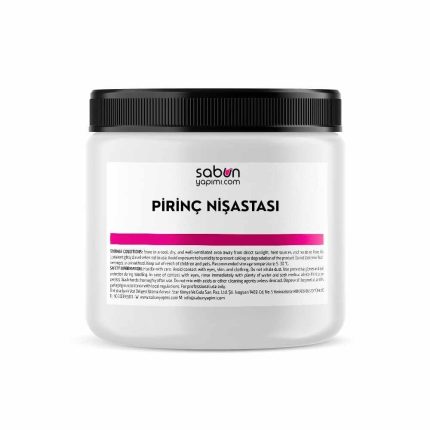
PEG-40 Hydrogenated Castor Oil (HCO-40) 250 g – Cosmetic Solubilizer & Emulsifier
$18,00
PEG-40 Hydrogenated Castor Oil (HCO-40) is a versatile nonionic solubilizer and emulsifier used in cosmetic and personal-care formulations. It helps incorporate fragrances, essential oils and selected oil-soluble ingredients into water-based products while supporting uniform distribution and formulation stability. Ideal for body sprays, facial mists, shampoos, shower gels, liquid cleansers, micellar waters and selected cosmetic emulsions. Its typical HLB value is approximately 14–16, depending on the commercial grade.
PEG-40 Hydrogenated Castor Oil (HCO-40) 250 g
Nonionic Solubilizer & Emulsifier for Essential Oils, Fragrances and Cosmetics
PEG-40 Hydrogenated Castor Oil, commonly referred to as HCO-40, is a versatile nonionic surfactant used as a solubilizer, emulsifier and formulation aid in cosmetic and personal-care products.
It is particularly valuable in formulations that require small amounts of fragrances, essential oils or other compatible lipophilic ingredients to be incorporated into water-based systems.
PEG-40 Hydrogenated Castor Oil is frequently used in:
- Body sprays and cosmetic mists
- Facial toners
- Fragrance-containing products
- Shampoos
- Shower gels
- Liquid hand cleansers
- Micellar waters
- Facial cleansing solutions
- Makeup removers
- Cosmetic creams and lotions
- Selected bath products
- Water-based fragrance systems
Its relatively high hydrophilic-lipophilic balance makes it especially useful in aqueous cosmetic applications.
What Is PEG-40 Hydrogenated Castor Oil?
PEG-40 Hydrogenated Castor Oil is a chemically modified derivative of hydrogenated castor oil.
It is produced by reacting hydrogenated castor oil with ethylene oxide.
The resulting material contains hydrophilic polyethylene glycol structures associated with the hydrogenated castor oil components.
This combination allows the ingredient to interact with both aqueous and lipophilic materials.
INCI Name: PEG-40 Hydrogenated Castor Oil
Alternative Names: HCO-40, PEG-40 HCO, Polyoxyl 40 Hydrogenated Castor Oil
CAS Number: 61788-85-0
Ingredient Family: Ethoxylated Hydrogenated Vegetable Oil
Surfactant Type: Nonionic
Typical HLB: Approximately 14–16
Primary Functions: Solubilizer / Emulsifier / Surfactant / Dispersing Agent
The exact composition and physical properties depend on the commercial grade.
Main Cosmetic Functions
PEG-40 Hydrogenated Castor Oil is commonly selected for:
- Essential oil solubilization
- Fragrance incorporation
- Oil-in-water emulsification
- Dispersion of selected lipophilic ingredients
- Improving formulation uniformity
- Supporting the clarity of compatible aqueous products
- Incorporating selected cosmetic actives
- Supporting certain cleansing systems
Its primary value lies in its surface-active and solubilizing characteristics.
How Does PEG-40 Hydrogenated Castor Oil Work?
PEG-40 Hydrogenated Castor Oil contains both hydrophilic and lipophilic structural regions.
The hydrophilic regions interact with water.
The lipophilic regions interact with certain oils and other hydrophobic substances.
In suitable aqueous formulations, the material can form micellar structures that help incorporate compatible oil-soluble ingredients.
This can help produce more uniform products and reduce visible oil separation.
However, not all oil-soluble substances can be fully solubilized at every concentration.
Formulation testing is essential.
What Is HLB?
HLB stands for Hydrophilic-Lipophilic Balance.
It is a classification system used to describe the relative hydrophilic and lipophilic characteristics of certain surfactants.
PEG-40 Hydrogenated Castor Oil typically has an HLB value of approximately:
14–16
This indicates a relatively hydrophilic emulsifying and solubilizing ingredient.
Its characteristics make it useful in oil-in-water formulations and aqueous solubilization systems.
The exact HLB value should be verified from the supplier’s technical specifications.
Essential Oil Solubilizer
One of the most important applications of PEG-40 Hydrogenated Castor Oil is essential oil solubilization.
Essential oils are complex mixtures of volatile organic compounds.
Many essential oil components have limited solubility in water.
When incorporated without a suitable solubilizer, they may produce:
- Floating oil droplets
- Cloudiness
- Layer separation
- Uneven fragrance distribution
- Unstable product appearance
PEG-40 Hydrogenated Castor Oil may help overcome these problems in properly developed formulations.
How to Solubilize Essential Oils
A common formulation approach is to prepare a premix containing the essential oil and PEG-40 Hydrogenated Castor Oil.
General Procedure
- Accurately weigh the required fragrance or essential oil.
- Add a suitable amount of PEG-40 Hydrogenated Castor Oil.
- Mix until the premix becomes uniform.
- If necessary, use gentle warming according to the supplier’s processing guidance.
- Incorporate the premix into the aqueous phase with controlled stirring.
- Continue mixing until the desired appearance is achieved.
- Allow the product to equilibrate.
- Evaluate clarity and phase stability.
- Complete appropriate storage and compatibility testing.
Different essential oils may require substantially different solubilizer concentrations.
PEG-40 Hydrogenated Castor Oil to Essential Oil Ratio
There is no universal solubilizer-to-oil ratio suitable for every formulation.
For preliminary laboratory screening, formulators may evaluate weight ratios such as:
2:1, 3:1 or 4:1
These represent parts of PEG-40 Hydrogenated Castor Oil per part of fragrance or essential oil.
For example, a preliminary screening mixture containing:
- 1 part essential oil
- 3 parts PEG-40 Hydrogenated Castor Oil
may be evaluated for clarity and stability.
This is only an experimental starting point.
The actual ratio depends on:
- Essential oil composition
- Fragrance concentration
- Water content
- Alcohol concentration
- Other solubilizers
- Electrolytes
- Temperature
- Desired transparency
Some fragrances may require a different ratio or another solubilization system.
Does PEG-40 HCO Make Essential Oils Water-Soluble?
PEG-40 Hydrogenated Castor Oil does not chemically transform essential oils into water-soluble substances.
Instead, it helps solubilize or disperse compatible lipophilic materials in aqueous systems.
Depending on the formulation, the finished product may appear:
- Transparent
- Translucent
- Slightly cloudy
- Emulsified
Complete transparency is not guaranteed.
Use in Body Sprays
PEG-40 Hydrogenated Castor Oil is a useful ingredient in water-based cosmetic body sprays.
It may help incorporate selected fragrance compositions without substantial visible oil separation.
Potential applications include:
- Fragranced body mists
- Cosmetic refreshing sprays
- Body-care sprays
- Selected scented skincare products
The formulation must be evaluated for skin compatibility, fragrance safety and appropriate preservation.
Use in Facial Mists & Toners
PEG-40 Hydrogenated Castor Oil may be used in selected water-based facial products.
Examples include:
- Facial toners
- Hydrating mists
- Botanical skincare waters
- Cosmetic refreshing sprays
- Fragranced facial products
Its role is generally to incorporate compatible lipophilic ingredients.
It is not the primary moisturizing ingredient.
Facial products should be developed with suitable consideration of fragrance sensitivity and intended application.
Use in Perfume Formulations
PEG-40 Hydrogenated Castor Oil can help incorporate certain fragrance materials into water-containing or water-alcohol systems.
It may be useful for:
- Water-based perfume concepts
- Fragrance sprays
- Cosmetic body mists
- Selected low-alcohol fragrance systems
However, solubilization is different from fragrance fixation.
Does PEG-40 HCO Improve Fragrance Longevity?
PEG-40 Hydrogenated Castor Oil can help maintain a more uniform distribution of compatible fragrance materials in a formulation.
However, this does not automatically mean that the fragrance will last longer on skin.
Fragrance longevity depends on:
- Fragrance composition
- Volatility of aroma molecules
- Solvent system
- Application method
- Product format
- Skin and environmental conditions
A suitable product claim is:
“Helps solubilize and uniformly distribute fragrance ingredients.”
It should not automatically be described as a long-lasting fragrance fixative.
Use in Shampoos
PEG-40 Hydrogenated Castor Oil may be incorporated into suitable shampoo formulations.
It can help introduce:
- Fragrance oils
- Essential oils
- Selected lipophilic actives
- Compatible fragrance blends
Possible product concepts include:
- Daily shampoos
- Mild cleansing shampoos
- Fragranced shampoos
- Specialty hair-care cleansers
- Selected clear shampoo systems
The effect on foam, viscosity and product transparency must be tested.
Does PEG-40 HCO Increase Shampoo Foam?
PEG-40 Hydrogenated Castor Oil is a nonionic surfactant.
However, it is not generally selected as the primary foam-building ingredient.
In shampoos, the main foaming system may include:
- Sodium Laureth Sulfate
- Cocamidopropyl Betaine
- Decyl Glucoside
- Coco Glucoside
- Sodium Cocoyl Glutamate
PEG-40 Hydrogenated Castor Oil may influence foam behavior depending on its concentration and compatibility with the surfactant system.
It should not automatically be marketed as a foam booster.
Use in Shower Gels
PEG-40 Hydrogenated Castor Oil is widely applicable to selected shower gel and body wash formulations.
Its main purpose is often to help incorporate oily fragrance ingredients into the aqueous surfactant system.
It can support:
- Fragrance dispersion
- Formulation uniformity
- Solubilization of selected ingredients
- Development of clear or translucent cleansing systems
Excessive use may affect viscosity, foam or sensory properties.
Use in Liquid Hand Cleansers
The ingredient may be useful in selected liquid hand-cleansing products.
It can help distribute fragrances and selected oil-soluble additives.
It does not replace the product’s main cleansing surfactants.
It is also not an antimicrobial preservative or disinfectant active.
Use in Micellar Water
PEG-40 Hydrogenated Castor Oil may be incorporated into suitable micellar cleansing systems.
Its nonionic surfactant properties can support the incorporation of selected oily substances.
Possible applications include:
- Micellar cleansing waters
- Makeup-removal solutions
- Facial cleansing waters
- Gentle cleansing concepts
The finished product must be evaluated for cleansing performance, irritation potential and preservation.
Products intended for the eye area require dedicated safety assessment.
Use in Makeup Removers
PEG-40 Hydrogenated Castor Oil can be considered in certain makeup-removal formulations.
Its surfactant properties may help disperse selected oily components when water is present.
However, makeup removal depends on the complete cleansing system.
The ingredient should not automatically be expected to remove every type of waterproof makeup.
Use in Creams & Lotions
PEG-40 Hydrogenated Castor Oil can also function as an emulsifier in suitable oil-in-water systems.
Potential applications include:
- Facial lotions
- Body lotions
- Cosmetic creams
- Lightweight emulsions
- Specialty skincare products
It may be used with compatible emulsifiers and stabilizers to achieve the desired formulation performance.
Is PEG-40 HCO a Complete Emulsifying System?
Not necessarily.
Although PEG-40 Hydrogenated Castor Oil has emulsifying properties, it does not automatically replace every component of a complete cream emulsification system.
A professional formulation may also require:
- Co-emulsifiers
- Fatty alcohols
- Thickening agents
- Emulsion stabilizers
- Suitable oil-phase ingredients
- Appropriate manufacturing conditions
The correct emulsification system depends on the oil phase and desired product texture.
Use in Sunscreen Formulations
PEG-40 Hydrogenated Castor Oil may serve as an emulsification or solubilization aid in certain professionally developed sunscreen products.
However:
PEG-40 Hydrogenated Castor Oil is not a UV filter.
It does not independently provide SPF or UVA/UVB protection.
The sunscreen’s performance and water resistance must be confirmed through the required finished-product testing.
PEG-40 Hydrogenated Castor Oil in Soap Making
This ingredient may be useful in certain specialty soap and cleansing formulations.
However, conventional cold process soap and modern water-based cleansing systems have different chemical characteristics.
PEG-40 Hydrogenated Castor Oil is generally more useful in:
- Liquid cleansing formulations
- Shower gels
- Syndet systems
- Specialty water-based products
than in traditional strongly alkaline soap.
Cold Process Soap
Traditional cold process soap is manufactured using oils and sodium hydroxide.
The mixture is strongly alkaline during saponification.
PEG-40 Hydrogenated Castor Oil contains ester structures that may be affected by strongly alkaline conditions.
Therefore, it should not automatically be recommended for conventional cold process soap.
It does not replace:
- Saponifiable oils
- Sodium Hydroxide
- Potassium Hydroxide
- Correct soap recipe calculations
Melt & Pour Soap
PEG-40 Hydrogenated Castor Oil may be evaluated in selected compatible melt and pour soap bases.
However, adding extra surfactant or solubilizer can change:
- Bar hardness
- Transparency
- Foam
- Texture
- Moisture behavior
- Storage stability
Always follow the soap-base manufacturer’s recommended additive limits.
PEG-40 Hydrogenated Castor Oil vs. Polysorbate 80
Both ingredients are nonionic surfactants used in cosmetic formulations.
PEG-40 Hydrogenated Castor Oil
INCI: PEG-40 Hydrogenated Castor Oil
Typical functions:
- Fragrance solubilizer
- Essential oil solubilizer
- Oil-in-water emulsifier
- Cosmetic dispersing agent
Typical HLB: 14–16
Polysorbate 80
INCI: Polysorbate 80
Typical functions:
- Emulsifier
- Solubilizer
- Oil dispersing agent
- Bath-product formulation aid
Typical HLB: Approximately 15
Although their HLB values are similar, they have different chemical structures and may behave differently with a given fragrance or oil.
They should not automatically be substituted at the same concentration.
PEG-40 HCO vs. Polysorbate 20
Polysorbate 20 is another common fragrance solubilizer.
It is widely used in:
- Cosmetic mists
- Fragranced toners
- Facial sprays
- Selected water-based products
Both PEG-40 Hydrogenated Castor Oil and Polysorbate 20 can be useful in aqueous fragrance systems.
The more effective ingredient depends on the specific fragrance composition and formulation requirements.
PEG-40 Hydrogenated Castor Oil vs. Castor Oil
These materials are chemically different.
Castor Oil
INCI: Ricinus Communis (Castor) Seed Oil
A vegetable oil commonly used as an emollient and soap-making oil.
It is not freely miscible with water.
Hydrogenated Castor Oil
INCI: Hydrogenated Castor Oil
A chemically hydrogenated derivative of castor oil, commonly used for structuring and consistency modification.
PEG-40 Hydrogenated Castor Oil
A hydrogenated and ethoxylated castor oil derivative.
It has substantially different water-compatibility and surfactant properties.
These three materials should not be considered interchangeable.
PEG-40 Hydrogenated Castor Oil vs. PEG-40 Castor Oil
PEG-40 Hydrogenated Castor Oil is also different from PEG-40 Castor Oil.
The presence of the word Hydrogenated is important.
The ingredients differ in the chemical treatment of their oil-derived components.
These differences can affect:
- Physical appearance
- Compatibility
- Solubilization behavior
- Oxidative stability
- Emulsification performance
Always verify the complete INCI name before purchasing or formulating.
Typical Usage Levels
The required concentration depends on the commercial grade, application and total amount of oil-soluble ingredients.
General laboratory starting ranges may include:
Fragrance Solubilization
0.5–5%, depending on fragrance loading and required solubilizer ratio.
Body Sprays & Cosmetic Mists
1–5%, where justified by formulation needs.
Shampoos & Shower Gels
0.5–3%, as an initial solubilizer screening range.
Creams & Lotions
1–5%, depending on the complete emulsifying system.
Micellar Waters & Cleansing Solutions
0.2–2%, depending on the desired cleansing and solubilization performance.
These are preliminary formulation ranges, not universal legal limits or guaranteed effective concentrations.
The correct concentration must be based on the supplier TDS, ingredient compatibility, safety assessment and stability testing.
How to Use PEG-40 Hydrogenated Castor Oil
The manufacturing procedure depends on the selected product.
Fragrance-Containing Water-Based Products
A typical approach involves:
- Preparing a fragrance-solubilizer premix.
- Mixing until uniform.
- Adding the premix gradually to the water phase.
- Continuing controlled stirring.
- Allowing the product to equilibrate.
- Evaluating clarity and separation.
- Completing stability testing.
Creams & Lotions
In emulsified products, incorporate the ingredient according to the selected emulsification process.
Shampoos & Shower Gels
The ingredient may be premixed with the fragrance or incorporated at a validated manufacturing stage.
The correct procedure should minimize unnecessary foaming and changes in viscosity.
Processing Temperature
The processing temperature depends on the specific grade.
Some commercial PEG-40 Hydrogenated Castor Oil materials have a paste-like consistency at room temperature.
Gentle warming may make weighing and mixing easier.
However, temperature can also influence aqueous clarity because certain nonionic ethoxylated surfactants display cloud-point behavior.
Do not assume heating will always increase the transparency of the final product.
Follow the manufacturer’s processing recommendations.
Physical Appearance
Commercial PEG-40 Hydrogenated Castor Oil is commonly supplied as:
- White to yellowish paste
- Waxy or viscous material
- Turbid or partially fluid material
depending on grade and temperature.
It should not automatically be described as a perfectly clear, colorless liquid.
A liquid product may also be a diluted commercial blend containing other ingredients.
Water Solubility
PEG-40 Hydrogenated Castor Oil is generally water-compatible and can form aqueous solutions.
However, the appearance and clarity of the finished formulation depend on its composition.
The solubilization of fragrances is limited by the capacity of the specific surfactant system.
A clear aqueous solution of the raw material does not guarantee that every added oil will remain dissolved.
Is PEG-40 HCO Oil-Soluble?
PEG-40 Hydrogenated Castor Oil contains lipophilic portions that interact with oils and fragrances.
However, it is predominantly hydrophilic.
Its solubility and compatibility with pure oils vary.
It should not be described as freely miscible with every vegetable oil or cosmetic ester.
Formulation pH
There is no universal finished-product pH range that applies to all PEG-40 Hydrogenated Castor Oil applications.
The suitable pH depends on:
- Product type
- Commercial grade
- Complete formulation
- Other surfactants
- Processing temperature
- Storage conditions
Some manufacturers specify the pH of a defined aqueous solution of the raw material.
That specification is different from the allowable pH range of a finished cosmetic product.
Strongly acidic or strongly alkaline conditions may affect the ingredient’s ester structures over time.
Does PEG-40 HCO Improve Product Stability?
PEG-40 Hydrogenated Castor Oil may help improve the physical stability of compatible fragrance and oil dispersions.
However, it cannot independently guarantee:
- Long shelf life
- Oxidative stability
- Microbiological preservation
- Stable color
- Stable fragrance
- Compatibility with packaging
These characteristics must be evaluated separately.
Is PEG-40 Hydrogenated Castor Oil a Preservative?
No.
PEG-40 Hydrogenated Castor Oil is not a conventional antimicrobial preservative.
Water-based cosmetic formulations may still require an appropriate preservative system.
The finished product should be assessed using suitable microbiological and preservative efficacy testing.
Is PEG-40 HCO a Moisturizer?
PEG-40 Hydrogenated Castor Oil is primarily used as a solubilizer, emulsifier and surfactant.
It may influence the sensory characteristics of a cosmetic formulation.
However, it is not a conventional primary humectant such as:
- Glycerin
- Panthenol
- Sodium PCA
- Betaine
It should not automatically be marketed as providing long-lasting skin hydration or repairing the skin barrier.
Is PEG-40 Hydrogenated Castor Oil Natural?
PEG-40 Hydrogenated Castor Oil is derived partly from vegetable castor oil.
However, the manufacturing process involves chemical hydrogenation and ethoxylation.
Therefore, it is more accurately described as:
A nonionic, ethoxylated derivative of hydrogenated castor oil.
It should not automatically be labeled:
- 100% Natural
- Organic Certified
- Chemical-Free
- COSMOS Approved
- ECOCERT Certified
Claims regarding vegan status and manufacturing origin must be verified against the supplier’s documentation.
Cosmetic Safety
PEG-40 Hydrogenated Castor Oil belongs to the group of PEGylated oil ingredients evaluated for cosmetic applications.
Its safety depends on factors including:
- Raw-material purity
- Finished-product concentration
- Intended application
- Exposure conditions
- Formulation compatibility
- Potential irritation
- Manufacturing quality
The ingredient should be used in appropriately developed and safety-assessed products.
It should not automatically be described as hypoallergenic or non-irritating for every skin type.
Ethoxylation & Impurity Control
PEG-40 Hydrogenated Castor Oil is produced through ethoxylation chemistry.
As with other ethoxylated cosmetic ingredients, professional raw-material specifications may include controls for process-related impurities.
Relevant parameters may include:
- Residual Ethylene Oxide
- 1,4-Dioxane
- Acid Value
- Saponification Value
- Hydroxyl Value
- Water Content
- Appearance
The applicable limits depend on the raw-material grade and intended market.
High-quality cosmetic-grade materials should be supported by appropriate supplier documentation.
Product Details
Product Name: PEG-40 Hydrogenated Castor Oil
INCI Name: PEG-40 Hydrogenated Castor Oil
Alternative Names: HCO-40 / PEG-40 HCO
CAS Number: 61788-85-0
Weight: 250 g
Ingredient Type: Nonionic Surfactant
Typical HLB: 14–16
Typical Appearance: White to Yellowish Paste or Viscous Material
Primary Functions: Solubilizer / Emulsifier / Dispersing Agent
Water Compatibility: Water-Soluble or Water-Compatible, Depending on Grade
Applications: Body Sprays, Cosmetic Mists, Shampoos, Shower Gels, Liquid Cleansers, Micellar Waters, Creams and Lotions
Purity: Refer to Supplier COA
Physical Form: Confirm with Supplier TDS
Processing Requirements: Grade-Dependent
Storage Conditions: Refer to Supplier Documentation
Raw Material Purity
Only describe the product as:
100% Pure PEG-40 Hydrogenated Castor Oil
if the actual supplied material supports this claim.
Some commercial products are supplied as undiluted ethoxylated castor oil derivatives.
Others are sold as prepared blends containing solvents or additional formulation aids.
The composition of a commercial blend may differ from that of an undiluted product.
Always verify the full INCI declaration and active content.
Quality Control
Professional cosmetic manufacturers should verify:
- INCI name
- CAS identification
- Appearance
- Water content
- Acid value
- Hydroxyl value
- Saponification value
- Residual impurity specifications
- HLB information where available
- Cosmetic-grade suitability
- Safety Data Sheet (SDS)
- Technical Data Sheet (TDS)
- Certificate of Analysis (COA)
These specifications help ensure consistent formulation performance.
Stability Testing
Finished products containing PEG-40 Hydrogenated Castor Oil should be evaluated for:
- Clarity
- Phase separation
- Cloudiness
- Temperature stability
- Odor changes
- Color changes
- Viscosity changes
- Fragrance compatibility
- Packaging compatibility
- Microbiological quality
- Preservative effectiveness where required
For transparent water-based products, clarity should be evaluated at different storage temperatures.
A formula that appears transparent immediately after manufacturing may develop haze or separation during storage.
Safety Information
PEG-40 Hydrogenated Castor Oil is a concentrated formulation raw material.
During professional handling:
- Avoid direct eye contact.
- Avoid unnecessary prolonged skin contact.
- Wear suitable gloves where appropriate.
- Avoid ingestion.
- Follow the supplier SDS.
- Prevent contamination.
- Keep away from children and pets.
The concentrated material should not be treated as a ready-to-use cosmetic product.
Storage
Store PEG-40 Hydrogenated Castor Oil:
- In tightly closed packaging
- In a dry environment
- Protected from unnecessary moisture exposure
- Away from excessive heat
- Away from direct sunlight where recommended
- According to the supplier’s technical instructions
Some grades may change consistency or show reversible physical separation during storage.
If this occurs, only use the rehomogenization method recommended by the manufacturer.
Wholesale, Private Label & Contract Manufacturing
We supply PEG-40 Hydrogenated Castor Oil, Polysorbate 20, Polysorbate 80, cosmetic solubilizers, nonionic surfactants, emulsifiers and other formulation raw materials in wholesale quantities for cosmetic brands, soap makers, laboratories, manufacturers, retailers and professional formulators.
We also provide custom cosmetic formulation development services for body sprays, cosmetic mists, shampoos, shower gels, micellar waters, fragrance-containing skincare and other personal-care concepts.
Our formulation development services may include:
- Solubilizer selection
- Fragrance compatibility assessment
- Surfactant-system design
- Emulsifier selection
- Transparent formulation development
- Solubility optimization
- Stability recommendations
- Manufacturing procedures
- Quality-control specifications
- Supporting technical documentation
Private label and contract manufacturing services are available for selected liquid soaps, detergents, surface cleaners and other cleansing products within our manufacturing capabilities. Cosmetic formulation development projects can be evaluated separately from finished cosmetic manufacturing.
Custom formulations can be developed with different fragrance systems, solubilizers, surfactants, viscosities, ingredients, packaging formats and private label designs.
For bulk PEG-40 Hydrogenated Castor Oil orders, custom cosmetic formulation development, private label or contract manufacturing inquiries, please contact us with your required raw-material grade, quantity, intended application, product concept, packaging requirements, target market and estimated production volume.
KARGO & İADE
SabunYapimi.com olarak müşteri memnuniyetini ön planda tutuyoruz. Siparişlerinizin güvenli ve hızlı bir şekilde size ulaşmasını sağlamak için en iyi lojistik firmalarıyla çalışıyoruz. Ayrıca, herhangi bir sebepten dolayı ürününüzden memnun kalmazsanız, iade ve değişim sürecimizi kolay ve hızlı hale getirdik.
Kargo Firması & Gönderim Süresi
- Siparişleriniz, ödeme onaylandıktan sonra 1-2 iş günü içinde kargoya verilir.
- Kargo firmaları: [Aras & Yurtiçi]
- Ortalama teslimat süresi 2-3 iş günü arasındadır.
Kargo Ücretleri & Ücretsiz Kargo Şartları
- [1000 TL ve üzeri alışverişlerde kargo ücretsizdir.]
- Standart kargo ücreti sipariş aşamasında ödeme sayfasında belirtilir.
Kargo Takibi
Siparişiniz kargoya verildiğinde e-posta veya SMS ile takip numarası paylaşılır. Kargo takip bağlantısını kullanarak siparişinizi kolayca takip edebilirsiniz.
📌 Siparişiniz belirlenen süre içinde ulaşmazsa, bize aşağıdaki iletişim bilgileriyle ulaşabilirsiniz:
📧 E-Posta: sabunyapimi@gmail.com
📞 WhatsApp Destek: +90 532 059 15 71
Geri Ödeme ve İade Süreçleri
Geri Ödeme ve İade Politikası Sayfamızı Okuyun