
 Soap Bases
 Scents
 Oils
Oils Dyes
Dyes Equipment and Accessories
 Cosmetic Clays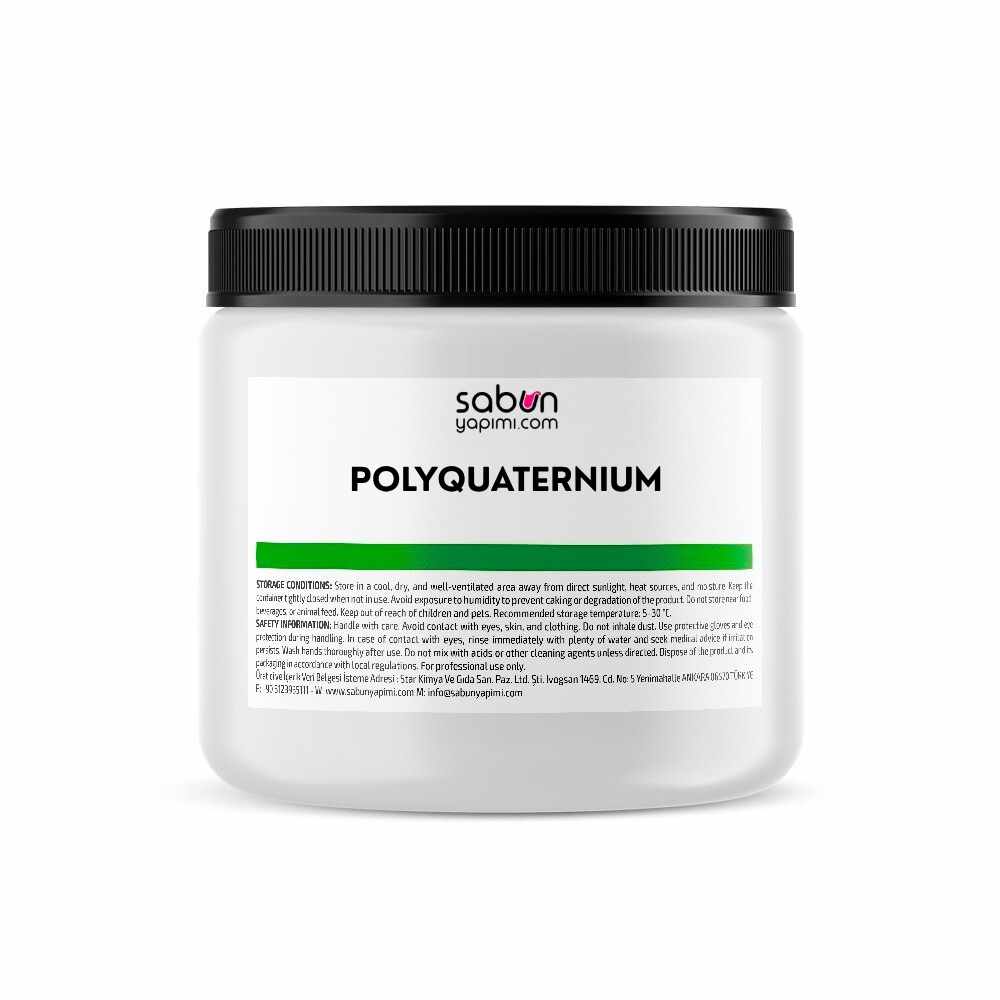
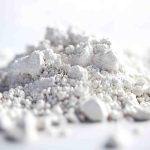
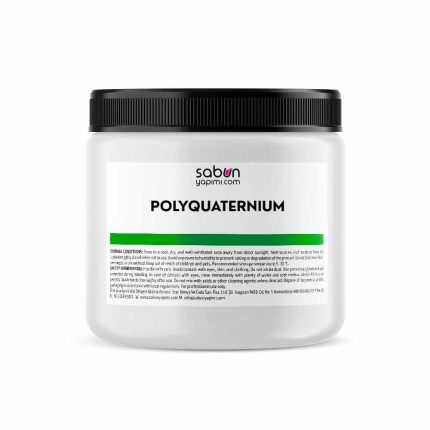
Polyquaternium-10 (PQ-10) 50 g – Hair Conditioning & Anti-Static Polymer
$28,00
Polyquaternium-10 (PQ-10) is a water-soluble, cationic cellulose-derived conditioning polymer used in shampoos, hair conditioners, body washes and personal-care formulations. It helps improve wet and dry combability, reduce static and frizz, and create a smooth, soft feel on hair and skin. It can also support viscosity and conditioning-agent deposition in compatible cleansing systems. Ideal for professional cosmetic and hair-care formulation development.
Polyquaternium-10 (PQ-10) 50 g – Hair Conditioning & Anti-Static Polymer
Water-Soluble Cationic Polymer for Shampoos, Conditioners & Personal-Care Formulations
Polyquaternium-10, commonly known as PQ-10, is a multifunctional cationic conditioning polymer widely used in cosmetic and personal-care formulations.
Derived from chemically modified cellulose, Polyquaternium-10 is especially valued for its ability to improve hair softness, reduce static electricity, enhance combability and contribute to a smooth, conditioned feel.
It is commonly incorporated into:
- Shampoos
- Hair conditioners
- Hair masks
- Leave-in conditioners
- Detangling sprays
- Shower gels
- Body washes
- Facial cleansers
- Liquid hand cleansers
- Shaving gels
- Selected creams and lotions
- Specialty hair styling products
Its water-soluble structure makes it particularly useful in water-based cleansing and conditioning formulations.
What Is Polyquaternium-10?
Polyquaternium-10 is a polymeric quaternary ammonium derivative of hydroxyethyl cellulose.
The original cellulose backbone is modified to introduce positively charged functional groups.
These positively charged groups give the polymer its cationic conditioning properties.
INCI Name: Polyquaternium-10
Alternative Names: PQ-10, Cationic Hydroxyethyl Cellulose
Common CAS Number: 68610-92-4
Ingredient Family: Cationic Cellulose Polymer
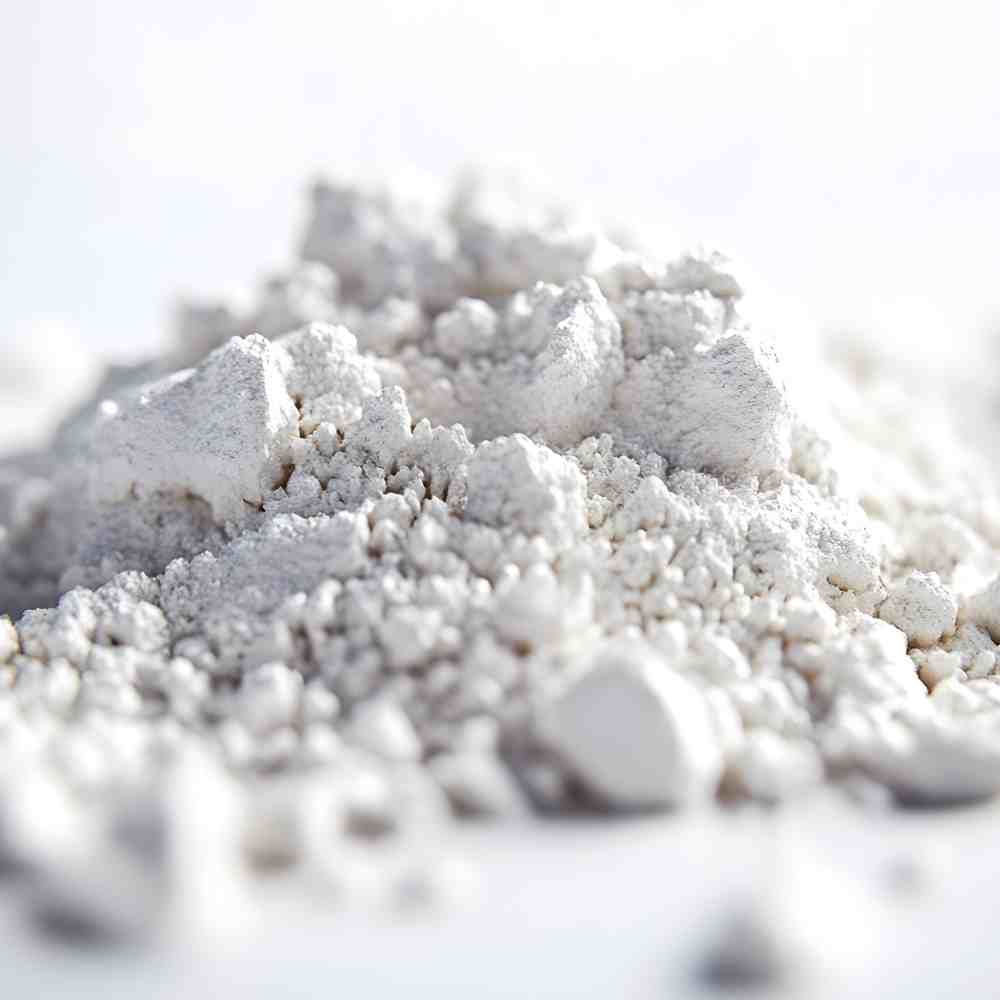
Typical Appearance: White to Off-White Powder
Solubility: Water-Soluble
Primary Functions: Hair Conditioning / Antistatic / Film Forming / Skin Conditioning / Rheology Modification
Commercial Polyquaternium-10 products are available in different molecular-weight and charge-density grades.
These differences can influence formulation viscosity, deposition and conditioning performance.
Main Benefits of Polyquaternium-10
Polyquaternium-10 is commonly used to support:
- Improved hair softness
- Easier wet combing
- Easier dry combing
- Reduced static electricity
- Frizz control
- Improved hair manageability
- Smoother hair feel
- Reduced friction between hair fibers
- Conditioning-agent deposition
- Soft skin feel
- Viscosity modification in selected formulations
The results depend on polymer grade, concentration and the complete cosmetic formulation.
How Does Polyquaternium-10 Work?
Polyquaternium-10 contains positively charged groups along its polymer structure.
Hair surfaces often exhibit negatively charged sites, particularly when the hair is damaged or weathered.
The cationic polymer can interact with these surfaces and contribute to the formation of a thin conditioning layer.
This may help reduce friction and improve hair manageability.
In properly developed formulations, it may also assist with the deposition of selected conditioning ingredients.
Hair Conditioning Properties
One of the primary applications of Polyquaternium-10 is hair conditioning.
It is useful in products designed to improve the appearance and feel of:
- Dry-feeling hair
- Tangled hair
- Frizzy hair
- Difficult-to-comb hair
- Chemically treated hair
- Damaged-looking hair
Its main benefits are related to surface conditioning and improved lubrication.
Does Polyquaternium-10 Repair Damaged Hair?
Polyquaternium-10 can improve the appearance and feel of damaged hair.
It may reduce friction between hair fibers and contribute to improved combing performance.
However, it does not permanently reconstruct the biological structure of damaged hair.
A more accurate cosmetic claim is:
“Helps improve the appearance, softness and manageability of damaged-looking hair.”
It should not automatically be claimed to permanently repair split ends or reverse chemical damage.
Anti-Static Properties
Static electricity can contribute to flyaway hair and difficult styling.
Polyquaternium-10 is commonly used as an antistatic ingredient because its cationic nature can help reduce the buildup and effects of static charge.
Potential cosmetic benefits include:
- Less flyaway appearance
- Improved smoothness
- Easier styling
- Better hair manageability
These effects depend on the formulation and environmental conditions.
Frizz Control
Polyquaternium-10 can help reduce the appearance of frizz by improving the surface feel and manageability of hair.
Its conditioning film may contribute to smoother hair fibers.
This can be particularly useful in:
- Anti-frizz shampoos
- Detangling conditioners
- Leave-in treatments
- Hair styling lotions
However, Polyquaternium-10 does not permanently straighten hair.
Wet & Dry Combability
Hair is particularly vulnerable to mechanical damage during brushing and combing.
In compatible formulations, Polyquaternium-10 can improve lubricity and reduce combing forces.
This makes it useful in products designed for:
- Easier detangling
- Improved wet combing
- Smoother dry combing
- Reduced friction
- More manageable hair
It is especially valuable in shampoo formulations where cleansing performance must be balanced with conditioning.
Polyquaternium-10 in Shampoo
Polyquaternium-10 for shampoo formulation is one of its most important commercial applications.
It is used in both conventional and selected sulfate-free cleansing systems.
Possible product concepts include:
- Daily shampoos
- Conditioning shampoos
- Two-in-one shampoos
- Sulfate-free shampoos
- Shampoos for dry-looking hair
- Anti-frizz shampoos
- Premium salon shampoos
Its primary contribution is conditioning rather than cleansing.
Does Polyquaternium-10 Clean Hair?
No.
Polyquaternium-10 is not a conventional primary cleansing surfactant.
It does not replace ingredients such as:
- Sodium Laureth Sulfate
- Cocamidopropyl Betaine
- Decyl Glucoside
- Coco Glucoside
- Sodium Cocoyl Glutamate
Instead, it works as a supporting conditioning polymer within the cleansing system.
Compatibility With Anionic Surfactants
Polyquaternium-10 is frequently used in shampoos containing anionic surfactants.
Examples include:
- Sodium Laureth Sulfate
- Sodium Lauryl Sulfate
- Sodium Lauroyl Sarcosinate
- Other compatible anionic cleansing agents
Although Polyquaternium-10 is positively charged and these surfactants are negatively charged, the combination can be intentionally used to obtain desirable conditioning behavior.
This interaction must be carefully controlled.
Coacervation & Conditioning Deposition
In certain shampoo systems, interactions between cationic polymers and anionic surfactants may promote the formation of polymer-surfactant complexes during dilution.
This process is often discussed in terms of coacervation.
Under suitable conditions, coacervation can help deliver conditioning materials onto hair during rinsing.
The behavior depends on:
- Polymer charge density
- Polymer molecular weight
- Surfactant composition
- Surfactant concentration
- Electrolytes
- Product dilution
- pH
- Other formulation ingredients
Incorrectly balanced systems may develop cloudiness, precipitation or undesirable viscosity changes.
Silicone Deposition Support
Certain Polyquaternium-10 grades can help improve the deposition of silicone conditioning ingredients from shampoo formulations.
For example, they may be evaluated with compatible silicone emulsions containing:
- Dimethicone
- Amodimethicone
- Other cosmetic conditioning silicones
This can be useful in developing two-in-one conditioning shampoos.
However, polymer grade and silicone compatibility must be validated.
Polyquaternium-10 in Sulfate-Free Shampoo
Polyquaternium-10 may also be used in selected sulfate-free cleansing systems.
These products may contain surfactants such as:
- Coco Glucoside
- Decyl Glucoside
- Sodium Cocoyl Glutamate
- Sodium Lauroyl Sarcosinate
- Cocamidopropyl Betaine
The polymer can contribute to the conditioning performance of the finished shampoo.
Its compatibility with each surfactant combination should be tested.
Use in Hair Conditioners
Polyquaternium-10 may be incorporated into compatible rinse-off hair conditioners.
It can contribute to:
- Improved combability
- Reduced static
- Smoother hair feel
- Easier detangling
- Improved sensory conditioning
The ingredient may complement cationic surfactants, fatty alcohols and silicone ingredients.
However, it is not a universal replacement for a complete conditioning-emulsion system.
Use in Hair Masks
Polyquaternium-10 can be evaluated in hair masks and intensive conditioning products.
It may help improve product texture and hair-conditioning performance.
Possible accompanying ingredients include:
- Cetearyl Alcohol
- Behentrimonium Chloride
- Panthenol
- Hydrolyzed Keratin
- Hydrolyzed Wheat Protein
- Dimethicone
- Cosmetic emollients
The final formula should be tested for viscosity, stability and hair feel.
Use in Leave-In Conditioners
Polyquaternium-10 is also useful in selected leave-in conditioning formulations.
Potential applications include:
- Detangling sprays
- Leave-in conditioning lotions
- Anti-frizz products
- Lightweight styling treatments
The polymer grade should be selected to avoid excessive tackiness, buildup or undesirable product viscosity.
Use in Hair Styling Products
Some Polyquaternium-10 grades have film-forming characteristics useful in hair styling.
They can contribute to:
- Hair manageability
- Soft styling
- Reduced flyaways
- Improved hair alignment
However, Polyquaternium-10 is not necessarily a replacement for dedicated strong-hold styling polymers.
Use in Shower Gels
Polyquaternium-10 may be incorporated into compatible shower gels.
It can help provide a softer and more conditioned after-feel.
Potential applications include:
- Conditioning body washes
- Creamy shower gels
- Mild-feeling cleansers
- Premium liquid cleansing products
The polymer may also influence viscosity and foam characteristics.
Use in Facial Cleansers
Polyquaternium-10 can be evaluated in selected facial cleansing formulations.
Its conditioning properties may help improve the sensory experience of cleansing.
However, it does not automatically make a cleanser:
- Non-irritating
- Hypoallergenic
- Suitable for every skin type
- Moisturizing for extended periods
The complete formula determines finished-product performance.
Use in Liquid Hand Cleansers
Polyquaternium-10 may be included in selected liquid hand-cleansing formulations where a soft after-feel is desired.
It can help improve conditioning properties without replacing the main surfactant system.
Suitable applications may include premium liquid hand washes and conditioning cleansers.
Use in Shaving Products
Polyquaternium-10 may contribute to lubricity and slip in compatible shaving formulations.
Potential benefits include:
- Smoother application
- Improved product spreadability
- Reduced friction
- A softer after-feel
However, a reduction in irritation or razor-related skin damage must be substantiated through finished-product testing.
Skin Conditioning Properties
Polyquaternium-10 is also used in some skin-care formulations.
It can contribute to:
- A smoother skin feel
- Softness
- Surface conditioning
- Improved texture
- Film formation
Its primary function is not equivalent to that of a conventional moisturizer or skin-repair active.
Is Polyquaternium-10 a Humectant?
Polyquaternium-10 is primarily a conditioning and film-forming polymer.
Some grades may contribute to a moisture-retaining sensory profile.
However, it should not automatically be regarded as a replacement for ingredients such as:
- Glycerin
- Panthenol
- Sodium PCA
- Betaine
- Hyaluronic Acid
In moisturizing formulations, Polyquaternium-10 may complement rather than replace these ingredients.
Use in Creams & Lotions
Selected Polyquaternium-10 grades can be used in suitable cosmetic creams and lotions.
They may contribute to:
- Texture modification
- Skin feel
- Conditioning
- Rheological behavior
However, cationic compatibility must be considered.
Certain anionic emulsifiers or thickening agents may interact unfavorably with Polyquaternium-10.
Professional compatibility testing is necessary.
Is Polyquaternium-10 a Thickener?
Polyquaternium-10 can contribute to viscosity in aqueous formulations.
However, thickening performance differs significantly between commercial grades.
Some grades are developed to provide stronger viscosity modification.
Others are selected mainly for their conditioning performance.
The final viscosity depends on:
- Polymer molecular weight
- Concentration
- Hydration
- Surfactants
- Electrolytes
- Temperature
- Formulation pH
Therefore, Polyquaternium-10 should not automatically be treated as a direct replacement for every cosmetic thickener.
Polyquaternium-10 vs. Hydroxyethyl Cellulose
Both materials are related to cellulose chemistry.
Hydroxyethyl Cellulose (HEC)
Commonly used as:
- Thickener
- Rheology modifier
- Film-forming ingredient
It is generally nonionic.
Polyquaternium-10
A chemically modified, cationic derivative of Hydroxyethyl Cellulose.
Commonly used as:
- Hair-conditioning polymer
- Antistatic agent
- Film former
- Rheology modifier
Its positive charge contributes to its conditioning properties.
These ingredients are not directly interchangeable.
Polyquaternium-10 vs. Polyquaternium-7
Both are popular cosmetic conditioning polymers, but they differ in chemical structure.
Polyquaternium-10
- Cationic cellulose derivative
- Commonly supplied as a powder
- Requires hydration
- Offers conditioning and viscosity modification
- Particularly useful in hair-care cleansing systems
Polyquaternium-7
- Synthetic cationic copolymer
- Commonly supplied as an aqueous solution
- Used in shampoos and personal-care cleansers
- Provides conditioning and antistatic properties
The correct selection depends on formulation requirements.
Polyquaternium-10 vs. Cationic Guar Gum
Another common conditioning ingredient is Guar Hydroxypropyltrimonium Chloride.
Both are cationic polymers, but their polymer backbones and performance characteristics differ.
Polyquaternium-10 is cellulose-derived.
Cationic Guar is derived from guar gum.
They may differ in:
- Viscosity
- Conditioning performance
- Deposition behavior
- Charge density
- Hydration
- Sensory characteristics
They should not automatically be substituted at the same concentration.
Polyquaternium-10 in Soap Making
Polyquaternium-10 is sometimes used in soap and cleansing-product development.
However, traditional soap and synthetic-detergent cleansing systems are chemically different.
For modern hair and skin cleansing formulations, Polyquaternium-10 is particularly useful in compatible syndet and surfactant systems.
Cold Process Soap
Traditional cold process soap is produced through saponification using fats, oils and sodium hydroxide.
Polyquaternium-10 is not necessary for the saponification reaction.
It does not replace:
- Soap-making oils
- Sodium Hydroxide
- Potassium Hydroxide
- Correct SAP calculations
The high alkalinity and complex ionic environment of traditional soap may affect polymer performance.
Any use in conventional cold process soap should be evaluated through appropriate formulation testing.
Melt & Pour Soap
Polyquaternium-10 may be evaluated in selected compatible soap bases, but it is not a standard additive required for melt and pour soap.
The polymer may affect:
- Transparency
- Texture
- Lather
- Viscosity during processing
- Finished-product appearance
Pre-hydration may be necessary depending on the raw-material grade and soap-base composition.
Typical Usage Levels
The correct concentration depends on the polymer grade and intended application.
General preliminary formulation ranges include:
Shampoos
0.2–0.5%
Hair Conditioners
0.2–0.5%, with higher amounts possible for certain grades and formulations.
Leave-In Hair Products
0.1–0.5%
Shower Gels & Body Washes
0.1–0.5%
Liquid Hand Cleansers
0.1–0.3%
Skin-Care Lotions
0.1–0.5%, subject to grade compatibility.
These percentages refer to the polymer raw material added to the final formula, assuming an appropriate powder grade.
If a diluted commercial solution is supplied, the amount must be adjusted according to its active content.
These values are formulation starting points, not universal regulatory limits or guarantees of performance.
How to Use Polyquaternium-10
Polyquaternium-10 is generally incorporated into the water phase.
Because it is commonly supplied as a powder, proper dispersion and hydration are essential.
General Incorporation Procedure
- Accurately weigh the required Polyquaternium-10.
- Prepare the appropriate amount of deionized water.
- Begin controlled agitation.
- Slowly sprinkle the polymer into the water.
- Avoid adding the powder in one large portion.
- Continue mixing until the particles are uniformly dispersed.
- Allow sufficient time for complete hydration.
- Confirm that the polymer solution is uniform.
- Add other ingredients according to the validated manufacturing procedure.
- Complete final pH adjustment, viscosity measurement and stability testing.
The precise procedure should follow the supplier’s technical guidance.
Why Hydration Is Important
Polyquaternium-10 particles absorb water and hydrate during processing.
If the powder is added too quickly, the outer surface of the particles may hydrate before the inner portion.
This can create lumps that are difficult to disperse.
These lumps are sometimes referred to as fish eyes.
Incomplete hydration may cause:
- Uneven product texture
- Visible particles
- Inconsistent viscosity
- Poor polymer distribution
- Reduced formulation reproducibility
Correct dispersion is an important part of successful manufacturing.
Preventing Clumping
To reduce clumping:
- Add the powder slowly.
- Maintain appropriate agitation.
- Avoid dumping the entire amount into the mixing vessel.
- Allow sufficient hydration time.
- Use a compatible pre-dispersion method if recommended by the supplier.
Some processes use a suitable humectant, such as glycerin, to help pre-disperse the powder before adding water.
However, this approach should be validated for the specific grade.
Hydration Temperature
Many Polyquaternium-10 grades can hydrate in water at room temperature.
Gentle heating may accelerate hydration for certain products.
However, there is no universal required hydration temperature.
Processing conditions should be selected according to:
- Supplier grade
- Polymer viscosity
- Batch size
- Mixing equipment
- Complete formulation
Avoid excessive heating unless supported by the technical documentation.
Can Polyquaternium-10 Be Added Directly to Shampoo?
Direct addition of dry Polyquaternium-10 to a finished surfactant blend may result in incomplete hydration or clumping.
For many powder grades, it is preferable to hydrate the polymer separately or early in the water phase before incorporating the surfactants.
The correct sequence should follow the manufacturer’s instructions.
pH Compatibility
The working pH range of Polyquaternium-10 depends on the commercial grade.
Many personal-care formulations containing PQ-10 are developed within mildly acidic to approximately neutral pH conditions.
A practical shampoo development range is often approximately:
pH 4.5–6.5
This is a common finished-shampoo formulation range, not a universal chemical stability limit for Polyquaternium-10.
The actual acceptable pH conditions must be confirmed with the supplier.
Anionic Compatibility
Although Polyquaternium-10 is used successfully with many anionic surfactants, incompatibilities can arise in certain systems.
Possible issues include:
- Turbidity
- Polymer-surfactant complex formation
- Precipitation
- Viscosity changes
- Reduced clarity
- Inconsistent conditioning deposition
The formulation should be evaluated at both full concentration and during dilution where relevant.
Does Polyquaternium-10 Cause Hair Buildup?
Cationic conditioning polymers can accumulate on hair under certain formulation and usage conditions.
However, the amount and characteristics of deposition depend on:
- Polymer grade
- Concentration
- Shampoo composition
- Hair type
- Washing frequency
- Other conditioning ingredients
Some modern Polyquaternium-10 grades are specifically developed for effective conditioning with limited unwanted buildup.
Higher concentrations do not automatically provide superior performance.
Does Polyquaternium-10 Increase Foam?
Polyquaternium-10 is not a primary foaming surfactant.
However, it may influence foam texture and consumer perception in some cleansing systems.
Its effects on:
- Foam volume
- Foam density
- Foam stability
- Rinseability
depend on the complete formulation.
These properties must be tested rather than assumed.
Is Polyquaternium-10 a Natural Ingredient?
Polyquaternium-10 is derived from cellulose, a naturally occurring polymer found in plants.
However, cellulose is chemically modified to produce the cationic conditioning polymer.
Therefore, the ingredient is more accurately described as:
Cellulose-Derived Cationic Conditioning Polymer
It should not automatically be marketed as:
- 100% Natural
- Unmodified Plant Extract
- Organic Certified
- COSMOS Approved
- Biodegradable
Natural-origin, biodegradability and certification claims require grade-specific supporting documentation.
Is Polyquaternium-10 Vegan?
Its cellulose backbone can originate from plant sources such as wood or cotton.
However, vegan certification should be confirmed using supplier documentation covering the complete manufacturing process.
A cellulose-derived origin alone does not establish formal vegan certification.
Is Polyquaternium-10 a Preservative?
No.
Polyquaternium-10 is a cationic polymer, but it is not a conventional antimicrobial preservative.
The presence of quaternary ammonium groups does not mean it can replace a cosmetic preservative system.
Water-containing formulations may require:
- Suitable antimicrobial preservatives
- Microbiological testing
- Preservative efficacy testing
- Good Manufacturing Practice
Polyquaternium-10 should not be used as a substitute for these preservation measures.
Cosmetic Safety
Polyquaternium-10 has been evaluated for use in cosmetic formulations.
Its suitability depends on:
- Raw-material quality
- Polymer concentration
- Product type
- Application area
- Intended exposure
- Formulation composition
- Consumer sensitivity
No cosmetic raw material should automatically be considered non-irritating or hypoallergenic in every formulation.
Product Details
Product Name: Polyquaternium-10
INCI Name: Polyquaternium-10
Alternative Name: PQ-10
Common CAS Number: 68610-92-4
Weight: 50 g
Ingredient Type: Cationic Conditioning Polymer
Polymer Origin: Chemically Modified Cellulose
Typical Appearance: White to Off-White Powder
Water Solubility: Water-Soluble After Appropriate Hydration
Primary Functions: Hair Conditioning / Antistatic / Film Forming / Skin Conditioning / Viscosity Modification
Main Applications: Shampoos, Hair Conditioners, Leave-In Hair Products, Body Washes and Cosmetic Cleansers
Viscosity Grade: Refer to Supplier TDS
Charge Density: Refer to Supplier Specifications
Active Content: Refer to Supplier COA
Recommended Dosage: Grade-Dependent
Different Commercial Grades
Polyquaternium-10 is available in several commercial grades.
For example, Dow offers multiple UCARE conditioning polymer grades with different viscosity and cationic characteristics.
These differences can affect:
- Conditioning intensity
- Polymer deposition
- Product viscosity
- Shampoo transparency
- Hair volume
- Sensory characteristics
- Compatibility with surfactants
The exact grade should be selected according to the formulation requirements.
Molecular Weight & Viscosity
Polyquaternium-10 is not a single uniform polymer molecule.
Different commercial products may contain polymers with different molecular weight distributions.
Molecular weight can influence:
- Viscosity development
- Hydration behavior
- Deposition
- Film formation
- Sensory performance
Therefore, two materials with the same INCI name may behave differently at the same usage level.
Raw Material Quality Control
Professional cosmetic manufacturers should verify:
- INCI identity
- CAS identification
- Appearance
- Moisture content
- Viscosity specification
- Charge density
- Nitrogen content where specified
- Polymer grade
- Recommended use level
- Microbiological quality
- Relevant impurity specifications
- Safety Data Sheet (SDS)
- Technical Data Sheet (TDS)
- Certificate of Analysis (COA)
These parameters are especially important when transferring formulations between suppliers.
Formulation Stability Testing
Finished products containing Polyquaternium-10 should be evaluated for:
- Appearance
- Clarity
- Viscosity
- pH stability
- Phase separation
- Polymer precipitation
- Temperature stability
- Dilution behavior
- Foam performance
- Hair-conditioning performance
- Packaging compatibility
- Microbiological quality
Special attention should be paid to the compatibility of the polymer with surfactants and electrolytes.
Safety Information
Polyquaternium-10 is supplied as a cosmetic formulation raw material.
During professional handling:
- Avoid inhaling fine powder.
- Avoid direct eye contact.
- Use appropriate gloves where necessary.
- Prevent airborne dust formation.
- Avoid ingestion.
- Follow the supplier SDS and TDS.
- Keep away from children and pets.
The concentrated polymer powder is not a ready-to-use cosmetic product.
Storage
Store Polyquaternium-10:
- In tightly closed packaging
- In a cool and dry environment
- Protected from moisture
- Away from direct sunlight
- Protected from contamination
- According to the manufacturer’s storage recommendations
Because the polymer is water-compatible, moisture exposure during storage may cause clumping.
Always reseal the package after use.
Wholesale, Private Label & Contract Manufacturing
We supply Polyquaternium-10, Polyquaternium-7, cosmetic conditioning polymers, surfactants, humectants, emulsifiers and other formulation raw materials in wholesale quantities for cosmetic brands, soap makers, laboratories, manufacturers and professional formulators.
We also provide custom cosmetic formulation development services for shampoos, hair conditioners, scalp-care products, body washes, liquid cleansers and other personal-care formulations.
Our formulation development services may include:
- Conditioning polymer selection
- Shampoo formulation development
- Polymer-surfactant compatibility assessment
- Conditioning deposition optimization
- Viscosity adjustment
- Ingredient selection
- Manufacturing procedures
- Stability recommendations
- Quality-control specifications
- Supporting technical documentation
Private label and contract manufacturing services are available for selected liquid soaps, detergents and cleansing products within our manufacturing capabilities. Cosmetic formulation development projects can be evaluated separately from finished cosmetic manufacturing.
Custom formulations can be developed with different conditioning polymers, surfactant systems, silicone ingredients, fragrances, viscosities, packaging formats and private label designs.
For bulk Polyquaternium-10 orders, custom hair-care formulation development, private label or contract manufacturing inquiries, please contact us with your required quantity, polymer grade, intended application, packaging requirements, target market and estimated production volume.
KARGO & İADE
SabunYapimi.com olarak müşteri memnuniyetini ön planda tutuyoruz. Siparişlerinizin güvenli ve hızlı bir şekilde size ulaşmasını sağlamak için en iyi lojistik firmalarıyla çalışıyoruz. Ayrıca, herhangi bir sebepten dolayı ürününüzden memnun kalmazsanız, iade ve değişim sürecimizi kolay ve hızlı hale getirdik.
Kargo Firması & Gönderim Süresi
- Siparişleriniz, ödeme onaylandıktan sonra 1-2 iş günü içinde kargoya verilir.
- Kargo firmaları: [Aras & Yurtiçi]
- Ortalama teslimat süresi 2-3 iş günü arasındadır.
Kargo Ücretleri & Ücretsiz Kargo Şartları
- [1000 TL ve üzeri alışverişlerde kargo ücretsizdir.]
- Standart kargo ücreti sipariş aşamasında ödeme sayfasında belirtilir.
Kargo Takibi
Siparişiniz kargoya verildiğinde e-posta veya SMS ile takip numarası paylaşılır. Kargo takip bağlantısını kullanarak siparişinizi kolayca takip edebilirsiniz.
📌 Siparişiniz belirlenen süre içinde ulaşmazsa, bize aşağıdaki iletişim bilgileriyle ulaşabilirsiniz:
📧 E-Posta: sabunyapimi@gmail.com
📞 WhatsApp Destek: +90 532 059 15 71
Geri Ödeme ve İade Süreçleri
Geri Ödeme ve İade Politikası Sayfamızı Okuyun