
 Soap Bases
 Scents
 Oils
Oils Dyes
Dyes Equipment and Accessories
 Cosmetic Clays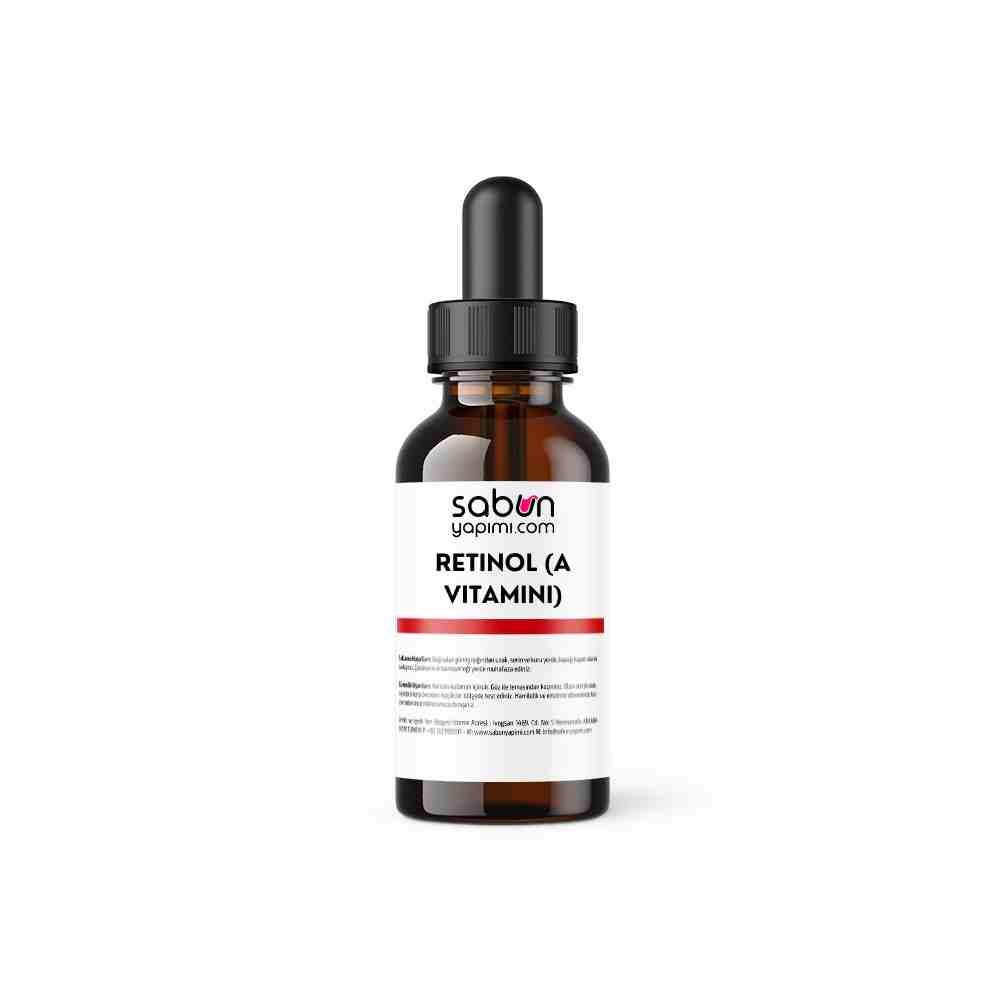
Retinol (Vitamin A) 10 g – Anti-Aging Cosmetic Active for Skincare
$28,00
Retinol (Vitamin A) is a powerful cosmetic active widely used in anti-aging skincare formulations. It helps improve the appearance of fine lines, uneven skin tone and rough texture, supporting smoother and more youthful-looking skin. Ideal for professionally developed night creams, facial serums and skincare emulsions, Retinol requires careful concentration control, oxidation protection and appropriate packaging. The active concentration and commercial grade must be verified before formulation.
Retinol (Vitamin A) 10 g – Anti-Aging Cosmetic Active for Skincare
Vitamin A Cosmetic Ingredient for Anti-Aging Creams, Facial Serums & Skin Renewal Formulations
Retinol, also known as Vitamin A1, is a well-established cosmetic active widely used in anti-aging skincare formulations.
It belongs to the retinoid family and is particularly valued for its ability to improve the appearance of fine lines, wrinkles, uneven skin tone and rough skin texture.
Retinol is commonly incorporated into:
- Anti-aging facial serums
- Night creams
- Facial moisturizers
- Skin-renewal formulations
- Skin-tone care products
- Fine-line and wrinkle appearance products
- Selected eye-area cosmetics
- Professionally developed skincare emulsions
Because Retinol is a potent and chemically sensitive ingredient, effective formulation requires precise concentration control, appropriate stabilization and careful evaluation of the finished product.
What Is Retinol?
Retinol is a fat-soluble form of Vitamin A.
It belongs to a family of compounds known as retinoids, which are involved in several biological processes associated with normal skin function.
In cosmetic formulations, Retinol is primarily used as a skin-conditioning active in products designed to improve the visible signs of skin aging.
INCI Name: Retinol
Alternative Names: Vitamin A1, All-Trans-Retinol
CAS Number: 68-26-8
Chemical Formula: C20H30O
Molecular Weight: Approximately 286.45 g/mol
Ingredient Family: Retinoid
Primary Cosmetic Function: Skin Conditioning
Retinol is different from Retinyl Palmitate, Retinyl Acetate, Retinal and Retinoic Acid.
These compounds have different chemical structures, formulation characteristics and regulatory considerations.
Main Cosmetic Benefits of Retinol
Retinol is widely used in skincare formulations developed to improve the appearance of:
- Fine lines
- Wrinkles
- Uneven skin texture
- Dull-looking skin
- Uneven skin tone
- Visible signs of photoaging
- Rough-feeling skin
- Enlarged-looking pores
The extent of any improvement depends on the formulation, active concentration, application frequency and individual skin characteristics.
Retinol for Fine Lines & Wrinkles
One of the most important applications of Retinol is in anti-aging facial skincare.
Retinol has been investigated for its effects on skin processes associated with visible aging, including epidermal turnover and collagen-related pathways.
Appropriately formulated products may help improve:
- The appearance of fine lines
- Skin smoothness
- Surface texture
- The appearance of wrinkles
- Overall skin radiance
The visible results develop gradually and vary between users.
Retinol should not be marketed as permanently removing wrinkles or reversing the biological aging process.
Does Retinol Support Collagen?
Retinol has been studied for its relationship with collagen metabolism and the appearance of photoaged skin.
This is one reason it is commonly included in cosmetic formulations targeting fine lines and wrinkles.
However, an ingredient’s biological activity does not automatically guarantee a particular clinical result in every finished product.
A suitable cosmetic claim is:
“Helps improve the appearance of fine lines and wrinkles.”
Any stronger claim should be supported by appropriate finished-product evidence.
Retinol for Skin Texture
Retinol is frequently used in formulations designed for uneven or rough-looking skin.
Regular use of an appropriately developed product may contribute to:
- Smoother-looking skin
- More refined surface texture
- A more uniform appearance
- Improved skin radiance
Retinol should not be confused with a physical exfoliating ingredient such as walnut shell powder.
Its cosmetic effects involve different biological mechanisms.
Retinol for Uneven Skin Tone
Retinol is also used in skincare formulations intended to improve the appearance of uneven skin tone.
It may be incorporated into products targeting:
- Dull-looking complexion
- Uneven-looking pigmentation
- Visible dark spots
- Post-blemish discoloration
- Sun-related uneven skin appearance
Appropriate product claims should focus on visible cosmetic improvement rather than guaranteed removal of pigmentation.
Retinol for Mature Skin
Retinol is a popular ingredient in skincare products designed for mature-looking skin.
Possible product concepts include:
- Night creams
- Facial serums
- Skin-conditioning creams
- Anti-aging moisturizers
- Fine-line appearance treatments
The complete formulation may also contain humectants, emollients, antioxidants and barrier-support ingredients.
Use in Facial Serums
Retinol is commonly incorporated into specialized facial serums.
These may be developed as:
- Oil-based serums
- Anhydrous serums
- Emulsion-based serums
- Encapsulated Retinol systems
- Stabilized cosmetic concentrates
A successful Retinol serum requires careful control of:
- Active concentration
- Ingredient compatibility
- Oxygen exposure
- Light exposure
- Packaging
- Stability
- Skin tolerance
Simply mixing Retinol with a cosmetic oil does not guarantee a stable or safe finished serum.
Use in Night Creams
Retinol is especially popular in night-care formulations.
Night creams may combine Retinol with suitable ingredients such as:
- Glycerin
- Panthenol
- Hyaluronic Acid
- Squalane
- Ceramides
- Cosmetic emollients
- Compatible antioxidants
These ingredients may complement the overall skin-conditioning profile.
Retinol products are commonly recommended for evening use to simplify sun-exposure precautions and reduce unnecessary light exposure during application.
Is Retinol a Moisturizer?
Retinol is not primarily a humectant.
It does not attract water in the same way as:
- Glycerin
- Sodium PCA
- Betaine
- Panthenol
Instead, it is used as a biologically active skin-conditioning ingredient.
Retinol formulations often include conventional moisturizing ingredients because dryness and irritation can occur during use.
Retinol for Oily-Looking Skin
Retinol is sometimes used in formulations designed for oily-looking or blemish-prone skin.
Its use may contribute to improving the appearance of uneven skin texture.
However, cosmetic Retinol should not automatically be marketed as:
- Curing acne
- Preventing every breakout
- Treating inflammatory skin diseases
- Eliminating acne scars
- Replacing prescription retinoids
Such claims may require medicinal authorization and clinical evidence.
Does Retinol Shrink Pores?
Retinol does not permanently change the anatomical size of pores.
However, appropriately formulated skincare products may help improve skin texture and make pores appear less noticeable.
An appropriate cosmetic claim is:
“Helps minimize the appearance of visible pores.”
Use in Eye-Area Formulations
Retinol is sometimes incorporated into specially developed eye-area skincare products.
These formulations require particular attention to:
- Low active concentration
- Skin sensitivity
- Product migration
- Eye irritation
- Packaging
- Finished-product safety
The eye area is relatively sensitive.
Ordinary facial Retinol products should not automatically be considered suitable for application close to the eyes.
Retinol in Soap Making
Although Retinol is sometimes marketed as a soap-making ingredient, traditional soap is generally not a suitable delivery system for this active.
Retinol is sensitive to:
- Light
- Oxygen
- Elevated temperatures
- Unfavorable processing conditions
Traditional soap manufacturing can expose ingredients to strong alkalinity and heat.
These conditions may compromise Retinol stability.
Cold Process Soap
Cold process soap is manufactured through the reaction of fats and oils with sodium hydroxide.
During production, the formulation is strongly alkaline.
Retinol is not required for this process and does not participate as a conventional soap-making oil.
Adding Retinol at trace does not guarantee that it will remain stable or provide measurable anti-aging benefits in the finished soap.
For this reason, routine use of Retinol in cold process soap is not recommended.
Melt & Pour Soap
Melt and pour soap bases are also generally unsuitable for obtaining reliable Retinol performance.
Potential problems include:
- Ingredient degradation
- Oxidation
- Changes in color
- Reduced stability
- Limited skin contact time
Retinol is generally better suited to carefully formulated leave-on skincare products.
Retinol in Facial Cleansers
Retinol may be used in certain rinse-off cosmetic products where permitted by the relevant regulations.
However, the short contact time and washing process may limit its practical value.
A well-formulated leave-on product is generally more appropriate when the main objective is an anti-aging skincare concept.
Retinol vs. Retinyl Palmitate
These ingredients belong to the Vitamin A family but are not identical.
Retinol
- Alcohol form of Vitamin A
- Widely used in anti-aging cosmetic formulations
- Sensitive to oxygen and light
- Requires careful stabilization
Retinyl Palmitate
- Ester of Retinol and Palmitic Acid
- Different chemical structure
- Different formulation behavior
- Different conversion and activity characteristics
Their concentrations must not be compared without accounting for Retinol Equivalent calculations.
Retinol vs. Retinal
Retinal, also called Retinaldehyde, is another retinoid used in specialized skincare formulations.
It is chemically distinct from Retinol.
The two materials have different:
- Stability characteristics
- Biological conversion pathways
- Formulation requirements
- Safety considerations
They should not be directly substituted without professional evaluation.
Retinol vs. Retinoic Acid
Retinol should also not be confused with Retinoic Acid, commonly associated with prescription treatments such as Tretinoin.
Retinoic Acid is a pharmacologically active retinoid with different regulatory status.
A cosmetic raw material labeled Retinol should not automatically be described as equivalent to prescription Tretinoin.
European Union Cosmetic Regulation
Under Commission Regulation (EU) 2024/996, Retinol is subject to concentration restrictions in cosmetic products.
The limits are expressed as Retinol Equivalent (RE).
Body Lotions
Maximum 0.05% RE
Other Leave-On & Rinse-Off Cosmetic Products
Maximum 0.3% RE
These limits apply to the finished cosmetic product.
They cover the relevant Vitamin A substances, including Retinol, Retinyl Acetate and Retinyl Palmitate.
Manufacturers must account for the total relevant Vitamin A contribution when formulating products.
Important EU Labeling Requirement
Cosmetic products containing Retinol, Retinyl Acetate or Retinyl Palmitate must carry the following warning under the applicable EU regulation:
“Contains Vitamin A. Consider your daily intake before use”.
This warning relates to total Vitamin A exposure from cosmetics, food and supplements.
Professional manufacturers should verify the current labeling and market-entry requirements before launching a product.
Understanding Retinol Equivalent
Retinol Equivalent is used to express Vitamin A content in a comparable form.
For products containing pure Retinol, the active Retinol concentration directly contributes to the RE calculation.
For formulations containing Retinyl Acetate or Retinyl Palmitate, appropriate conversion factors must be considered.
This is especially important when multiple Vitamin A derivatives are included in the same product.
Pure Retinol vs. Retinol Concentrate
Commercial Retinol may be supplied in different forms.
Examples include:
- High-purity Retinol
- Oil-based Retinol concentrates
- Stabilized Retinol blends
- Encapsulated Retinol dispersions
A 10 g package does not necessarily contain 10 g of active Retinol.
The exact active percentage must be verified from the actual supplier documentation.
Why Active Concentration Matters
For example, a formulation containing:
1% of a commercial blend with 10% active Retinol
contains approximately:
0.1% active Retinol
This is different from adding 1% pure Retinol.
The concentration of the supplied raw material and its carrier system must always be considered.
This example is provided to explain active-content calculations, not as a finished-product formulation recommendation.
Typical Formulation Concentrations
Retinol is a potent cosmetic active.
Professional developers commonly evaluate low concentrations in anti-aging formulations.
For example, certain facial skincare concepts may be developed around:
0.05–0.3% active Retinol
subject to product category, target market, safety assessment and the applicable legal maximum.
This is not a recommendation to use the full range in every product.
For EU body lotions, the separate maximum of 0.05% RE must be respected.
The safest and most appropriate concentration may be substantially lower than the maximum legal limit.
Higher Retinol Concentrations
The original recommendation of up to 1% Retinol should not be treated as a universal cosmetic formulation guideline.
Higher concentrations can increase the risk of:
- Irritation
- Redness
- Dryness
- Peeling
- Burning sensations
- Poor tolerability
They may also exceed the legal limits in certain markets.
More Retinol does not necessarily mean better skincare performance.
Retinol Solubility
Retinol is a fat-soluble ingredient.
It is practically insoluble in water.
It is more compatible with suitable:
- Cosmetic oils
- Lipid carriers
- Selected organic solvents
- Specialized delivery systems
The exact solubility depends on the raw-material grade and carrier system.
A water-based serum generally requires appropriate delivery technology, such as a compatible emulsion or encapsulated system.
Retinol & Oxidation
Retinol is chemically sensitive to oxygen.
Exposure can contribute to degradation and loss of active content.
A formulation may require:
- Suitable antioxidant systems
- Oxygen-controlled manufacturing
- Compatible carriers
- Protective packaging
- Stability testing
Antioxidants may help improve chemical stability but do not guarantee unlimited shelf life.
Retinol & Light Sensitivity
Retinol is also sensitive to light exposure.
Prolonged exposure may reduce the stability of the active ingredient.
Appropriate packaging may include:
- Opaque bottles
- Airless packaging
- Light-protective containers
- Carefully selected barrier materials
Transparent packaging should not automatically be used for Retinol-containing products without stability evidence.
Retinol & Temperature
Excessive processing heat can accelerate Retinol degradation.
For professional formulation, Retinol is often incorporated during a controlled cooling stage or by a process specifically validated for the commercial grade.
The suitable addition temperature must be confirmed using the supplier TDS.
Do not expose Retinol to unnecessary prolonged heating.
Retinol & Formulation pH
A raw-material statement such as:
pH 4.0–6.0
should not automatically be applied to every commercial Retinol product.
Pure Retinol is not an aqueous ingredient and therefore does not have a directly meaningful conventional pH measurement.
In emulsified skincare formulations, the final pH should be selected according to:
- Stability
- Emulsion compatibility
- Preservative system
- Other active ingredients
- Skin tolerance
The precise target depends on the complete formula.
How to Incorporate Retinol
Professional processing should follow the manufacturer’s validated instructions.
General considerations include:
- Confirm the exact raw-material grade and active concentration.
- Verify regulatory limits for the intended product.
- Select a compatible carrier or emulsion system.
- Minimize light, heat and oxygen exposure.
- Incorporate the Retinol using the recommended processing method.
- Ensure uniform distribution.
- Use suitable stabilizing ingredients where required.
- Verify active concentration and finished-product stability.
- Select appropriate protective packaging.
- Complete the cosmetic safety assessment before commercial sale.
These are general formulation principles rather than a universal manufacturing recipe.
Retinol & Other Cosmetic Ingredients
Retinol may be combined with suitable ingredients such as:
- Glycerin
- Panthenol
- Hyaluronic Acid
- Ceramides
- Squalane
- Selected antioxidants
- Compatible emollients
The purpose of these ingredients may be to improve the overall moisturizing profile and skin tolerance of the finished product.
Retinol & Niacinamide
Retinol and Niacinamide are used together in some professional skincare formulations.
Niacinamide is commonly selected for barrier-support and skin-conditioning product concepts.
However, their combination requires appropriate formulation compatibility and stability testing.
The presence of Niacinamide does not guarantee that Retinol irritation will be eliminated.
Retinol & Vitamin C
Retinol and Vitamin C are both popular cosmetic actives.
However, combining them in one formulation can introduce additional challenges related to:
- pH
- Oxidation
- Solubility
- Processing
- Stability
- Irritation potential
The correct formulation approach depends on the Vitamin C derivative and the Retinol grade.
Retinol With AHA & BHA Ingredients
Retinol is sometimes used within skincare routines that also include exfoliating ingredients such as:
- Glycolic Acid
- Lactic Acid
- Salicylic Acid
Combining multiple active skincare products can increase irritation risk.
For professional formulations, simultaneous use of these ingredients requires careful safety evaluation.
Consumers should not automatically combine multiple high-strength actives without suitable guidance.
Retinol & Sun Protection
Retinol does not provide sun protection.
It is not a UV filter and cannot replace sunscreen.
Retinol-containing skincare routines should include appropriate sun-protection practices.
Common recommendations include:
- Broad-spectrum sunscreen
- Avoiding excessive sun exposure
- Protective clothing when appropriate
- Following finished-product usage instructions
Why Is Retinol Commonly Used at Night?
Retinol is commonly associated with night-time skincare.
This is partly because of its sensitivity to light and the potential for irritation during use.
Night-time application does not eliminate the need for daytime sun protection.
Retinol & Sensitive Skin
Retinol may cause skin discomfort in some individuals.
Possible reactions include:
- Dryness
- Redness
- Peeling
- Stinging
- Irritation
- Increased sensitivity
Individuals with sensitive or compromised skin may require lower-strength formulations or may not tolerate Retinol.
Finished products should provide appropriate usage and warning instructions.
Pregnancy Precautions
Retinoid-containing skincare products, including products containing Retinol, are generally recommended to be avoided during pregnancy.
Individuals who are pregnant or planning pregnancy should not begin Retinol use without appropriate medical guidance.
During breastfeeding, a healthcare professional should assess whether a particular Retinol product is appropriate.
Formulators must consider the intended consumer population during product safety assessment.
Retinol Is Not Suitable for Children
Retinol should not automatically be incorporated into cosmetic products intended for infants or young children.
These applications require special safety and regulatory consideration.
Retinol Is Not a Sunscreen or Preservative
Retinol does not independently provide:
- SPF protection
- UVA protection
- UVB protection
- Antimicrobial preservation
- Guaranteed moisturizing performance
Water-containing Retinol products may still require an appropriate antimicrobial preservative system.
Product Details
Product Name: Retinol (Vitamin A)
INCI Name: Retinol
Alternative Name: Vitamin A1
CAS Number: 68-26-8
Chemical Formula: C20H30O
Molecular Weight: Approximately 286.45 g/mol
Weight: 10 g
Ingredient Family: Retinoid
Primary Cosmetic Function: Skin Conditioning
Water Solubility: Practically Insoluble
Primary Applications: Anti-Aging Facial Creams, Night Serums and Specialized Skincare Formulations
Physical Form: Refer to Supplier Specification
Active Retinol Concentration: Refer to Supplier COA
Carrier Ingredients: Refer to Full INCI Declaration
Storage Conditions: Refer to Supplier TDS
Raw Material Purity
Only describe the product as:
100% Pure Retinol
if the actual supplier Certificate of Analysis supports this statement.
Commercial Retinol products may contain:
- Retinol
- Oil-based carriers
- Antioxidants
- Stabilizers
- Encapsulation materials
- Other formulation components
The product’s complete composition must be correctly declared.
Retinol Quality Documentation
Professional cosmetic formulators should verify:
- Exact INCI composition
- Retinol assay
- Active concentration
- Chemical identity
- Purity
- Carrier ingredients
- Stabilizer composition
- Appearance
- Oxidation stability
- Recommended processing conditions
- Storage temperature
- SDS
- TDS
- COA
These details are critical for accurate concentration calculations and cosmetic safety assessments.
Cosmetic Stability Testing
Retinol-containing formulations should undergo appropriate evaluation, which may include:
- Retinol assay over time
- Appearance changes
- Color changes
- Odor changes
- Oxidation stability
- Packaging compatibility
- Temperature stability
- pH stability for aqueous formulations
- Microbiological quality
- Preservative efficacy testing where necessary
A visually unchanged product may still experience a reduction in active Retinol concentration.
Therefore, chemical stability testing is particularly important.
Safety Information
Retinol is a concentrated cosmetic active and should be handled carefully.
During professional raw-material handling:
- Avoid direct skin contact with concentrated material.
- Avoid direct eye contact.
- Avoid unnecessary inhalation of dust or aerosols.
- Use suitable protective gloves.
- Wear appropriate eye protection.
- Work under controlled conditions.
- Avoid excessive light and heat exposure.
- Do not ingest.
- Keep away from children and pets.
- Follow the supplier SDS.
The 10 g raw material package is not a ready-to-use skincare product.
Do Not Apply Concentrated Retinol Directly to Skin
Concentrated Retinol should not be applied directly to the face or body.
It must first be incorporated into a professionally developed formulation at an appropriate concentration.
Undiluted application may cause significant skin irritation.
Storage
Retinol requires particularly careful storage.
General precautions include:
- Keep in tightly sealed containers.
- Protect from direct sunlight.
- Minimize air exposure.
- Avoid unnecessary heat.
- Protect from contamination.
- Use light-resistant packaging.
- Follow the supplier’s specified storage temperature.
Some commercial Retinol grades require refrigerated or otherwise controlled storage.
Storage requirements must be verified for the actual supplied material rather than assuming that ordinary room-temperature storage is sufficient.
Wholesale, Private Label & Contract Manufacturing
We supply Retinol, cosmetic vitamins, antioxidants, humectants, emollients, conditioning ingredients and other cosmetic formulation raw materials in wholesale quantities for cosmetic brands, laboratories, manufacturers, retailers and professional formulators.
We also provide custom cosmetic formulation development services for Retinol-based night creams, anti-aging facial serums, skin-conditioning emulsions and other specialized skincare concepts.
Formulation development services may include:
- Raw-material selection
- Active concentration planning
- Carrier-system development
- Retinol stabilization strategies
- Ingredient compatibility evaluation
- Manufacturing procedures
- Packaging recommendations
- Quality-control specifications
- Regulatory formulation considerations
- Supporting technical documentation
Private label and contract manufacturing services are also available for selected soaps, liquid cleansing products and other categories within our manufacturing capabilities. Cosmetic formulation development can be evaluated separately from physical manufacturing.
Customized skincare formulation projects can be developed with different Retinol concentrations, compatible humectants, emollients, antioxidants, textures, delivery systems and packaging concepts.
For bulk Retinol orders, custom cosmetic formulation development, private label or contract manufacturing inquiries, please contact us with your required raw-material grade, active concentration, product concept, target market, packaging requirements and estimated production volume.
KARGO & İADE
SabunYapimi.com olarak müşteri memnuniyetini ön planda tutuyoruz. Siparişlerinizin güvenli ve hızlı bir şekilde size ulaşmasını sağlamak için en iyi lojistik firmalarıyla çalışıyoruz. Ayrıca, herhangi bir sebepten dolayı ürününüzden memnun kalmazsanız, iade ve değişim sürecimizi kolay ve hızlı hale getirdik.
Kargo Firması & Gönderim Süresi
- Siparişleriniz, ödeme onaylandıktan sonra 1-2 iş günü içinde kargoya verilir.
- Kargo firmaları: [Aras & Yurtiçi]
- Ortalama teslimat süresi 2-3 iş günü arasındadır.
Kargo Ücretleri & Ücretsiz Kargo Şartları
- [1000 TL ve üzeri alışverişlerde kargo ücretsizdir.]
- Standart kargo ücreti sipariş aşamasında ödeme sayfasında belirtilir.
Kargo Takibi
Siparişiniz kargoya verildiğinde e-posta veya SMS ile takip numarası paylaşılır. Kargo takip bağlantısını kullanarak siparişinizi kolayca takip edebilirsiniz.
📌 Siparişiniz belirlenen süre içinde ulaşmazsa, bize aşağıdaki iletişim bilgileriyle ulaşabilirsiniz:
📧 E-Posta: sabunyapimi@gmail.com
📞 WhatsApp Destek: +90 532 059 15 71
Geri Ödeme ve İade Süreçleri
Geri Ödeme ve İade Politikası Sayfamızı Okuyun