
 Soap Bases
 Scents
 Oils
Oils Dyes
Dyes Equipment and Accessories
 Cosmetic Clays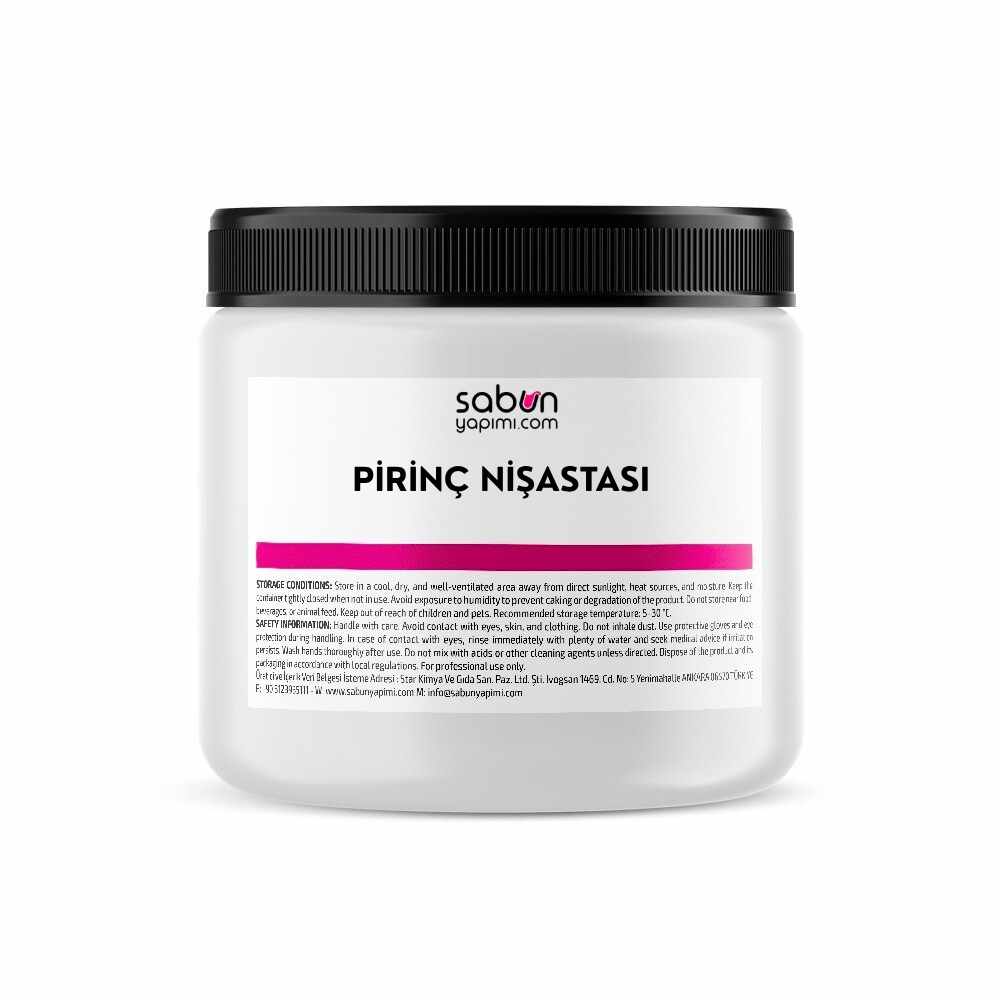
Rice Starch 100 g – Natural Oil-Absorbing Powder for Soap Making & Cosmetics
$18,00
Rice Starch (Oryza Sativa Starch) is a fine, plant-derived powder used as an absorbent, mattifying agent and texture enhancer in cosmetic and soap-making formulations. It helps absorb excess surface oil and moisture while providing a smooth, soft and velvety finish. Ideal for loose powders, face masks, dry shampoos, pressed makeup, specialty soaps and selected creams and lotions. Suitable for professional cosmetic formulation when supplied in an appropriate cosmetic grade.
Rice Starch 100 g – Natural Oil-Absorbing Powder for Soap Making & Cosmetics
Plant-Derived Mattifying, Absorbent & Texture-Enhancing Cosmetic Ingredient
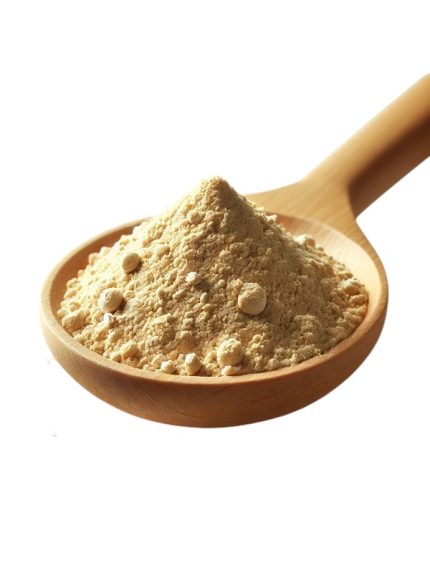
Rice Starch, also known as Oryza Sativa Starch, is a fine botanical powder obtained from rice grains.
It is widely used in cosmetic and personal-care formulations for its oil-absorbing, moisture-absorbing, mattifying and texture-enhancing properties.
Rice Starch is particularly valued in products designed to provide a soft, smooth and velvety skin feel.
It is commonly incorporated into:
- Loose face powders
- Pressed cosmetic powders
- Mattifying makeup products
- Dry shampoos
- Facial masks
- Cosmetic body powders
- Selected creams and lotions
- Specialty handmade soaps
- Powder-based personal-care products
Its plant-derived origin makes it a popular ingredient in natural-inspired cosmetic formulations.
What Is Rice Starch?
Rice Starch is a carbohydrate-based material extracted from rice, scientifically known as Oryza sativa.
It mainly consists of starch polysaccharides, including amylose and amylopectin.
These components form fine particles that can absorb surface moisture and certain oily materials.
INCI Name: Oryza Sativa (Rice) Starch
Alternative Names: Rice Starch, Oryza Sativa Starch
CAS Number: 9005-25-8 (general starch CAS)
Ingredient Family: Plant-Derived Polysaccharide
Typical Appearance: Fine White Powder
Primary Functions: Absorbent / Binding Agent / Bulking Agent / Viscosity Modifier
The exact particle size, purity and absorption capacity depend on the commercial grade.
Main Benefits of Rice Starch in Cosmetics
Rice Starch can help improve the physical and sensory properties of suitable cosmetic products.
Its main benefits include:
- Absorption of excess surface oil
- Absorption of surface moisture
- Reduced greasy or shiny appearance
- Soft and silky skin feel
- Improved powder texture
- More comfortable product application
- Enhanced cosmetic spreadability
- Improved consistency in selected formulations
- A smooth, velvety finish
Its performance depends on the complete formulation and raw-material characteristics.
Natural Oil Absorption
One of the most useful characteristics of Rice Starch is its ability to absorb certain oils.
This makes it suitable for cosmetics designed for oily-looking skin.
It may help reduce the appearance of shine caused by excess surface sebum.
Rice Starch is commonly used in:
- Mattifying face powders
- Cosmetic finishing powders
- Oil-absorbing makeup
- Dry shampoos
- Selected facial masks
It works primarily through physical absorption rather than by directly changing the biological production of sebum.
Mattifying Effect
Rice Starch can help create a less shiny and more matte cosmetic appearance.
This makes it valuable in formulations designed for:
- Oily-looking skin
- Combination skin
- Matte makeup finishes
- Lightweight facial powders
- Oil-control cosmetic products
Fine particle size can also contribute to a smooth and refined finish.
However, the level of mattification depends on particle size, processing and the total formulation.
Silky Skin Feel
Rice Starch is often used as a sensory modifier.
In suitable formulations, its fine particles can help create a:
- Soft
- Smooth
- Velvety
- Powdery
- Less greasy
skin feel.
This property is especially useful in powders, primers and selected skincare emulsions.
Rice Starch for Loose Face Powder
Rice Starch can be used in loose cosmetic powders as an absorbent and filler.
It may help:
- Reduce surface shine
- Improve powder flow
- Create a soft finish
- Modify coverage and texture
- Improve application feel
The final powder formulation may also include suitable pigments, fillers and other cosmetic ingredients.
Powders intended for use near the face must be assessed for inhalation exposure.
Rice Starch for Pressed Powder
Rice Starch may also function as a supporting ingredient in pressed makeup products.
Possible applications include:
- Compact face powders
- Pressed finishing powders
- Blush products
- Selected powder foundations
- Other decorative cosmetics
Its binding and bulking characteristics may contribute to the structure of the pressed powder.
The final hardness, pickup and application properties depend on the complete binder system.
Natural-Inspired Talc-Free Cosmetics
Rice Starch is often used in cosmetic formulations developed without talc.
It may be selected as a partial or complete replacement for certain powder functions, depending on the required performance.
Possible applications include:
- Talc-free face powders
- Body powders
- Powder foundations
- Dry cosmetic formulations
However, Rice Starch and Talc do not have identical properties.
Differences may include:
- Oil absorption
- Powder flow
- Skin feel
- Adhesion
- Particle morphology
- Moisture behavior
Therefore, replacing Talc with Rice Starch may require reformulation.
Rice Starch in Dry Shampoo
Rice Starch is particularly useful in dry shampoo formulations.
Dry shampoos are designed to improve the appearance and feel of oily hair without conventional water-based washing.
Rice Starch can help absorb some of the excess oil present on hair and scalp surfaces.
Potential cosmetic benefits include:
- Fresher-looking hair
- Reduced greasy appearance
- Improved hair texture
- Less visible oiliness
- Temporary volume enhancement
It does not replace regular hair washing or treat scalp disorders.
Does Rice Starch Clean Hair?
Rice Starch can absorb surface oil, helping hair look less greasy.
However, it is not a conventional cleansing surfactant.
It does not wash away dirt and contaminants in the same manner as a shampoo containing surfactants.
For this reason, dry shampoo should be regarded as a cosmetic appearance and freshness product rather than a complete substitute for washing.
Rice Starch for Facial Masks
Rice Starch may be incorporated into powder-based facial masks.
Possible product concepts include:
- Powder masks
- Mattifying masks
- Clay-based facial masks
- Specialty wash-off masks
It may help improve:
- Powder consistency
- Application feel
- Oil absorption
- Texture
- The sensory characteristics of the mask
For example, it may be combined with suitable cosmetic-grade clays, depending on the formulation.
Rice Starch in Clay Masks
Rice Starch can be used alongside compatible mineral ingredients such as:
- Kaolin
- Bentonite
- Other cosmetic-grade clays
These combinations can be evaluated for oil absorption, spreadability and product feel.
Rice Starch should not automatically be described as detoxifying the skin or removing toxins.
Its primary role is physical absorption and texture modification.
Rice Starch in Creams
Rice Starch may also be incorporated into certain cream formulations.
In these products, it can help modify the sensory feel.
Possible benefits include:
- Reduced oily after-feel
- A more powdery finish
- Improved texture
- Mattifying characteristics
However, native Rice Starch does not behave like a conventional liquid emollient.
Its effect depends on the specific starch grade and processing conditions.
Rice Starch in Body Lotions
Selected Rice Starch grades can be used in body lotions.
They may help reduce the greasy sensation associated with certain oil-rich formulations.
Potential applications include:
- Mattifying body lotions
- Lightweight skincare emulsions
- Specialty body creams
- Cosmetic texture-enhancing systems
The correct concentration should be established through laboratory testing.
Is Rice Starch a Moisturizer?
Rice Starch is not primarily a humectant.
It does not perform the same function as:
- Glycerin
- Panthenol
- Sodium PCA
- Betaine
- Hyaluronic Acid
Its main benefit is related to absorption and sensory texture.
Although selected specialized starch products may influence moisture-related performance, ordinary Rice Starch should not automatically be marketed as providing deep or long-lasting skin hydration.
Does Rice Starch Reduce Sweating?
Rice Starch can absorb some moisture present on the skin surface.
However, it does not directly stop the physiological production of sweat.
Therefore, it should not be marketed as an antiperspirant active.
An appropriate cosmetic description is:
“Helps absorb surface moisture and provides a dry, comfortable feel.”
Rice Starch for Sensitive Skin
Rice Starch is often selected for mild-feeling cosmetic formulations.
However, its natural origin does not guarantee suitability for every consumer.
Potential reactions depend on:
- Raw-material quality
- Particle size
- Concentration
- Fragrance ingredients
- Other formulation components
- Individual sensitivity
Finished products designed for sensitive skin require appropriate safety evaluation.
Rice Starch in Baby Care Products
Starch-based powders have historically been used in some baby-care products.
However, airborne fine powders present an inhalation risk for infants and young children.
For this reason, loose Rice Starch powder should not be promoted as a ready-to-use baby powder.
The suitability of any infant-care formulation requires dedicated safety assessment.
Avoid using loose cosmetic powders around an infant’s face or respiratory zone.
Rice Starch for Soap Making
Rice Starch may be used as a supplementary additive in certain handmade soap formulations.
It can contribute to the physical and sensory characteristics of the soap.
Possible effects include:
- Increased opacity
- A different surface feel
- Changes in bar texture
- A more powdery or silky sensory profile
However, the effect depends on the soap recipe and manufacturing process.
Rice Starch is not necessary for saponification.
Cold Process Soap
Rice Starch may be evaluated in specialty cold process soap formulations.
It is not a replacement for:
- Soap-making oils
- Sodium Hydroxide
- Potassium Hydroxide
- Correct SAP calculations
Because starch is a carbohydrate rather than a triglyceride oil, it is not included as a conventional saponifiable oil in the soap recipe.
Any addition should be tested for compatibility.
Typical Cold Process Soap Considerations
When using Rice Starch in cold process soap, formulators should consider:
- Powder dispersion
- Potential clumping
- Processing temperature
- Bar appearance
- Texture
- Foam behavior
- Final product stability
The addition of starch does not automatically produce a moisturizing or exfoliating soap.
How to Add Rice Starch to Soap
For small-scale laboratory evaluation, Rice Starch may be premixed with a compatible portion of the formulation before incorporation.
A typical approach involves:
- Accurately weighing the Rice Starch.
- Preparing a smooth premix with a suitable compatible medium.
- Incorporating the premix into the soap batch.
- Mixing until evenly distributed.
- Completing the normal soap manufacturing process.
- Evaluating texture, lather and bar quality.
Avoid adding large amounts of loose powder directly into a mixing process where airborne dust may form.
Does Rice Starch Increase Soap Foam?
Rice Starch is not a foaming surfactant.
It does not independently create cleansing foam.
Any influence on soap lather depends on the complete soap formulation.
Adding excessive starch may produce undesirable changes in the finished bar.
Melt & Pour Soap
Rice Starch may also be evaluated in selected melt and pour soap bases.
However, undissolved starch particles can influence:
- Transparency
- Appearance
- Texture
- Dispersion
- Sedimentation
- Lather
Transparent bases may become cloudy when starch is added.
Always follow the soap-base manufacturer’s recommended additive limits.
Rice Starch vs. Rice Flour
Rice Starch and Rice Flour are not identical materials.
Rice Starch
Primarily consists of the starch fraction extracted from rice.
Typical functions include:
- Absorption
- Mattification
- Binding
- Texture modification
Rice Flour
Produced by milling rice grains.
Its composition may include starch together with variable amounts of proteins and other grain components.
Rice Flour may have a different:
- Particle size
- Appearance
- Composition
- Texture
- Processing behavior
These ingredients should not automatically be substituted for one another.
Rice Starch vs. Rice Powder
The term “Rice Powder” can be used broadly in commerce.
It may refer to:
- Rice Flour
- Finely milled Rice Powder
- Rice Starch
- Specialized cosmetic rice powders
Professional formulators should verify the actual INCI name.
For example:
Oryza Sativa (Rice) Starch is different from Oryza Sativa (Rice) Powder.
Native vs. Modified Rice Starch
Commercial cosmetic starches are available in different forms.
Native Rice Starch
This is starch extracted and processed without intentional chemical modification of its starch structure.
It is commonly used for:
- Absorption
- Mattification
- Powder texture
- Cosmetic filling and binding
Modified Rice Starch
Modified starches are developed to provide particular functional characteristics.
Depending on the modification, these may include:
- Improved processing stability
- Better emulsion compatibility
- Different viscosity behavior
- Enhanced oil absorption
- Modified water resistance
The INCI name may differ from standard Rice Starch.
The type of starch must be verified from the supplier documentation.
Water Solubility
Rice Starch is generally insoluble in cold water.
It can be dispersed in water, but this does not mean it has dissolved.
This distinction is important in cosmetic manufacturing.
Depending on temperature and grade, Rice Starch may swell or undergo gelatinization.
What Happens When Rice Starch Is Heated?
Native Rice Starch can undergo gelatinization when heated in sufficient water.
During gelatinization, starch granules absorb water and undergo structural changes.
This can influence:
- Viscosity
- Consistency
- Texture
- Product appearance
- Process stability
The gelatinization behavior depends on the starch composition and processing conditions.
Certain modified cosmetic starch grades have very different heat-processing characteristics.
Rice Starch in Water-Based Formulations
Adding Rice Starch to a liquid formulation may create a dispersion rather than a true solution.
Formulators should evaluate:
- Particle sedimentation
- Viscosity
- Product appearance
- Mixing conditions
- Microbiological stability
- Temperature sensitivity
The product should not automatically be expected to remain homogeneous without suitable stabilization.
Microbiological Considerations
Rice Starch is an organic carbohydrate-based material.
In water-containing formulations, starch may provide nutrients that support microbial growth if preservation and manufacturing hygiene are inadequate.
Therefore, water-based cosmetic products containing Rice Starch require appropriate microbiological control.
The finished product may need:
- An effective preservative system
- Preservative efficacy testing
- Microbiological testing
- Suitable manufacturing hygiene
- Stability testing
Rice Starch is not a preservative.
Typical Usage Levels
The appropriate amount of Rice Starch depends on the commercial grade and application.
General experimental starting ranges include:
Specialty Handmade Soap
0.5–3%
Cosmetic Creams & Lotions
0.5–5%
Facial Masks
5–20%
Dry Shampoo Powder Blends
5–30%, depending on the composition
Loose & Pressed Cosmetic Powders
5–30%, or other grade-dependent levels within professionally developed powder systems.
These values are preliminary formulation ranges, not universal limits or guarantees of performance.
Actual usage may differ substantially depending on the grade and finished product.
Inhalation exposure should be considered whenever fine powders may become airborne.
How to Incorporate Rice Starch
The incorporation method depends on the product category.
Dry Cosmetic Products
Rice Starch may be blended with other suitable cosmetic powders using appropriate dust-control procedures.
Creams & Lotions
The ingredient may be dispersed into a compatible phase according to the supplier’s processing recommendations.
Soap Formulations
It may be incorporated as a premixed powder dispersion to support more uniform distribution.
Facial Masks
It may be blended with suitable dry ingredients before final formulation or preparation.
Avoid assuming that all Rice Starch grades can be added directly to every liquid formulation without affecting stability.
pH Information
Dry Rice Starch does not have a meaningful standalone pH value.
A statement such as:
pH 5.0–7.0
should not automatically be treated as a universal raw-material specification.
Some manufacturers may specify the pH of a starch-water dispersion under defined test conditions.
The final cosmetic formulation’s pH must be evaluated separately.
Is Rice Starch Natural?
Rice Starch is obtained from a botanical source.
It can appropriately be described as:
Plant-Derived
or:
Rice-Derived Cosmetic Starch
provided that the supplier confirms its identity and origin.
However, the term “chemical-free” is not scientifically accurate.
Rice Starch is itself a natural chemical substance composed of polysaccharides.
Vegan & Natural Cosmetic Formulations
Rice Starch is plant-derived.
However, claims such as:
- Vegan Certified
- COSMOS Approved
- Organic Certified
- GMO-Free
must be supported by the actual supplier documentation.
A natural origin does not automatically establish certification.
Is Rice Starch Talc-Free?
Pure Rice Starch does not inherently contain Talc as a formulation ingredient.
However, a finished cosmetic product can only be called talc-free when its complete composition supports that claim.
The manufacturer should also maintain appropriate raw-material identity and quality controls.
Is Rice Starch an Exfoliant?
Rice Starch is not primarily a chemical or mechanical exfoliating active.
Its fine particles are generally more useful for:
- Absorption
- Texture
- Mattification
- Powder feel
It should not automatically be described as removing dead skin cells or performing a chemical peel.
Product Details
Product Name: Rice Starch
INCI Name: Oryza Sativa (Rice) Starch
Botanical Source: Oryza sativa
CAS Number: 9005-25-8 (general starch CAS)
Weight: 100 g
Typical Form: Fine Powder
Typical Color: White to Off-White
Ingredient Family: Botanical Polysaccharide
Water Solubility: Insoluble in Cold Water
Primary Functions: Absorbent / Mattifying Agent / Binding Agent / Texture Modifier
Applications: Makeup Powders, Dry Shampoos, Facial Masks, Specialty Soap and Selected Skincare Formulations
Purity: Refer to Supplier COA
Particle Size: Refer to Supplier TDS
Native or Modified Grade: Confirm with Supplier
Cosmetic Grade: Confirm with Supplier Documentation
Raw Material Quality
For professional cosmetic manufacturing, relevant specifications may include:
- INCI identity
- Botanical origin
- Starch purity
- Moisture content
- Particle size distribution
- Appearance
- Odor
- Microbiological quality
- Heavy metal specifications
- Pesticide residues where applicable
- Safety Data Sheet (SDS)
- Technical Data Sheet (TDS)
- Certificate of Analysis (COA)
Rice-derived ingredients may require appropriate contaminant monitoring according to their origin, manufacturing process and intended application.
Cosmetic Safety
Rice-derived cosmetic ingredients have been evaluated for safety under established practices of use.
However, suitability depends on:
- Ingredient quality
- Particle size
- Application method
- Product type
- Exposure
- Contaminant control
- Finished-product safety
The natural origin of Rice Starch does not eliminate the need for cosmetic safety assessment.
Powder Inhalation Safety
Fine cosmetic powders may become airborne during:
- Mixing
- Filling
- Packaging
- Dry blending
- Consumer application
Avoid breathing airborne powder.
Professional manufacturers should use appropriate dust-control procedures and protective equipment.
Products designed for spray or aerosol application require particular attention to inhalation safety.
Loose powders should not be applied near the face of infants or young children.
Storage
Store Rice Starch:
- In tightly closed packaging
- In a cool and dry environment
- Protected from moisture
- Away from direct sunlight
- Away from contamination
- According to the supplier’s storage instructions
Because starch can absorb moisture, unsuitable storage conditions may cause clumping and deterioration.
Wholesale, Private Label & Contract Manufacturing
We supply Rice Starch, botanical cosmetic powders, cosmetic clays, absorbents, fillers, pigments, humectants and other soap-making and cosmetic formulation raw materials in wholesale quantities for laboratories, soap makers, cosmetic brands, manufacturers and professional formulators.
We also provide custom cosmetic formulation development services for facial masks, mattifying creams, powders, dry-shampoo concepts and other selected personal-care formulations.
Our formulation development services may include:
- Raw-material selection
- Powder-system development
- Oil-absorption optimization
- Texture improvement
- Ingredient compatibility assessment
- Manufacturing procedures
- Stability recommendations
- Quality-control specifications
- Supporting technical documentation
Private label and contract manufacturing services are available for selected liquid soaps, detergents, cleansing products and other categories within our manufacturing capabilities. Cosmetic formulation development is offered separately from finished cosmetic manufacturing.
For bulk Rice Starch orders, cosmetic formulation development, private label or contract manufacturing inquiries, please contact us with your required quantity, cosmetic-grade specifications, product concept, packaging requirements, target market and estimated production volume.
KARGO & İADE
SabunYapimi.com olarak müşteri memnuniyetini ön planda tutuyoruz. Siparişlerinizin güvenli ve hızlı bir şekilde size ulaşmasını sağlamak için en iyi lojistik firmalarıyla çalışıyoruz. Ayrıca, herhangi bir sebepten dolayı ürününüzden memnun kalmazsanız, iade ve değişim sürecimizi kolay ve hızlı hale getirdik.
Kargo Firması & Gönderim Süresi
- Siparişleriniz, ödeme onaylandıktan sonra 1-2 iş günü içinde kargoya verilir.
- Kargo firmaları: [Aras & Yurtiçi]
- Ortalama teslimat süresi 2-3 iş günü arasındadır.
Kargo Ücretleri & Ücretsiz Kargo Şartları
- [1000 TL ve üzeri alışverişlerde kargo ücretsizdir.]
- Standart kargo ücreti sipariş aşamasında ödeme sayfasında belirtilir.
Kargo Takibi
Siparişiniz kargoya verildiğinde e-posta veya SMS ile takip numarası paylaşılır. Kargo takip bağlantısını kullanarak siparişinizi kolayca takip edebilirsiniz.
📌 Siparişiniz belirlenen süre içinde ulaşmazsa, bize aşağıdaki iletişim bilgileriyle ulaşabilirsiniz:
📧 E-Posta: sabunyapimi@gmail.com
📞 WhatsApp Destek: +90 532 059 15 71
Geri Ödeme ve İade Süreçleri
Geri Ödeme ve İade Politikası Sayfamızı Okuyun