

 Soap Bases
 Scents
 Oils
Oils Dyes
Dyes Equipment and Accessories
 Cosmetic Clays
What Is Superfat in Soap Making? A Guide to Lye Discounting

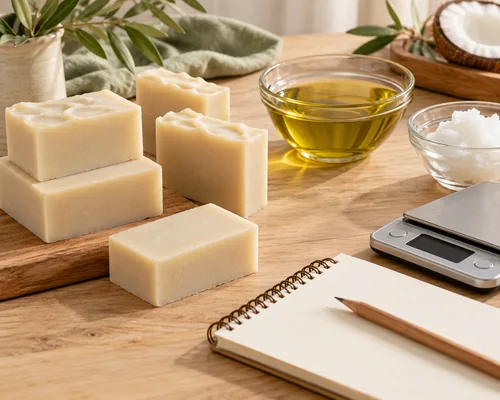
What Is Superfat in Soap Making? A Guide to Lye Discounting
If you have read a cold process soap recipe, you have probably seen a setting such as “5% superfat.” You may also have seen the term “lye discount.” These terms describe a key decision in soap formulation: using less alkali than the calculated amount needed to saponify all the oils in a recipe.
Superfat can affect a bar’s feel, firmness, lather, and storage performance. It also provides a margin for normal variation in ingredients and measurements. Understanding the calculation helps you choose an appropriate setting rather than simply selecting the highest percentage available.
What Is Superfat?
Superfat is the portion of oils or fatty material intended to remain unsaponified in finished soap. In a traditional soap formula, sodium hydroxide reacts with oils to produce soap. When the formula uses less sodium hydroxide than the theoretical amount required for all its oils, some fatty material can remain outside that reaction.
Soap makers usually select superfat as a percentage in a soap calculator. A common example for a general-purpose body bar is 5% superfat, although an appropriate level depends on the complete formula and the intended use.
The selected percentage is a formulation target. Natural variation in oils, the alkali’s actual purity, and measurement accuracy mean the finished bar cannot be assumed to contain an exactly measured percentage of one particular free oil.
What Is a Lye Discount?
A lye discount means reducing the calculated amount of alkali for a particular oil blend. In many soap-making discussions, “5% lye discount” and “5% superfat” are used to describe the same calculation.
Here is a simplified example:
| Calculation | Example amount |
|---|---|
| Theoretical sodium hydroxide amount for the oils at 0% superfat | 100 g |
| Chosen lye discount | 5% |
| Discounted sodium hydroxide amount | 95 g |
The arithmetic in this illustration is 100 g × 0.95 = 95 g. These are example numbers only, not a soap recipe. The correct amount for a real batch depends on its exact oils, their weights, the alkali used, and the calculator’s settings.
How Is Superfat Calculated?
Every oil has a saponification value, often shortened to SAP value. This value is used to estimate how much alkali is needed for a given weight of that oil. A soap calculator performs the individual oil calculations, adds them together, and applies the selected superfat setting.
The basic process is:
- List every oil and butter in the formula.
- Enter the exact weight of each into a suitable soap calculator.
- Choose the correct alkali: sodium hydroxide for a typical solid bar, or potassium hydroxide for a formula designed for liquid soap.
- Select the intended superfat percentage.
- Review the calculated alkali and water amounts.
- Check the calculator’s assumptions, including any alkali purity setting.
Recalculate the entire formula whenever you change an oil or its weight. Olive oil, coconut oil, shea butter, and other fats do not all require the same amount of alkali.
Why Do Soap Makers Use Superfat?
To Avoid Designing a Lye-Heavy Formula
A properly chosen lye discount gives the recipe a margin below the theoretical alkali amount needed to saponify all its oils. It can help account for normal variation in oil composition and measurement.
That margin does not make inaccurate weighing safe. A forgotten oil, incorrect scale setting, or major calculation error can still produce a soap with too much free alkali.
To Adjust the Character of the Bar
Changing the superfat level can change how a bar feels during use. It should be considered alongside the oils used, the balance of fatty acids, the water amount, and the cure.
A high superfat percentage does not automatically make a bar “better” or suitable for sensitive skin. The result depends on the complete formula, and individual skin responses vary.
To Suit a Specific Soap Formula
Different formulations call for different superfat targets. A soap made primarily with one oil may be designed differently from a balanced multi-oil bar. A cleaning or laundry soap may also have different priorities from a body bar.
Follow a tested recipe for the product you want to make instead of applying the same percentage to every batch.
Is a Higher Superfat Always Better?
No. Increasing superfat also increases the amount of fatty material that is not converted into soap. Depending on the recipe, too much can contribute to a softer bar, reduced lather, a greasy feel, or shorter storage stability.
Unsaponified oils can oxidize over time. Ingredient freshness, oil selection, storage conditions, and packaging also influence whether a soap develops an unpleasant odor or discoloration.
When evaluating a formula, compare finished bars after an appropriate cure rather than judging only the fresh batter or newly cut soap.
Does a 5% Superfat Mean Exactly 5% of the Bar Is Free Oil?
Not necessarily. The percentage selected in a calculator describes the discount applied during formulation. It is not a laboratory measurement proving that precisely 5% of the finished bar consists of identifiable free oil.
The calculation is based on SAP values, which represent estimated requirements for oils that naturally vary. Actual alkali purity can vary as well. Additives, weighing errors, and processing differences may further affect the finished composition.
For this reason, describe “5% superfat” as the recipe’s calculated setting, not as a precise analytical result for every bar.
Can You Choose Which Oil Remains as Superfat?
In a typical cold process batch, adding an expensive oil at trace does not guarantee that this specific oil will remain unsaponified. Saponification continues after the batter has reached trace, and the oils are mixed together.
If you want a particular ingredient to be present in the finished product, include it in the formula and ingredient information. Do not assume that the order in which oils are added proves which molecules remained unsaponified.
Superfat vs. Water Discount: What Is the Difference?
These two terms are easy to confuse because both include the word discount. They refer to different ingredients.
| Term | What changes? | Primary purpose |
|---|---|---|
| Superfat or lye discount | The calculated amount of alkali relative to the oils | Sets the recipe’s alkali-to-oil balance |
| Water discount | The amount of water used to prepare the lye solution | Changes the solution concentration and how the batch behaves |
Reducing water does not automatically increase superfat. Reducing alkali does. Changing either setting can affect the making process, so record both clearly in your formula.
Does Superfat Lower the pH of Soap to Neutral?
No. A lye discount does not turn traditional soap into a neutral-pH product. Properly made traditional soap is alkaline by nature.
Do not try to make a cold process bar “pH neutral” by repeatedly reducing the sodium hydroxide amount. An excessive discount may leave too much unsaponified material and produce a poor-quality bar. If you need a cleanser designed for a different pH range, that calls for a different formulation approach.
Common Superfat Calculation Mistakes
Reusing the Lye Amount After Changing Oils
Oil substitutions change the recipe’s alkali requirement. Always rerun the calculator when an oil, butter, or its weight changes.
Confusing Sodium Hydroxide and Potassium Hydroxide
NaOH and KOH have different molecular weights and are used in different types of soap formulas. Do not substitute one for the other using the same number of grams.
Ignoring Alkali Purity
Soap calculators may use default purity assumptions for sodium hydroxide or potassium hydroxide. Compare those assumptions with your material’s specification and use a calculator or formula suited to the actual ingredient.
Assuming Superfat Corrects a Major Error
A small calculation margin is not a remedy for omitted oils, the wrong alkali, or serious weighing errors. Set aside any batch with a suspected formulation mistake and assess it before use.
Increasing Superfat Without Testing the Result
A change that improves one recipe may make another too soft or affect its storage performance. Make small test batches and evaluate them after curing.
How Should Beginners Choose a Superfat Level?
Start with the superfat setting in a tested beginner recipe. Check that the recipe matches the oils you have and enter those exact ingredients into a soap calculator. Follow its instructions for both alkali and water.
Once you understand how the original bar performs, you can test a carefully calculated change. Keep the oils, water setting, mold, and process as consistent as possible so that you can observe what the superfat adjustment actually changed.
Final Thoughts
Superfat, also called a lye discount, is a calculated reduction in the alkali used for a soap recipe’s oils. It influences the balance between soap and unsaponified fatty material, but it does not replace accurate measurement or guarantee a particular skin benefit.
For reliable results, use the correct SAP values, account for the alkali’s purity, calculate every oil in the formula, and test the finished bar. Keep superfat and water discount as separate settings in your batch records.