
 Soap Bases
 Scents
 Oils
Oils Dyes
Dyes Equipment and Accessories
 Cosmetic Clays
Can You Make Soap Without Lye? What “Lye-Free Soap” Really Means

Can You Make Soap Without Lye? What “Lye-Free Soap” Really Means
Many beginners ask whether they can make soap without lye. The answer depends on what they mean by make soap. You can create handmade bars from a prepared base without measuring or mixing raw lye yourself. But traditional soap made from oils or fats requires an alkali during its production.
There is also another option: a solid cleansing bar made with surfactants instead of relying mainly on traditional soap molecules. Often called a syndet bar, it can look like soap but uses a different formulation approach.
This guide explains the chemistry, what “lye-free” can mean on a label, and which methods let you make cleansing bars without handling raw lye at home.
What Is Lye?
In soap making, lye usually refers to one of two strong alkalis:
- Sodium hydroxide (NaOH): Commonly used to make solid traditional soap bars.
- Potassium hydroxide (KOH): Commonly used to make traditional liquid soap.
When a suitable alkali reacts with oils or fats, it produces the fatty acid salts that make up traditional soap. This reaction is called saponification.
The alkali amount must be calculated for the specific oils in the recipe. Sodium hydroxide and potassium hydroxide are different substances and cannot simply be substituted for one another in equal weights.
Can Oils and Water Become Soap Without Lye?
No. Mixing olive oil, coconut oil, or another fat with water does not turn it into traditional soap. The oils need to react with an alkali to form soap molecules.
Adding fragrance, essential oils, herbs, honey, or milk does not replace this chemical reaction. These ingredients may be used in certain soap formulas, but they cannot turn an oil-and-water mixture into traditional soap on their own.
Does Finished Soap Contain Lye?
A correctly calculated and properly made soap should not contain an unsafe excess of free, unreacted lye. The lye is used to make the soap through saponification; the finished bar is intended to contain soap, not a dangerous amount of free alkali.
That does not mean every homemade bar is automatically safe. Too much lye, a forgotten oil, inaccurate weighing, or poor mixing can produce a batch that needs further assessment.
It is helpful to distinguish between these statements:
- “Lye was used to make this soap” describes a manufacturing ingredient in a traditional soap-making process.
- “This finished soap contains excess free lye” describes a potential formulation or production problem.
These statements do not mean the same thing.
Why Do Some Products Say “Lye-Free Soap”?
The phrase “lye-free soap” can refer to several different situations. It may mean that the person crafting the final bar did not handle lye, that a prepared base was used, or that the product is a surfactant-based cleansing bar rather than traditional soap.
The phrase alone does not tell you exactly how the product was manufactured. To understand what a bar contains, read its full ingredient information and ask the supplier about the base.
For a traditional soap made from a prepared base, “made without handling raw lye” is clearer than claiming that no alkali was involved at any stage.
Method 1: Use a Melt and Pour Soap Base
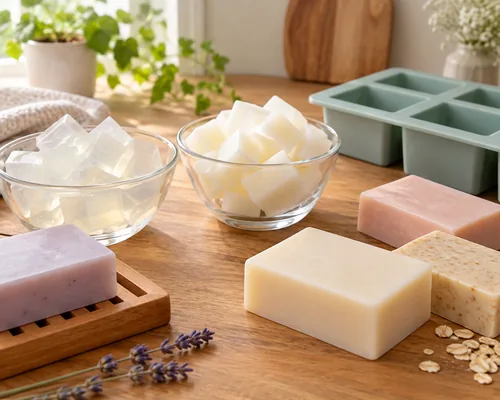
Melt and pour is one of the simplest ways to make customized bars without handling raw lye. You purchase a prepared base, melt the required amount, add suitable color or fragrance if desired, and pour it into a mold.
Once the bar cools and hardens, you can unmold it. There is no need to calculate a fresh oils-and-lye recipe for every design because the base has already been manufactured.
However, “melt and pour” describes the crafting method, not necessarily the base’s exact chemistry. A prepared base may contain traditional soap, synthetic surfactants, or a combination. Check the manufacturer’s ingredient list if that distinction matters to you.
Advantages of Melt and Pour
- You do not measure or mix raw lye yourself.
- It is accessible for small beginner projects.
- You can experiment with molds, colors, and layers.
- Finished bars do not require the same curing process as newly made cold process soap.
Limitations of Melt and Pour
- You have limited control over the base’s underlying cleansing formula.
- Large amounts of added oils, water, or fresh ingredients can affect its stability.
- You must follow the supplier’s instructions for heating and suitable additives.
Method 2: Customize a Finished Soap Base
Another approach is to purchase unscented, finished soap and customize its presentation. Depending on the product and the supplier’s instructions, you may be able to use it for rebatching, decorative finishing, or packaging under your own project concept.
The soap has already been made before you receive it. You do not handle raw lye during customization, but an alkali was used earlier if the material is traditional soap.
Finished soap cannot always be melted and poured in the same way as a melt and pour base. Choose a product intended for the technique you plan to use.
Method 3: Make a Syndet Bar
A syndet bar is a solid cleanser formulated with surfactants. Its cleansing action does not rely primarily on the fatty acid salts that define traditional soap.
A syndet bar may be designed for different cleansing properties and can be made without carrying out the traditional oil-and-lye saponification process in your workspace. However, its own ingredients still require appropriate handling, accurate formulation, and product testing.
Do not assume that every syndet ingredient was manufactured without the use of alkalis at any point in its supply chain. If an “entirely lye-free manufacturing process” claim is important, you would need documentation from the relevant ingredient suppliers.
Traditional Soap vs. Melt and Pour vs. Syndet Bars
| Feature | Traditional soap made from scratch | Melt and pour project | Syndet bar |
|---|---|---|---|
| Main starting point | Oils or fats, alkali, and water | A prepared soap or cleansing base | A formulated blend of surfactants and other ingredients |
| Do you handle raw lye during this method? | Yes | No, when using a ready-made base | Not as part of traditional saponification |
| Can you control the base formula? | Yes, within sound formulation practices | Only to a limited extent | Yes, with suitable surfactant formulation knowledge |
| What defines the cleanser? | Primarily soap molecules formed from fats and alkali | Depends on the prepared base | Its surfactant system |
Can Baking Soda Replace Lye in Soap Making?
No. Baking soda is not a direct replacement for sodium hydroxide or potassium hydroxide in a traditional soap formula. Exchanging ingredients without recalculating and understanding the chemistry can leave you with a mixture that does not become soap.
A recipe designed for baking soda may create another type of cleaning product, but it should not be described as an equivalent replacement for a tested lye-based soap recipe.
Can Vinegar or Lemon Juice Replace Lye?
No. Vinegar and lemon juice are acidic ingredients. They do not perform the role of sodium hydroxide or potassium hydroxide in traditional saponification.
Do not attempt to replace the lye in a cold process recipe with an acid. If your goal is to avoid handling raw lye, use a prepared base or follow a tested recipe for a different type of cleansing bar.
Is Soap Made with Lye Safe to Use?
Traditional soap made with lye can be suitable for use when its recipe is correctly calculated, the batch is properly made, and the finished product is appropriately assessed.
Raw lye and lye solution are different from a properly made, finished soap bar. During production, sodium hydroxide and potassium hydroxide are corrosive and require suitable protective equipment, compatible containers, and careful handling.
Using a prepared base lets you avoid that raw-lye step in your own workspace. You must still take care with hot melted base, suitable fragrance levels, and the stability of any additives.
Which Option Is Best for Beginners?
If your main goal is to learn molding, coloring, and decorating without handling raw lye, begin with a reputable melt and pour base. Read its ingredient list and follow its heating and additive instructions.
If you want complete control over the oils in a traditional soap bar, study cold process or hot process soap making and learn lye safety before making a batch.
If you want to develop a solid cleanser using surfactants rather than traditional soap chemistry, start with a tested syndet formula. Treat it as its own formulation discipline rather than a simple modification of a soap recipe.
Final Thoughts
Can you make soap without lye? You can make customized bars without handling raw lye yourself by using a prepared base. You can also make a surfactant-based cleansing bar using a different formulation approach.
Traditional soap made from oils or fats, however, requires an alkali during its production. Understanding that distinction helps you choose the right method, follow recipes safely, and describe your finished product accurately.