
 Soap Bases
 Scents
 Oils
Oils Dyes
Dyes Equipment and Accessories
 Cosmetic Clays
What Is Sodium Lactate and How Is It Used in Soap Making?

What Is Sodium Lactate and How Is It Used in Soap Making?
Waiting for a new batch of soap to become firm enough to remove from its mold can test any soap maker’s patience. Recipes made with a high proportion of liquid oils may stay soft for longer, and detailed silicone molds can make unmolding even more difficult. Sodium lactate is an additive commonly used to help with this stage of soap making.
But what exactly is sodium lactate? How much should you use, and when should you add it? This guide explains its role in cold process and hot process soap, provides a practical starting amount, and clarifies how it differs from lactic acid and the curing process.
What Is Sodium Lactate?
Sodium lactate is the sodium salt of lactic acid. It is used in a variety of products, including cosmetics and soap. For soap making, it is commonly sold as a liquid solution containing sodium lactate and water. One frequently available grade is a 60% solution, although the concentration of the product you purchase should always be checked.
In skin-care formulas, sodium lactate can function as a humectant, helping a product manage moisture. In handmade bar soap, its most practical and noticeable use is helping a newly made bar firm up so it can often be removed from the mold more easily.
Sodium lactate is an optional soap additive. It is not an oil, a fragrance, a colorant, or a substitute for sodium hydroxide. A well-formulated soap can be made without it.
Why Do Soap Makers Use Sodium Lactate?
It can make unmolding easier
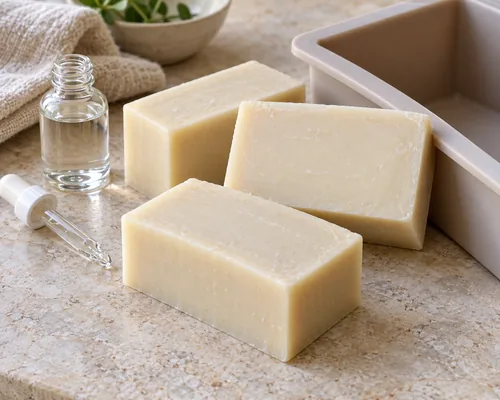
Fresh cold process soap may be too soft to remove cleanly from a mold. Pulling it out too early can leave dents, drag marks, or broken edges. Sodium lactate can help the bar become firm enough to handle sooner, although the actual timing still depends on the recipe, mold, and processing conditions.
It can be helpful in soft-oil recipes
Recipes containing a large proportion of oils that produce a softer young bar may benefit from sodium lactate. It is often considered for olive oil-rich or palm-free recipes, especially when the maker wants a clean release from a silicone mold.
The additive does not change the underlying fatty acid balance of the oils. If a recipe consistently produces a very soft finished bar, its oil composition, water amount, and cure should also be reviewed.
It may help with hot process texture
Hot process soap batter can become thick after cooking. In some hot process methods, sodium lactate is used to make the cooked soap easier to work with and pour into the mold. Its behavior in hot process soap is different from its most familiar cold process use, so follow instructions written for the specific method you are using.
How Much Sodium Lactate Should You Use?
A common starting point for liquid sodium lactate in cold process soap is:
Approximately 1 teaspoon per 1 pound (454 g) of soap-making oils.
This amount is calculated from the weight of the oils, not the total weight of the finished soap, which also includes water and alkali.
| Total oil weight | Approximate starting amount of liquid sodium lactate |
|---|---|
| 454 g (1 lb) | 1 teaspoon |
| 908 g (2 lb) | 2 teaspoons |
| 1,000 g | Approximately 2.2 teaspoons |
These are starting examples, not a universal maximum or a substitute for the supplier’s directions. Commercial sodium lactate solutions can vary in concentration. Teaspoon measurements also describe volume, not weight. For repeatable production, weigh your chosen liquid product, record the amount used, and keep the same supplier grade when comparing batches.
More is not necessarily better. Excess sodium lactate can make some soap batches brittle or crumbly, especially when cutting. Start with a small test batch before changing a production recipe.
How to Use Sodium Lactate in Cold Process Soap
The following sequence describes a common approach for a liquid sodium lactate product:
- Calculate the soap recipe. Determine the correct amounts of oils, sodium hydroxide, and water using a reliable soap calculator. Sodium lactate does not replace this calculation.
- Prepare the lye solution safely. Wearing suitable protective equipment, add sodium hydroxide to the measured water according to established soap-making safety practice.
- Let the lye solution cool. Allow it to reach the processing temperature appropriate for your recipe. Follow the sodium lactate supplier’s temperature and mixing guidance.
- Add the measured sodium lactate. Stir the liquid sodium lactate thoroughly into the cooled lye solution.
- Make the soap as usual. Combine the prepared lye solution with the oils, blend to the desired consistency, add any other suitable ingredients, and pour into the mold.
- Check before unmolding. Gently assess whether the bar is firm enough to release cleanly. If it sticks to the mold or dents easily, allow more time.
- Cut and cure the bars. After unmolding, cut at an appropriate firmness and allow the soap to cure as required by the recipe.
Some experienced makers incorporate sodium lactate through a different stage of their process. The important points are to use a measured amount, disperse it evenly, and follow guidance suitable for the exact product and soap-making method.
Does Sodium Lactate Reduce Soap Curing Time?
No. A firm bar is not necessarily a fully cured bar. Sodium lactate can improve early firmness and help with unmolding. Curing serves additional purposes, including allowing excess water to evaporate and the bar’s final handling and use characteristics to develop.
A freshly unmolded bar may feel solid while still being too young to perform as intended. The required curing period depends on the recipe and method; many cold process recipes are cured for several weeks. Do not treat faster unmolding as proof that curing is complete.
Sodium Lactate vs. Lactic Acid: What Is the Difference?
The similar names can cause a serious recipe mistake:
| Material | What it is | Soap-making consideration |
|---|---|---|
| Sodium Lactate | The sodium salt of lactic acid | Used as an optional additive; it is not entered as a saponifiable oil. |
| Lactic Acid | An acid | Reacts with alkali, so its addition must be accounted for in the lye calculation. |
Do not replace a recipe’s sodium lactate with the same amount of lactic acid. They are different materials and affect the formula differently. Likewise, adding lactic acid is not a simple way to turn a traditional alkaline soap into a low-pH facial cleanser.
Is Sodium Lactate a Preservative in Handmade Soap?
Sodium lactate can appear in industries where it serves other technical purposes, but in a handmade soap recipe it should not be treated as a complete cosmetic preservative system. Its usual reason for inclusion is improving early bar firmness and handling.
Water-containing products such as lotions require their own preservation assessment. The fact that a recipe contains sodium lactate does not establish that the finished product is protected against bacteria, yeast, or mold.
Common Sodium Lactate Problems and How to Avoid Them
| Problem | Possible cause | What to check |
|---|---|---|
| Soap crumbles while cutting | Too much sodium lactate, cutting too late, or a naturally brittle recipe | Review the dose, oil balance, and cutting time. |
| Soap still sticks to the mold | The bar needs more time or the recipe is especially soft | Wait longer and review water amount, oils, and mold type. |
| Different results between batches | Changed supplier grade, concentration, measurements, or processing conditions | Record the exact product, amount, temperatures, and unmolding time. |
| Soap feels hard but wears down quickly | Early firmness has been mistaken for full cure or balanced bar composition | Allow proper curing and evaluate the oil recipe. |
When Is Sodium Lactate Especially Useful?
Consider testing sodium lactate when you make soap with a high proportion of soft oils, use intricate silicone molds, need cleaner edges during unmolding, or want to compare how a hot process recipe flows into its mold. It can also be helpful when consistent production handling is important.
Keep one control batch without sodium lactate and one test batch with it if you want to evaluate its real effect on your recipe. Compare unmolding time, cutting behavior, appearance, and the feel of the bars after a full cure. This gives you more useful information than assuming every soap formula will respond the same way.
Final Thoughts
Sodium lactate is a useful but optional soap-making additive. In cold process soap, it is mainly valued for helping bars firm up and release from molds more easily. A common starting point is approximately one teaspoon of liquid sodium lactate per pound of oils, subject to the concentration and instructions of the product you buy.
Measure it carefully, keep it distinct from lactic acid, and remember that early hardness does not replace a balanced recipe or adequate curing. Used thoughtfully, sodium lactate can make handmade soap production easier and more consistent.