

 Soap Bases
 Scents
 Oils
Oils Dyes
Dyes Equipment and Accessories
 Cosmetic Clays
Cosmetic Emulsifiers & Solubilizers
Discover our collection of cosmetic emulsifiers and solubilizers for skincare, hair care and personal care formulations. Explore essential ingredients used in creams, lotions, serums, cleansers and other cosmetic products to help combine oil and water phases, improve texture and support formulation stability.
Whether you are creating handmade cosmetics or developing professional skincare products, choosing the right emulsifying ingredients is essential for achieving consistent textures, suitable ingredient compatibility and reliable product performance.
Cosmetic Emulsifiers & Solubilizers for Skincare Formulations
Cosmetic emulsifiers are essential ingredients in the development of creams, lotions, cleansing products and many other personal care formulations. They help combine ingredients that would not normally mix together, particularly oil-based and water-based components.
Creating a stable cosmetic product requires more than simply blending oils with water. Without an appropriate emulsification system, these phases may separate during manufacturing or storage.
Emulsifiers help form and stabilize emulsions by reducing interfacial tension between different phases and supporting the distribution of droplets throughout the formulation.
At SabunYapimi, explore emulsifiers, solubilizers and related cosmetic formulation ingredients for handmade skincare, hair care and professional cosmetic development.
What Are Cosmetic Emulsifiers?
An emulsifier is an ingredient that helps create or stabilize a mixture of two normally immiscible liquids, such as oil and water.
Many cosmetic creams and lotions are emulsions containing an aqueous phase and an oil phase.
Depending on the formulation, these products may be oil-in-water or water-in-oil emulsions.
In an oil-in-water emulsion, small oil droplets are dispersed throughout a continuous water phase. This structure is commonly used in many lightweight creams and lotions.
In a water-in-oil emulsion, water droplets are dispersed within a continuous oil phase, which may produce a richer and more occlusive product texture.
The correct emulsifier depends on the intended emulsion type, oil-phase composition, desired viscosity and other formulation requirements.
Emulsifiers for Creams and Lotions
Emulsifiers for creams and lotions play an important role in maintaining a uniform and stable cosmetic texture.
A properly developed emulsification system can help produce products with consistent appearance, smooth spreading characteristics and acceptable storage stability.
Emulsifiers are frequently combined with fatty alcohols, consistency agents and other formulation ingredients to achieve the desired structure.
For example, Glyceryl Monostearate (GMS) may be used in selected cosmetic emulsions as a consistency agent and co-emulsifier.
Its exact role depends on the commercial grade and the other ingredients in the formulation. Standard Glyceryl Stearate and self-emulsifying Glyceryl Stearate SE should not be assumed to have identical properties.
Similarly, Stearic Acid may contribute to emulsion structure and viscosity. It can also participate in emulsifying systems when appropriately neutralized.
However, neither ingredient should automatically be considered a complete stand-alone emulsifier for every cosmetic formulation.
Cosmetic Solubilizers for Fragrances and Essential Oils
Cosmetic solubilizers are commonly used when formulators need to incorporate relatively small quantities of compatible oil-soluble ingredients into water-based products.
For example, fragrances and essential oils do not normally dissolve directly in water.
Without a suitable solubilizing system, these ingredients may separate, create visible droplets or cause inconsistent product appearance.
PEG-40 Hydrogenated Castor Oil is a commonly used nonionic solubilizer that can help incorporate selected fragrance oils into compatible aqueous cosmetic formulations.
It is frequently evaluated in facial toners, body sprays, micellar-style products and other water-based systems.
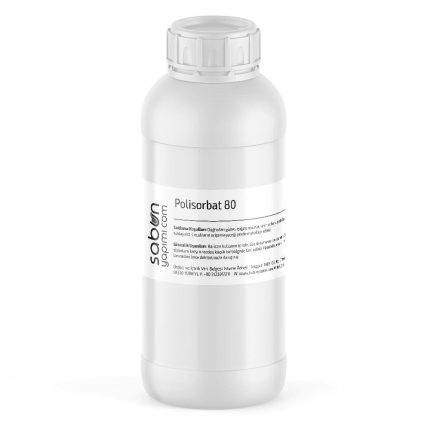
Another important ingredient is Polysorbate 80, a nonionic surfactant used in certain cosmetic products as an emulsifier or solubilizer.
These ingredients have different properties, and the appropriate selection depends on the materials being incorporated and the desired finished-product characteristics.
A clear formulation cannot be guaranteed solely by adding a particular solubilizer. Concentration, fragrance composition, temperature and ingredient compatibility must all be considered.
Emulsifiers vs. Solubilizers: What Is the Difference?
Although emulsifiers and solubilizers are both surface-active ingredients, they do not always perform the same function.
An emulsifier generally helps create or maintain dispersed droplets within an emulsion, such as a cream or lotion.
A solubilizer is often selected to incorporate relatively small amounts of lipophilic ingredients into an aqueous system, potentially creating a transparent or translucent formulation.
For example, a rich moisturizing cream typically requires an appropriate emulsifier system, while a water-based fragrance spray may require a compatible solubilizer.
Certain ingredients can perform both functions depending on their concentration and the complete formulation.
Understanding the distinction helps formulators avoid common mistakes, such as expecting a fragrance solubilizer to stabilize a high-oil-content cream without additional emulsifying ingredients.
Emulsifiers in Handmade Skincare Products
Emulsifiers are used in many different skincare formulations, including face creams, body lotions, cleansing milks and specialty moisturizing products.
The emulsifier system contributes to the physical structure and sensory characteristics of the finished product.
A lightweight lotion may require a different emulsifier combination from a thick, rich body cream.
Likewise, a cleansing lotion may have different requirements from a leave-on facial moisturizer.
Selecting a suitable emuls