
 Soap Bases
 Scents
 Oils
Oils Dyes
Dyes Equipment and Accessories
 Cosmetic Clays
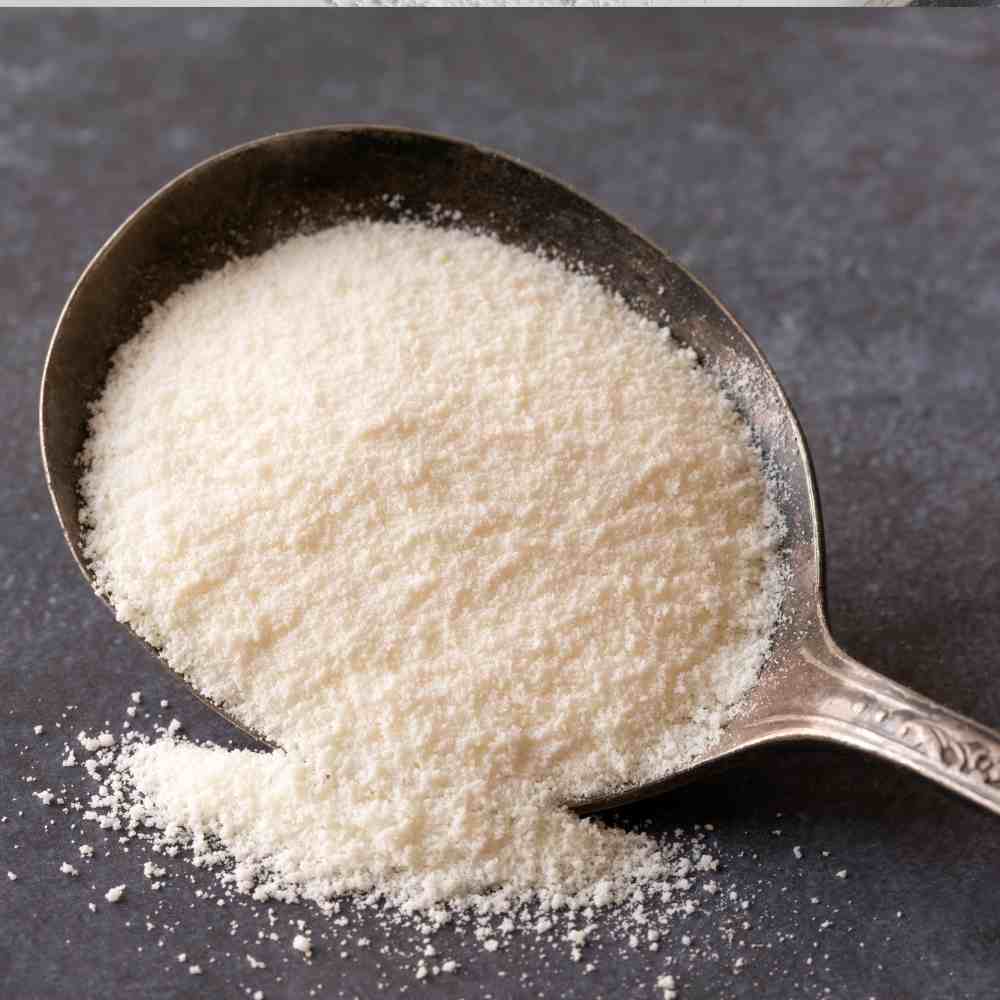
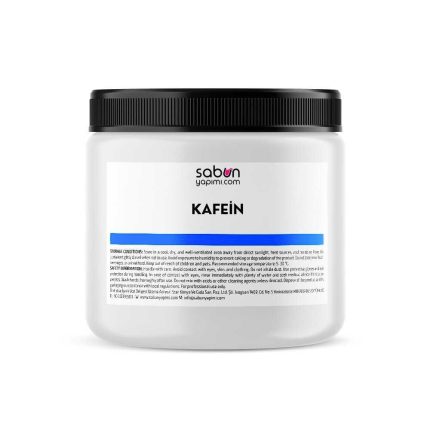
Caffeine Powder 50 g – Cosmetic Active for Eye Care, Skin & Hair Formulations
$28,00
Caffeine Powder is a versatile cosmetic active used in eye creams, facial serums, body lotions, shampoos and scalp-care formulations. It is commonly selected for products designed to improve the appearance of tired-looking skin, puffiness and uneven skin texture. This water-soluble ingredient requires careful concentration, dissolution and stability control to prevent crystallization in finished formulations.
Caffeine Powder 50 g – Cosmetic Active for Eye Care, Skin & Hair Formulations
Caffeine Cosmetic Ingredient for Skincare, Eye Creams & Hair Care
Caffeine Powder is a versatile cosmetic ingredient widely used in skincare, body-care and hair-care formulations.
Caffeine belongs to the methylxanthine family of compounds and is naturally present in coffee beans, tea leaves and certain other botanical materials.
In cosmetic formulations, it is particularly popular in products designed to improve the appearance of:
- Tired-looking skin
- Under-eye puffiness
- Dull-looking complexion
- Uneven skin texture
- Less firm-looking skin
- Dry or damaged-looking hair
Caffeine is commonly incorporated into:
- Eye creams
- Eye serums
- Facial serums
- Body lotions
- Firming body-care products
- Shampoos
- Scalp-care products
- Hair serums
- Facial masks
- Specialty cosmetic formulations
Its effectiveness and suitability depend on the final product’s concentration, stability, application method and complete formulation.
What Is Caffeine?
Caffeine is an organic compound belonging to the methylxanthine group.
It is naturally found in several plants, including coffee and tea.
Commercial caffeine may be obtained through botanical extraction or manufactured synthetically.
INCI Name: Caffeine
CAS Number: 58-08-2
Chemical Formula: C8H10N4O2
Molecular Weight: 194.19 g/mol
Ingredient Type: Methylxanthine
Primary Cosmetic Function: Skin Conditioning
Pure anhydrous caffeine is typically supplied as a white crystalline powder.
The exact grade, purity and origin should be confirmed through supplier documentation.
Main Cosmetic Applications
Caffeine is commonly selected for cosmetic formulations focused on:
- Refreshing skincare
- Eye-area appearance
- Skin conditioning
- Body-care treatments
- Scalp-care products
- Cosmetic formulations targeting a firmer-looking appearance
It may also contribute antioxidant activity, depending on the finished formulation.
Caffeine for Eye Creams
One of the most popular applications of caffeine is in eye-area skincare.
Caffeine is frequently incorporated into products designed for tired-looking or puffy under-eye areas.
Possible products include:
- Under-eye creams
- Eye serums
- Cooling eye gels
- Eye-area moisturizers
- Lightweight eye lotions
Caffeine-containing products may help temporarily improve the appearance of puffiness in some formulations.
However, results depend on the cause of puffiness and the complete product.
Does Caffeine Reduce Under-Eye Bags?
Under-eye puffiness can have several causes, including:
- Temporary fluid retention
- Lack of sleep
- Allergies
- Skin characteristics
- Age-related structural changes
Cosmetic caffeine formulations are generally positioned around improving the appearance of temporary puffiness.
They cannot be expected to eliminate every type of under-eye bag.
Persistent or structural under-eye bags may not respond to topical cosmetics.
Caffeine for Dark Circles
Caffeine is also used in products marketed for tired-looking eyes and dark-circle appearance.
However, dark circles can result from:
- Pigmentation
- Visible blood vessels
- Facial anatomy
- Skin thickness
- Shadows
- Age-related changes
Caffeine does not address all these factors equally.
Therefore, a suitable cosmetic claim is:
“Helps improve the appearance of tired-looking eyes.”
It should not be claimed to permanently eliminate dark circles.
Use in Facial Serums
Caffeine is suitable for selected water-based and emulsion-type facial serum formulations.
It may be used in products designed around:
- Refreshed skin appearance
- Skin conditioning
- Tired-looking complexion
- Smooth skin texture
- Antioxidant-focused cosmetic concepts
Caffeine may be combined with compatible ingredients such as:
- Glycerin
- Panthenol
- Hyaluronic Acid
- Betaine
- Niacinamide
- Selected botanical extracts
The complete formulation must be evaluated for compatibility and stability.
Caffeine & Antioxidant Properties
Caffeine is studied for antioxidant-related properties.
In cosmetic formulations, it may be included in products intended to support the appearance of healthy-looking skin.
However, antioxidant activity observed in laboratory conditions does not automatically guarantee a measurable effect in every finished cosmetic product.
Caffeine should also not be treated as a substitute for an antimicrobial preservative.
Caffeine for Body Lotions
Caffeine is widely used in body-care formulations, particularly products marketed around the appearance of:
- Skin smoothness
- Firmness
- Uneven texture
- Dimpled skin
Applications may include:
- Body lotions
- Body creams
- Cosmetic body gels
- Massage lotions
- Firming body-care formulations
The final claims should be based on finished-product performance testing.
Caffeine in Firming Cosmetics
Caffeine is commonly incorporated into cosmetic products positioned around firmer-looking skin.
However, it is important to distinguish between:
A temporary cosmetic improvement in skin appearance
and
Permanent changes to skin structure.
Caffeine-containing cosmetics should not automatically be claimed to tighten loose skin permanently or reverse age-related changes.
Caffeine & Cellulite Appearance
Caffeine is a popular ingredient in cosmetic products marketed for the appearance of cellulite.
These products may include:
- Body creams
- Body gels
- Massage products
- Firming lotions
Some formulations may temporarily improve the appearance of dimpled skin.
However, caffeine should not be described as permanently removing cellulite or eliminating fat deposits.
Appropriate cosmetic positioning includes:
“For smoother and firmer-looking skin.”
Caffeine for Hair Care
Caffeine is also used in hair-care formulations.
Common applications include:
- Shampoos
- Scalp serums
- Hair lotions
- Leave-in scalp products
- Specialty hair-care products
It has attracted scientific interest because of its potential interactions with hair-follicle biology.
However, the evidence for reliable clinical hair-growth benefits remains limited.
Does Caffeine Prevent Hair Loss?
Topical caffeine has been investigated in clinical studies involving hair thinning and certain types of hair loss.
Some studies have reported promising outcomes.
However, evidence quality and formulation details vary.
Therefore, caffeine should not automatically be marketed as:
- Preventing hair loss
- Curing alopecia
- Regrowing lost hair
- Strengthening hair roots permanently
- Replacing medically established hair-loss treatments
Such claims require appropriate evidence and may change the regulatory classification of the finished product.
Use in Shampoo
Caffeine may be included in shampoos designed for:
- Daily scalp care
- Premium hair-care positioning
- Conditioning-focused shampoo
- Scalp-care product concepts
Its role is not primary cleansing.
The surfactant system remains responsible for removing oil, dirt and other residues.
Caffeine should be dissolved and incorporated into a compatible formulation.
Use in Scalp Serums
Caffeine may also be formulated into water-based scalp serums and lotions.
For professional development, formulators should consider:
- Active concentration
- Scalp compatibility
- Solubility
- Preservation
- Contact time
- Stability
- Packaging
Leave-on scalp products generally provide longer contact time than rinse-off shampoos, but longer exposure does not automatically guarantee improved results.
Caffeine for Soap Making
Caffeine can be incorporated into experimental soap and cleansing formulations.
However, traditional cold process soap is not generally the most suitable delivery system for specialty caffeine skincare benefits.
Traditional soap has:
- An alkaline environment
- A rinse-off application
- Relatively short skin contact time
Therefore, caffeine-containing soap should not automatically be marketed as providing the same cosmetic benefits as a leave-on eye cream or facial serum.
Cold Process Soap
Caffeine is not required for the saponification process.
It does not replace:
- Soap-making oils
- Sodium hydroxide
- Potassium hydroxide
- Correct SAP calculations
Its addition does not automatically improve:
- Soap hardness
- Cleansing performance
- Lather quality
- Moisturizing performance
If evaluated in specialty soap formulations, stability and finished-product performance should be tested.
Melt & Pour Soap
Caffeine may be evaluated in selected compatible melt and pour bases.
However, additional dissolved or dispersed materials can influence:
- Transparency
- Appearance
- Crystallization
- Texture
- Product stability
Always follow the soap-base manufacturer’s recommended additive limits.
Better Applications for Caffeine
The properties of caffeine are generally easier to evaluate in formulations such as:
- Facial serums
- Eye creams
- Body lotions
- Scalp serums
- Cosmetic gels
- Professionally developed skincare products
These systems allow greater control of concentration, pH, solubility and application.
Is Caffeine Water-Soluble?
Yes.
Caffeine is soluble in water, but its solubility at room temperature is limited.
At approximately 25°C, the aqueous solubility of caffeine is around:
2.16–2.17 g per 100 mL of water
This is an important formulation consideration.
Caffeine is not freely soluble at every desired cosmetic concentration.
Why Caffeine Can Crystallize
Caffeine dissolves more readily in hot water than in cold water.
However, a formulation that appears completely dissolved at an elevated temperature may develop crystals after cooling.
Potential problems include:
- Visible crystals
- Sedimentation
- Gritty texture
- Uneven active distribution
- Unstable product appearance
High-temperature solubility should not be used as the only basis for selecting the concentration in a finished product.
Formulation Example: Solubility Considerations
Consider a hypothetical water-based cosmetic formula containing:
1% Caffeine
This corresponds to approximately 1 gram of caffeine per 100 grams of finished product.
Whether it remains fully dissolved depends on:
- Actual water content
- Other dissolved ingredients
- Solvent system
- Temperature
- Storage conditions
In a low-water or highly concentrated formula, crystallization may occur at a lower total caffeine percentage than expected.
Always conduct cold-temperature stability testing.
Typical Usage Levels
Caffeine dosage depends on the product type and raw-material grade.
General experimental formulation starting ranges may include:
Eye Creams & Eye Serums
0.1–0.5%
Facial Serums
0.1–1%
Body Lotions
0.5–1%
Shampoos
0.1–0.5%
Scalp-Care Serums
0.1–1%
These are conservative formulation starting points, not universal legal limits or guarantees of effectiveness.
The appropriate concentration must be determined using the supplier TDS, finished-product safety assessment, solubility testing and target-market requirements.
Higher concentrations may require specialized solubilization strategies.
How to Use Caffeine in Cosmetic Formulations
For suitable water-based formulations, a general procedure may include:
- Accurately weigh the required caffeine.
- Prepare the water phase.
- Add caffeine gradually while mixing.
- Use gentle heating if permitted by the validated formulation.
- Continue mixing until the powder dissolves.
- Incorporate the solution into the remaining formulation.
- Allow the product to reach its intended storage temperature.
- Check for crystallization or precipitation.
- Verify finished-product pH.
- Complete stability and compatibility testing.
The exact process should follow the supplier’s technical documentation.
Processing Temperature
Caffeine’s water solubility increases with temperature.
However, heating should be controlled to avoid adversely affecting other ingredients.
It is generally preferable to avoid unnecessary prolonged heating.
After formulation, the product should be evaluated for crystal formation at room temperature and under cold-storage conditions.
Water Phase Compatibility
Caffeine is primarily incorporated into the aqueous phase of cosmetic formulations.
It is not a conventional oil-soluble emollient.
It should not be added directly to an anhydrous oil blend with the expectation that it will fully dissolve.
For water-in-oil and other specialized systems, the formulation architecture must account for caffeine solubility.
Combining Caffeine With Other Ingredients
Caffeine may be used alongside ingredients such as:
- Panthenol
- Glycerin
- Sodium PCA
- Hyaluronic Acid
- Betaine
- Hydrolyzed Proteins
- Suitable Botanical Extracts
Combination does not automatically mean synergy or improved effectiveness.
Each formula requires its own stability and performance evaluation.
Is Caffeine a Natural Cosmetic Ingredient?
Caffeine occurs naturally in several plants.
Commercial caffeine may be produced through different processes, including extraction and synthesis.
Therefore, claims such as:
- 100% Natural
- Coffee-Derived
- Plant-Derived
- Organic Certified
should only be used when supported by the actual supplier documentation.
Synthetic caffeine and naturally extracted caffeine can share the same chemical identity, but their sourcing and certification status differ.
Pure Caffeine vs. Coffee Extract
These materials should not be confused.
Pure Caffeine
Typically a white crystalline material containing caffeine as the principal ingredient.
Coffee Extract
A complex botanical extract that may contain:
- Caffeine
- Polyphenols
- Other botanical components
- Water or solvents
- Additional extract constituents
Their composition and formulation behavior are different.
Is Caffeine a Moisturizer?
Caffeine is not a conventional humectant in the same category as glycerin or panthenol.
It is primarily used as a cosmetic skin-conditioning active.
For moisturizing formulations, it is commonly combined with ingredients that provide water-binding and emollient properties.
Is Caffeine a Preservative?
No.
Caffeine should not be used as the primary antimicrobial preservative in cosmetic formulations.
Water-containing products may still require:
- Suitable antimicrobial preservatives
- Microbiological testing
- Preservative efficacy testing
- Good Manufacturing Practice
pH Considerations
Pure caffeine powder should not be assigned a universal cosmetic pH range such as:
pH 4.5–7.0
because pH is measured in an appropriate aqueous system, not directly in the dry powder.
Caffeine can be incorporated into formulations with different pH values, provided compatibility and stability are established.
The finished product’s pH should be selected according to its intended application and overall formulation requirements.
Product Details
Product Name: Caffeine Powder
INCI Name: Caffeine
CAS Number: 58-08-2
Chemical Formula: C8H10N4O2
Molecular Weight: 194.19 g/mol
Weight: 50 g
Typical Appearance: White Crystalline Powder
Ingredient Family: Methylxanthine
Primary Cosmetic Function: Skin Conditioning
Water Solubility: Approximately 2.16–2.17 g/100 mL at 25°C
Applications: Eye Creams, Facial Serums, Body Lotions, Shampoos and Scalp-Care Formulations
Purity: Refer to Supplier COA
Raw Material Origin: Refer to Supplier Documentation
Cosmetic Grade: Confirm with Supplier
Purity & Raw Material Specifications
Only describe the product as:
100% Pure Caffeine
if the actual supplied batch supports this statement.
For professional cosmetic manufacturing, relevant specifications include:
- Purity
- Identification
- Anhydrous or hydrated form
- Moisture content
- Appearance
- Assay
- Heavy metal limits
- Microbiological specifications where applicable
- SDS
- TDS
- COA
Safety Considerations
Concentrated caffeine powder is not equivalent to a ready-to-use cosmetic product.
During raw-material handling:
- Avoid inhaling powder.
- Avoid direct eye contact.
- Wear suitable protective equipment.
- Use accurate weighing equipment.
- Do not ingest.
- Do not taste the powder.
- Keep away from children and pets.
- Follow the supplier SDS.
Accidental ingestion of concentrated caffeine can cause serious poisoning.
This product should not be used to prepare homemade dietary supplements or energy products.
Eye-Area Safety
Caffeine is commonly used in eye creams, but an eye-area product must be specifically developed and evaluated for this sensitive application.
Formulators should consider:
- Eye irritation potential
- Active concentration
- Preservative suitability
- Product migration into the eyes
- Microbiological quality
- Finished-product safety
Avoid direct contact between the raw material and the eyes.
Sensitive Skin
The presence of caffeine does not automatically make a product suitable for every skin type.
Potential skin responses depend on the formula and individual sensitivity.
Products designed for sensitive skin should undergo an appropriate safety assessment.
Stability Testing
Professional caffeine formulations should be evaluated for:
- Crystallization
- Appearance
- Color changes
- pH stability
- Viscosity
- Temperature stability
- Microbiological quality
- Preservative efficacy
- Packaging compatibility
Cold-temperature testing is especially useful because caffeine may crystallize as solubility decreases.
Storage
Store Caffeine Powder:
- In tightly closed packaging
- In a cool and dry environment
- Away from direct sunlight
- Protected from moisture
- Away from contamination
- Out of reach of children and pets
Follow the supplier’s recommended storage conditions.
Wholesale, Private Label & Contract Manufacturing
We supply Caffeine Powder, cosmetic actives, humectants, conditioning agents, botanical ingredients and other formulation raw materials in wholesale quantities for cosmetic brands, laboratories, manufacturers, retailers and professional formulators.
We also provide custom cosmetic formulation development services for caffeine-based eye creams, facial serums, body lotions, shampoos, scalp serums and other personal-care concepts.
Our formulation development services can include:
- Raw-material selection
- Active concentration optimization
- Solubility assessment
- Formulation development
- Stability recommendations
- Manufacturing procedures
- Technical specifications
- Quality-control requirements
- Supporting technical documentation
Private label and contract manufacturing services are available for selected cleansing products within our manufacturing capabilities. Cosmetic formulation development projects can be evaluated separately from physical manufacturing.
Customized formulations can be developed with different caffeine concentrations, compatible botanical extracts, humectants, conditioning ingredients, textures, fragrances and packaging concepts.
For bulk Caffeine Powder orders, custom cosmetic formulation development, private label or contract manufacturing inquiries, please contact us with your required raw-material grade, purity, product concept, packaging requirements, target market and estimated quantity.
KARGO & İADE
SabunYapimi.com olarak müşteri memnuniyetini ön planda tutuyoruz. Siparişlerinizin güvenli ve hızlı bir şekilde size ulaşmasını sağlamak için en iyi lojistik firmalarıyla çalışıyoruz. Ayrıca, herhangi bir sebepten dolayı ürününüzden memnun kalmazsanız, iade ve değişim sürecimizi kolay ve hızlı hale getirdik.
Kargo Firması & Gönderim Süresi
- Siparişleriniz, ödeme onaylandıktan sonra 1-2 iş günü içinde kargoya verilir.
- Kargo firmaları: [Aras & Yurtiçi]
- Ortalama teslimat süresi 2-3 iş günü arasındadır.
Kargo Ücretleri & Ücretsiz Kargo Şartları
- [1000 TL ve üzeri alışverişlerde kargo ücretsizdir.]
- Standart kargo ücreti sipariş aşamasında ödeme sayfasında belirtilir.
Kargo Takibi
Siparişiniz kargoya verildiğinde e-posta veya SMS ile takip numarası paylaşılır. Kargo takip bağlantısını kullanarak siparişinizi kolayca takip edebilirsiniz.
📌 Siparişiniz belirlenen süre içinde ulaşmazsa, bize aşağıdaki iletişim bilgileriyle ulaşabilirsiniz:
📧 E-Posta: sabunyapimi@gmail.com
📞 WhatsApp Destek: +90 532 059 15 71
Geri Ödeme ve İade Süreçleri
Geri Ödeme ve İade Politikası Sayfamızı Okuyun