
 Soap Bases
 Scents
 Oils
Oils Dyes
Dyes Equipment and Accessories
 Cosmetic Clays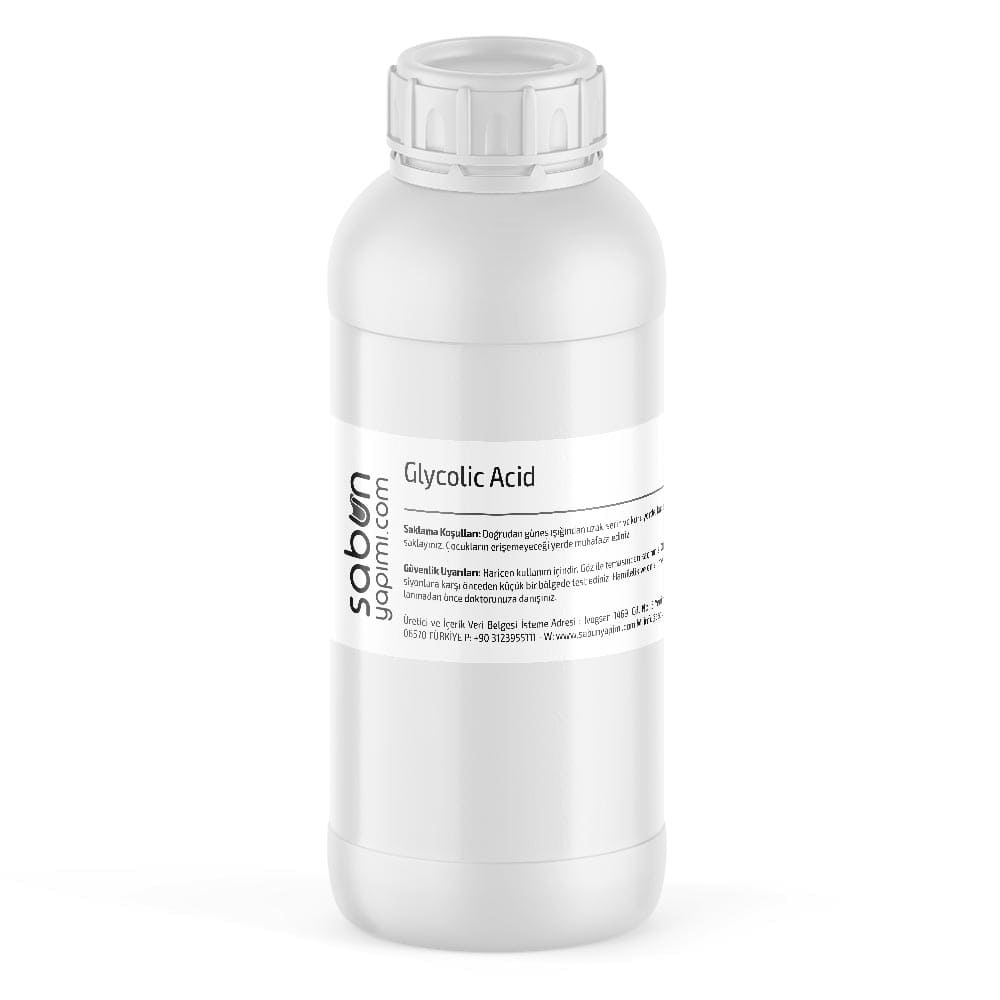
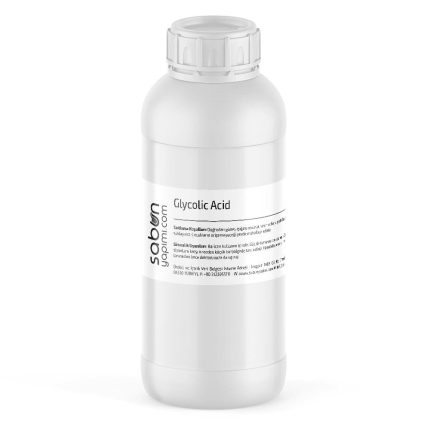
Glycolic Acid 100 g – AHA Exfoliating Active for Skincare Formulations
$37,00
Glycolic Acid is an alpha hydroxy acid (AHA) used in cosmetic formulations to support controlled surface exfoliation and smoother, brighter-looking skin. Suitable for professionally formulated toners, serums, creams and rinse-off products, it requires precise concentration and finished-product pH control for safe and effective use.
Glycolic Acid 100 g
Alpha Hydroxy Acid (AHA) for Professional Skincare Formulations
Glycolic Acid is one of the best-known alpha hydroxy acids (AHAs) used in cosmetic skincare formulations.
It is primarily used as a controlled chemical exfoliating ingredient in products designed to improve the appearance of:
- Rough skin texture
- Dull-looking skin
- Uneven-looking skin tone
- Surface dryness
- Fine textural irregularities
It is commonly incorporated into:
- Facial toners
- Exfoliating serums
- Creams
- Lotions
- Body-care products
- Rinse-off exfoliating products
- Professionally formulated peeling systems
Because Glycolic Acid is a strong cosmetic active, both concentration and final product pH are critical.
What Is Glycolic Acid?
Glycolic Acid is the smallest member of the alpha hydroxy acid family.
INCI Name: Glycolic Acid
Chemical Formula: C2H4O3
CAS Number: 79-14-1
Ingredient Type: Alpha Hydroxy Acid
Primary Function: Exfoliating / pH-Adjusting Cosmetic Active
Its relatively small molecular structure contributes to its effectiveness as a surface-exfoliating AHA.
Is Glycolic Acid a Natural Fruit Acid?
Glycolic Acid occurs naturally in certain plant materials, including sugar cane.
However, commercial cosmetic Glycolic Acid may be produced through different manufacturing processes.
Therefore, claims such as:
“100% Natural Glycolic Acid from Sugar Cane”
should only be used when supported by the supplier documentation.
For general product descriptions, the technically safer description is:
Alpha Hydroxy Acid (AHA)
How Does Glycolic Acid Work?
Glycolic Acid helps loosen the bonds between accumulated cells at the outermost surface of the skin.
This controlled exfoliating effect can help improve the appearance of:
- Uneven texture
- Dullness
- Rough-feeling skin
- Superficial discoloration
- Fine surface lines
The final effect depends strongly on:
- Glycolic Acid concentration
- Free-acid level
- Finished-product pH
- Contact time
- Frequency of use
- Complete formulation
Surface Exfoliation
Glycolic Acid is used primarily to promote controlled exfoliation of the stratum corneum.
Appropriately formulated products may help skin appear:
- Smoother
- Brighter
- More even
- More refined
It should not be marketed as literally removing scars, permanently removing pigmentation or regenerating skin.
Use in Facial Toners
Glycolic Acid can be incorporated into professionally formulated facial toners.
The formulation must carefully control:
- Acid concentration
- pH
- Buffer system
- Preservative
- Skin tolerance
Simply adding Glycolic Acid to water does not create a properly formulated cosmetic toner.
Use in Facial Serums
Glycolic Acid may be used in exfoliating serum formulations.
It can be combined with compatible ingredients such as:
- Humectants
- Soothing ingredients
- Suitable polymers
- Selected botanical extracts
- Compatible preservatives
Acid-sensitive ingredients should be evaluated carefully.
Use in Creams & Lotions
Glycolic Acid can also be incorporated into emulsions such as:
- Facial creams
- Body lotions
- Hand-care products
- Rough-skin body products
Emulsion stability should be tested at the intended acidic pH.
Not every emulsifier, thickener or preservative system remains stable in low-pH formulations.
Use in Body-Care Products
Glycolic Acid may be useful in formulations designed for areas with rough or uneven-feeling skin.
Possible applications include:
- Body lotions
- Hand-care products
- Foot-care products
- Exfoliating body products
The appropriate concentration still depends on the complete formulation.
Cosmetic Usage Levels
Usage should always be based on:
- Raw-material concentration
- Finished-product pH
- Intended application
- Leave-on or rinse-off use
- Target market regulations
- Safety assessment
For conventional consumer cosmetic products, conservative AHA formulation is essential.
High-strength acid systems should not be treated as general DIY cosmetic formulations.
Why pH Is Critical
With Glycolic Acid, percentage alone does not determine product strength.
A formula containing the same nominal amount of Glycolic Acid can behave very differently depending on its final pH.
Lower pH generally increases the proportion of free acid and can increase exfoliating intensity and irritation potential.
For this reason, professional formulation requires an accurately calibrated pH meter.
Do not formulate strong acid products using pH strips alone.
Do Not Use Concentration Alone to Judge Safety
Statements such as:
“5% Glycolic Acid is always mild”
or
“10% Glycolic Acid is always safe”
are not technically sufficient.
Safety and performance also depend on:
- Final pH
- Free-acid concentration
- Exposure time
- Frequency
- Skin area
- Vehicle
- Other active ingredients
Sun Sensitivity
AHA-containing products can increase sensitivity to ultraviolet exposure.
Products containing Glycolic Acid should therefore include appropriate consumer instructions concerning sun protection.
Users should be encouraged to:
- Use broad-spectrum sunscreen
- Limit unnecessary sun exposure
- Follow the finished product’s directions for use
especially during regular AHA use.
Glycolic Acid Is Not a Sunscreen
Glycolic Acid provides no SPF protection.
It does not replace:
- Sunscreen
- UVA filters
- UVB filters
- Protective clothing
Initial Skin Sensations
Products containing Glycolic Acid may sometimes cause temporary sensations such as:
- Tingling
- Mild stinging
- Warmth
However, burning, persistent pain or significant redness should not be described as “normal.”
Strong discomfort can indicate excessive irritation.
Finished-product instructions should tell users to discontinue use if significant irritation develops.
Sensitive Skin
Glycolic Acid should not automatically be described as suitable for all sensitive skin.
Skin tolerance varies significantly.
Sensitive users may require:
- Lower-strength products
- Less frequent application
- Shorter contact time
- Alternative exfoliating systems
Use on Damaged Skin
Acid exfoliants should generally not be applied to:
- Open wounds
- Severely irritated skin
- Recently damaged skin
- Areas with significant barrier disruption
unless directed by an appropriate healthcare professional.
Use Around the Eyes
Avoid direct contact with the eyes and delicate mucosal areas.
Products specifically intended for eye-area use require dedicated safety assessment.
Can Glycolic Acid Be Used in Soap?
Glycolic Acid is not an ideal active for conventional cold process soap.
Traditional soap has an alkaline environment, whereas Glycolic Acid performs as an AHA under acidic formulation conditions.
When added to cold process soap, Glycolic Acid can react with sodium hydroxide and form glycolate salts.
This means the ingredient does not behave in soap the same way it does in an acidic facial serum or toner.
Glycolic Acid & Sodium Hydroxide
Adding Glycolic Acid to a soap recipe can consume part of the sodium hydroxide.
Therefore:
Never simply add Glycolic Acid to an existing soap recipe without recalculating the chemistry.
Doing so may affect:
- Effective lye amount
- Saponification
- Superfat
- Bar hardness
- Processing behavior
Professional soap formulation must account for acid neutralization.
Does Glycolic Acid Make an Exfoliating Soap?
Not in the same way as an acidic AHA skincare product.
Traditional finished soap is naturally alkaline.
Therefore, marketing a conventional soap bar as an effective “glycolic acid peel” can be misleading.
Glycolic Acid is better suited to deliberately formulated acidic skincare systems.
Melt & Pour Soap
Adding Glycolic Acid directly to a finished melt and pour base can also alter:
- pH
- Clarity
- Hardness
- Stability
- Lather
Use only if the soap-base manufacturer confirms compatibility.
Glycolic Acid Raw Material Concentration
This is extremely important.
Commercial Glycolic Acid may be supplied as:
- High-purity crystalline material
- Approximately 70% aqueous solution
- Other diluted solutions
Therefore:
100 g of raw material does not necessarily mean 100 g of pure Glycolic Acid.
Always check the COA.
For example, a 70% solution contains substantially less active Glycolic Acid than the same weight of a near-100% solid grade.
Product Form
Do not describe the material as powder, crystals or liquid until the exact commercial grade is confirmed.
The product page should match the actual material being sold.
Product Details
Product Name: Glycolic Acid
INCI Name: Glycolic Acid
CAS Number: 79-14-1
Chemical Formula: C2H4O3
Weight: 100 g
Ingredient Type: Alpha Hydroxy Acid (AHA)
Primary Function: Cosmetic Exfoliating Active / pH Modifier
Applications: Toners, Serums, Creams, Lotions and Controlled Exfoliating Formulations
Concentration: Refer to COA
Physical Form: Refer to Product Specification
Formulation Equipment
When developing Glycolic Acid formulations professionally, use:
- Precision scale
- Calibrated pH meter
- Acid-resistant mixing equipment
- Appropriate PPE
- Controlled manufacturing procedure
Do not estimate acid concentration or pH by eye.
Neutralization & Buffering
Some formulations partially neutralize Glycolic Acid using appropriate bases to reach the desired pH and free-acid level.
Neutralization changes the balance between:
- Glycolic Acid
- Glycolate salts
- Finished-product pH
This is an important part of professional AHA formulation.
Compatibility Testing
Before commercial production, evaluate compatibility with:
- Emulsifiers
- Thickeners
- Preservatives
- Fragrance
- Active ingredients
- Packaging
Low-pH formulations can destabilize ingredients that perform well at neutral pH.
Stability Testing
Finished Glycolic Acid formulations should undergo appropriate:
- pH monitoring
- Accelerated stability testing
- Temperature testing
- Packaging compatibility testing
- Microbiological testing
- Preservative efficacy testing where applicable
Safety During Raw Material Handling
Concentrated Glycolic Acid is substantially more hazardous than a correctly formulated low-concentration cosmetic product.
During raw material handling:
- Wear chemical-resistant gloves.
- Wear protective goggles.
- Avoid skin contact.
- Avoid eye contact.
- Avoid inhalation of aerosols or dust.
- Work in a controlled area.
- Follow the SDS.
Concentrated Glycolic Acid can cause severe irritation or chemical burns depending on concentration.
Never Apply Raw Glycolic Acid Directly to Skin
Concentrated raw material is not a finished skincare product.
Do not apply undiluted Glycolic Acid directly to the face or body.
It must first be incorporated into a properly formulated, pH-controlled finished product.
Professional Peel Formulations
High-strength Glycolic Acid peel products require specialist formulation and professional safety controls.
They should not be treated as ordinary DIY skincare.
Concentration, pH and contact time must all be controlled together.
Storage
Store Glycolic Acid:
- In tightly closed compatible packaging
- In a cool and dry environment
- Away from excessive heat
- Protected from contamination
- Away from incompatible alkaline materials
Always follow the supplier SDS and storage specification.
Important Regulatory Note
The acceptable concentration and conditions of use may differ according to:
- Target market
- Product category
- Leave-on or rinse-off format
- Professional vs. consumer use
Always complete the required cosmetic safety assessment before commercial sale.
Wholesale, Private Label & Contract Manufacturing
We also supply Glycolic Acid, AHAs, cosmetic actives, humectants and other skincare formulation raw materials in wholesale quantities for cosmetic brands, laboratories, manufacturers and professional formulators.
In addition to raw material supply, we provide private label and contract manufacturing services for exfoliating toners, serums, creams, lotions, body-care products and other customized cosmetic formulations.
Custom products can be developed with different AHA systems, concentrations, pH targets, humectants, botanical ingredients, packaging formats and private label designs.
For bulk Glycolic Acid orders, private label products or contract manufacturing, please contact us with your required raw-material concentration, product concept, intended use, target pH, packaging requirements, target market and estimated production volume.
KARGO & İADE
SabunYapimi.com olarak müşteri memnuniyetini ön planda tutuyoruz. Siparişlerinizin güvenli ve hızlı bir şekilde size ulaşmasını sağlamak için en iyi lojistik firmalarıyla çalışıyoruz. Ayrıca, herhangi bir sebepten dolayı ürününüzden memnun kalmazsanız, iade ve değişim sürecimizi kolay ve hızlı hale getirdik.
Kargo Firması & Gönderim Süresi
- Siparişleriniz, ödeme onaylandıktan sonra 1-2 iş günü içinde kargoya verilir.
- Kargo firmaları: [Aras & Yurtiçi]
- Ortalama teslimat süresi 2-3 iş günü arasındadır.
Kargo Ücretleri & Ücretsiz Kargo Şartları
- [1000 TL ve üzeri alışverişlerde kargo ücretsizdir.]
- Standart kargo ücreti sipariş aşamasında ödeme sayfasında belirtilir.
Kargo Takibi
Siparişiniz kargoya verildiğinde e-posta veya SMS ile takip numarası paylaşılır. Kargo takip bağlantısını kullanarak siparişinizi kolayca takip edebilirsiniz.
📌 Siparişiniz belirlenen süre içinde ulaşmazsa, bize aşağıdaki iletişim bilgileriyle ulaşabilirsiniz:
📧 E-Posta: sabunyapimi@gmail.com
📞 WhatsApp Destek: +90 532 059 15 71
Geri Ödeme ve İade Süreçleri
Geri Ödeme ve İade Politikası Sayfamızı Okuyun