
 Soap Bases
 Scents
 Oils
Oils Dyes
Dyes Equipment and Accessories
 Cosmetic Clays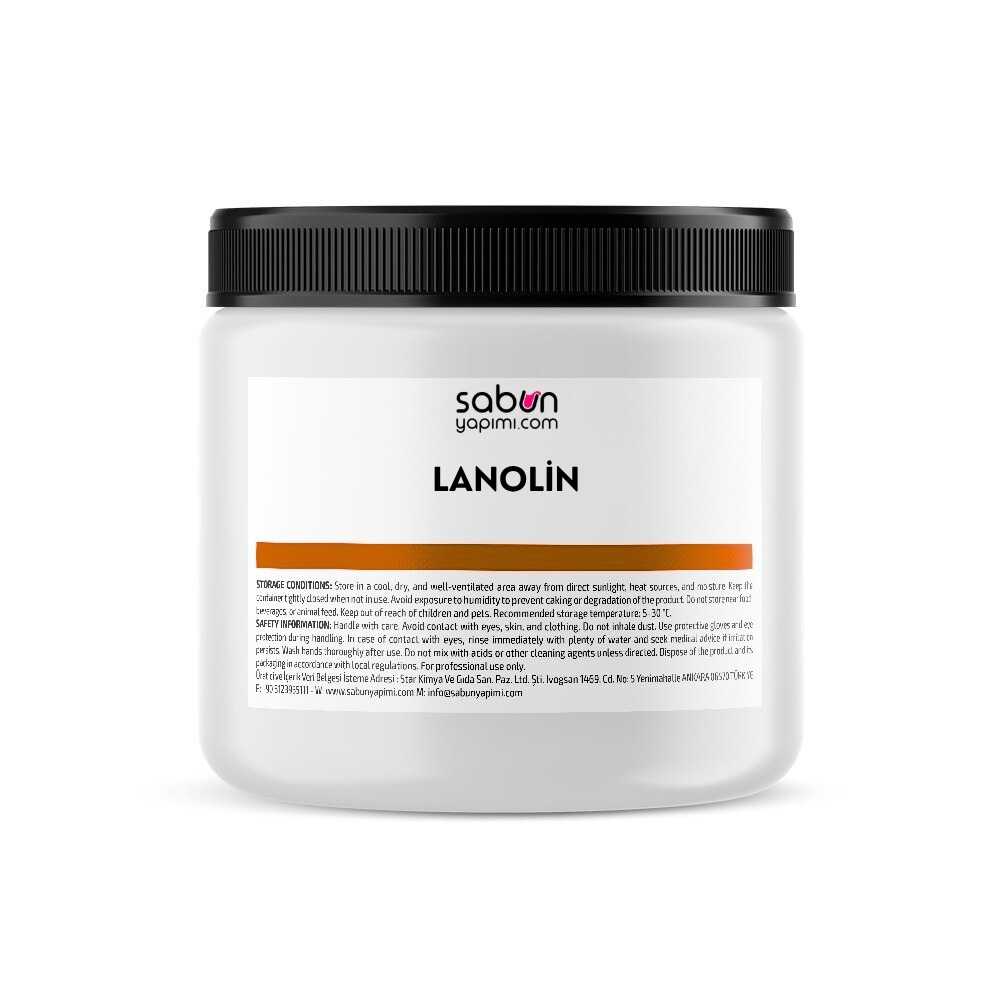
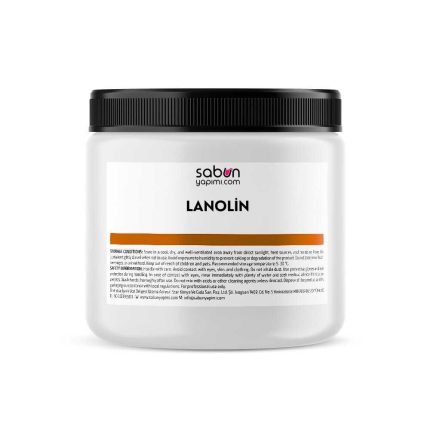
Lanolin 100 g – Natural Wool Wax for Soap Making, Lip Balms & Cosmetics
$32,00
Lanolin is a natural, sheep-wool-derived wax widely used as an emollient and protective ingredient in soap making and cosmetic formulations. Its rich, semi-solid texture helps soften the skin, improve product consistency and reduce moisture loss by forming an occlusive layer on the skin surface.
Commonly used in lip balms, hand creams, body balms, intensive moisturizing products and specialty handmade soaps, Lanolin is particularly valued in formulations designed for dry-feeling and rough skin. The supplied grade, water content and purity should be confirmed before professional formulation.
Lanolin 100 g – Natural Wool Wax for Soap Making & Cosmetics
Natural Emollient and Protective Wax for Lip Balms, Creams and Handmade Soap
Lanolin is a natural wax-like substance obtained from sheep’s wool and widely used in cosmetic and personal-care formulations. It is particularly valued for its rich texture, emollient properties and ability to help reduce moisture loss from the skin surface.
Often called Wool Wax or Wool Fat, Lanolin is commonly used in products designed to soften dry-feeling skin and improve the consistency of intensive moisturizing formulations.
Its unique composition makes it useful in lip balms, hand creams, body balms, protective skincare products and specialty handmade soaps.
Unlike ordinary vegetable oils, Lanolin contains a complex mixture of wax esters, sterols, fatty alcohols and related lipid compounds. These characteristics give it distinctive water-binding, emulsifying and skin-conditioning properties.
What Is Lanolin?
Lanolin is a naturally occurring material secreted by the sebaceous glands of sheep. It coats the wool fibers and helps protect the fleece from environmental moisture.
During wool processing, the wax is separated, purified and refined to produce commercial Lanolin.
The resulting material is typically a yellow to amber-colored, soft, waxy substance with a characteristic odor that varies depending on the degree of refinement.
INCI Name: Lanolin
CAS Number: 8006-54-0
EC Number: 232-348-6
Alternative Names: Wool Wax, Wool Fat, Adeps Lanae
Ingredient Origin: Animal-Derived
Primary Functions: Emollient, Skin Conditioning and Emulsifying
Typical Physical Form: Semi-Solid Wax
Commercial Lanolin can be supplied in several grades, including cosmetic-grade, highly refined and pharmacopoeial-quality materials.
The exact grade must be verified through supplier documentation.
Lanolin Benefits for Skin Care
Lanolin is widely incorporated into skincare products because it can help create a smoother, softer and more comfortable skin feel.
Its primary benefit is related to its emollient and occlusive properties. When incorporated into an appropriate cosmetic formulation, Lanolin can contribute to the formation of a protective lipid layer on the skin surface.
This layer helps reduce transepidermal water loss, which is the natural process through which water evaporates from the skin.
As a result, Lanolin is particularly useful in cosmetic formulations intended for dry-feeling or rough skin.
However, it is important to distinguish between preventing moisture loss and providing water directly to the skin. Lanolin is not a conventional humectant like Glycerin or Hyaluronic Acid.
Lanolin as a Natural Emollient
An emollient is an ingredient that helps soften and smooth the skin.
Lanolin provides a rich, waxy sensory profile and can help improve the texture of products designed for intensive skin conditioning.
It is commonly selected for formulations that require a more substantial protective feel than lightweight lotions.
For example, a hand balm developed for dry-feeling skin may contain Lanolin alongside suitable vegetable oils, waxes and other emollients.
The result can be a rich cosmetic product that spreads across the skin and leaves a soft protective film.
The overall performance depends on the complete formulation rather than Lanolin alone.
Lanolin for Lip Balm Formulations
Lanolin for lip balm is one of the most popular applications of this cosmetic raw material.
Its waxy consistency and adhesion characteristics make it useful in lip-care formulations designed to reduce the feeling of dryness and create a smooth, protective finish.
Lanolin may help improve the consistency and application characteristics of lip balms while contributing to a comfortable, conditioned feel.
It can be combined with compatible ingredients such as Beeswax, Shea Butter, Cocoa Butter, Castor Oil, Sweet Almond Oil and selected cosmetic esters.
The proportions of these ingredients determine the finished product’s hardness, melting behavior, spreadability and sensory characteristics.
Lanolin is also useful in certain lip glosses and lip-conditioning products because it can contribute to adhesion and shine.
For products intended for use on the lips, cosmetic-grade quality, raw-material purity and appropriate safety testing are particularly important.
Lanolin for Hand and Foot Creams
Hand and foot products often require richer textures than conventional facial moisturizers.
Lanolin can help create a protective, emollient feel in cosmetic formulations developed for rough or dry-feeling areas.
It is commonly evaluated in intensive hand creams, foot balms and specialty body-care products.
When combined with appropriate humectants and emollients, Lanolin may help improve the overall moisturizing performance of the finished cosmetic.
However, it should not automatically be claimed to heal skin cracks, treat eczema or repair damaged tissue. Such claims may require clinical evidence or medicinal-product authorization.
A suitable cosmetic description is:
“Helps soften rough, dry-feeling skin and reduce moisture loss.”
Lanolin for Moisturizing Creams and Lotions
Lanolin may be used in both rich cosmetic creams and selected lotion formulations.
Its lipid composition can contribute to product body, texture and skin-conditioning performance.
In an emulsion, Lanolin may be combined with conventional ingredients such as Glycerin, Glyceryl Stearate, Cetearyl Alcohol, cosmetic oils and suitable emulsifiers.
Lanolin also has the ability to incorporate water under appropriate conditions, making it useful in certain water-in-oil systems.
However, it should not be assumed that Lanolin alone will stabilize every oil-and-water mixture.
A reliable cosmetic emulsion requires an appropriate emulsification system, controlled manufacturing conditions and finished-product stability testing.
Anhydrous Lanolin vs. Hydrous Lanolin
An important distinction in cosmetic formulation is the difference between Anhydrous Lanolin and Hydrous Lanolin.
Anhydrous Lanolin
Anhydrous Lanolin is a refined wool wax containing very little water.
It is generally supplied as a soft, yellowish or amber-colored semi-solid.
This material is commonly used in anhydrous balms, lip-care products and cosmetic emulsions.
Its low water content makes it particularly useful where a concentrated lipid ingredient is required.
Hydrous Lanolin
Hydrous Lanolin is a preparation containing Lanolin and a substantial amount of water.
Traditional hydrous lanolin preparations may contain approximately 25–30% water.
Its composition and formulation behavior differ from those of anhydrous Lanolin.
Why Is This Difference Important?
A formula developed with anhydrous Lanolin cannot automatically be reproduced using the same weight of a hydrous lanolin preparation.
The water content affects the effective Lanolin concentration, product consistency and preservation requirements.
Before preparing a formulation, confirm whether the supplied material is anhydrous, hydrous or a commercial blend containing additional ingredients.
Lanolin for Soap Making
Lanolin for soap making is used as a specialty conditioning and formulation ingredient.
It is particularly associated with soaps designed to provide a rich, emollient after-feel.
Lanolin differs chemically from conventional soap-making oils such as Olive Oil, Coconut Oil and Castor Oil.
Most vegetable oils used in soap making consist mainly of triglycerides. Lanolin, however, is a complex mixture of wax esters and other lipid substances.
This difference affects its behavior during saponification.
A portion of Lanolin can undergo alkaline hydrolysis or saponification, while other components remain unsaponified.
These unsaponifiable components can influence the sensory properties of the finished soap.
Lanolin in Cold Process Soap
Lanolin may be incorporated into selected cold process soap formulations, but it should not be treated as a direct replacement for conventional vegetable oils.
It can contribute to the composition and texture of specialty soap products, particularly those developed around a richer conditioning profile.
However, excessive Lanolin may affect soap hardness, lather, texture and processing behavior.
The ideal concentration depends on the complete formulation.
Soap makers should also consider that Lanolin contains saponifiable components with their own alkali requirements.
Therefore, its use must be accounted for during the sodium hydroxide calculation.
Simply adding Lanolin to an existing soap recipe without adjusting the formulation may produce an undesirable alkali balance.
Lanolin and Saponification Value
The saponification value indicates the amount of alkali required to react with the saponifiable components of a fatty material.
Lanolin generally has a much lower saponification value than many conventional vegetable oils because of its distinctive chemical composition.
Published Lanolin saponification values vary by grade.
For professional soap manufacturing, the correct calculation should use the actual supplier’s saponification value and the complete formula.
Lanolin should never be assigned the same SAP value as Olive Oil, Coconut Oil or other conventional triglyceride oils.
Does Lanolin Increase Soap Foam?
Lanolin is not primarily a foam-building ingredient.
Although it can contribute to the conditioning profile and texture of a specialty soap, it does not independently guarantee increased foam volume.
In conventional soap formulations, abundant bubbly lather is generally associated with particular fatty acid profiles, including Lauric and Myristic Acid components.
A high level of additional fatty or waxy ingredients may even reduce lather under certain conditions.
Therefore, Lanolin is generally selected for its conditioning and sensory properties rather than as a primary foaming agent.
Lanolin in Melt and Pour Soap
Lanolin may also be evaluated in selected melt and pour soap bases.
However, commercial melt and pour bases are already formulated with specific balances of soap, solvents, humectants and structural ingredients.
Adding extra waxy materials can change the base’s transparency, hardness, texture and lather.
For this reason, the amount of Lanolin must be limited to a level supported by compatibility testing and the soap-base manufacturer’s recommendations.
In transparent soap bases, Lanolin may also produce cloudiness or alter the finished appearance.
Lanolin in Hair Care Formulations
Lanolin and selected Lanolin derivatives are also used in hair-care products.
Their emollient properties can contribute to smoother hair feel, shine and improved manageability.
Depending on the commercial grade and formulation, Lanolin may be incorporated into conditioning creams, hair masks and specialty styling products.
However, concentrated Lanolin may produce a heavy or greasy feel in some hair types.
It should not automatically be claimed to stimulate hair growth, prevent hair loss or permanently repair damaged hair.
Is Lanolin Suitable for Sensitive Skin?
Lanolin is widely used in skincare, but it is not universally suitable for every skin type.
Some individuals may develop allergic contact dermatitis or irritation after exposure to Lanolin-containing products.
Lanolin sensitivity is particularly relevant in individuals with pre-existing dermatitis or compromised skin.
For this reason, claims such as hypoallergenic, non-irritating or safe for all sensitive skin types should not be made without appropriate evidence.
Products intended for sensitive skin must undergo suitable finished-product safety evaluation.
Lanolin Allergy and Wool Alcohols
Lanolin contains complex mixtures of wax esters, sterols and fatty alcohols.
Certain free Lanolin alcohol components have been associated with allergic contact reactions in susceptible individuals.
A person may develop redness, itching or irritation after using a product containing Lanolin.
The risk varies according to the individual, raw-material refinement and finished formulation.
Manufacturers developing products for allergy-prone consumers should pay particular attention to ingredient selection and testing.
A product’s natural origin does not eliminate allergy risk.
Lanolin for Baby Care Formulations
Highly refined Lanolin may be found in certain commercially developed infant-care and protective skincare products.
However, the presence of Lanolin in these products does not mean that every cosmetic-grade Lanolin is suitable for direct use on infants.
Products intended for babies require careful assessment of raw-material purity, exposure, formulation safety and the intended application area.
Claims relating to diaper rash treatment, healing irritated skin or preventing medical skin conditions may be regulated as medicinal or therapeutic claims.
Only appropriately developed and evaluated finished products should be marketed for infant use.
Lanolin in Breastfeeding Care Products
Purified Lanolin is also used in certain commercially available nipple-care preparations.
However, the raw ingredient sold for cosmetic formulation should not automatically be considered suitable for direct application during breastfeeding.
Such products may require highly refined Lanolin, strict contaminant specifications and a dedicated safety assessment accounting for possible infant exposure.
A general-purpose Lanolin raw material should not be marketed as a ready-to-use breastfeeding-care product.
Typical Usage Levels
The appropriate Lanolin concentration depends on the commercial grade, intended application and finished-product characteristics.
For preliminary formulation development, creams and lotions may be evaluated at approximately 1–5%, depending on the desired texture.
In lip balms and rich body balms, formulators may explore approximately 5–15%, while some specialized anhydrous formulations may use different concentrations.
For cold process soap, smaller experimental additions, such as approximately 1–3% of the total oil and wax phase, may be considered as an initial development range.
These figures are only general laboratory starting points. They are not universal concentration limits, guarantees of compatibility or recommendations for direct application.
Baby-care, breastfeeding-care and therapeutic applications require separate assessment and should not rely on these general ranges.
How to Use Lanolin in Cosmetic Formulations
Lanolin is generally incorporated into the oil phase of cosmetic formulations.
Because of its semi-solid consistency, gentle heating may be necessary to obtain a uniform mixture.
For anhydrous balms, Lanolin can be melted together with compatible oils and waxes before the product is cooled under controlled conditions.
In creams and lotions, it may be incorporated into the heated oil phase according to the selected emulsification system.
The manufacturing temperature should be sufficient for proper mixing without exposing the material to unnecessary prolonged heat.
For soap production, Lanolin must be accounted for in the complete saponification calculation and incorporated according to the validated process.
Lanolin Solubility
Lanolin is not freely soluble in water.
It is compatible with many oil-based and other suitable lipophilic formulation ingredients.
Its distinctive composition also allows it to absorb or incorporate water under appropriate conditions.
This behavior is different from true water solubility.
A mixture containing Lanolin and water may form an emulsion rather than a clear molecular solution.
The stability of that emulsion depends on the complete formulation.
Lanolin vs. Lanolin Oil
Lanolin and Lanolin Oil are related but distinct cosmetic ingredients.
Lanolin is typically supplied as a soft, semi-solid wax.
Lanolin Oil is a liquid fraction or derivative obtained through processing Lanolin.
Both may provide emollient characteristics, but their viscosity, texture and compatibility can differ considerably.
They should not automatically be substituted at identical concentrations.
The correct INCI name and physical specifications should be confirmed before formulation.
Lanolin vs. Vegetable Butters
Lanolin is sometimes compared with Shea Butter and Cocoa Butter because all three ingredients are used in rich cosmetic balms.
However, they have different chemical compositions.
Lanolin is derived from sheep’s wool and consists of complex waxy lipids.
Shea Butter and Cocoa Butter are plant-derived fats composed primarily of triglycerides.
These differences influence:
- Melting behavior
- Skin feel
- Product consistency
- Emulsification characteristics
- Soap-making properties
Vegetable butters may be suitable alternatives in vegan formulation concepts, but they are not direct one-to-one replacements for Lanolin.
Is Lanolin Vegan?
No.
Lanolin is obtained from sheep’s wool and is therefore an animal-derived material.
Although wool harvesting does not inherently require slaughter, Lanolin is not considered suitable for vegan formulations.
For vegan skincare projects, formulators may explore alternative combinations of vegetable waxes, butters, esters and emollients.
These alternatives require their own formulation and stability evaluation.
Is Lanolin a Natural Ingredient?
Lanolin is naturally produced by sheep and can appropriately be described as an animal-derived natural wax.
However, commercial Lanolin undergoes purification and refining to obtain a suitable cosmetic or pharmaceutical raw material.
The term natural does not mean that the material is automatically organic-certified, hypoallergenic or free from contaminants.
Any certification claims must be supported by the supplier’s documents.
Lanolin Purity and Refining
Raw wool grease may contain impurities originating from wool processing, environmental exposure and agricultural practices.
Refining is therefore an important part of Lanolin production.
For professional cosmetic applications, particular attention may be given to pesticide residues, detergent residues, free Lanolin alcohols and other quality parameters.
Highly refined Lanolin grades may be developed to meet additional purity requirements.
USP or European Pharmacopoeia compliance should only be claimed when supported by the supplied material’s actual documentation.
Product Details
Product Name: Lanolin
INCI Name: Lanolin
Alternative Names: Wool Wax, Wool Fat, Adeps Lanae
CAS Number: 8006-54-0
EC Number: 232-348-6
Package Size: 100 g
Ingredient Origin: Sheep’s Wool
Typical Form: Semi-Solid Wax
Typical Appearance: Yellow to Amber
Water Solubility: Practically Insoluble
Primary Functions: Emollient / Skin Conditioning / Emulsifying
Applications: Lip Balms, Hand Creams, Body Balms, Cosmetic Emulsions and Specialty Soap Formulations
Anhydrous or Hydrous Grade: Refer to Supplier TDS
Water Content: Refer to Supplier COA
Purity: Refer to Supplier Specifications
Cosmetic Grade: Confirm with Supplier Documentation
Lanolin and pH
Because anhydrous Lanolin is a waxy material containing very little water, it does not have a meaningful conventional standalone pH measurement.
A general pH range such as 5.0–7.0 should therefore not be used as its raw-material specification.
Some quality specifications may refer to acidity or alkalinity determined through defined laboratory methods.
The finished cosmetic product’s pH should be evaluated separately when the formulation contains a suitable aqueous phase.
Quality Control and Technical Documentation
Professional cosmetic manufacturers should verify the identity and quality of the Lanolin used in their products.
Important parameters may include water content, acid value, saponification value, iodine value, peroxide value, appearance, odor, pesticide residues and free Lanolin alcohol content.
The appropriate limits depend on the commercial grade and intended application.
Relevant supplier documentation includes the Safety Data Sheet (SDS), Technical Data Sheet (TDS) and Certificate of Analysis (COA).
For sensitive applications, additional purity testing and finished-product safety evaluation may be necessary.
Is Lanolin a Preservative?
Lanolin is not an antimicrobial preservative.
Although anhydrous cosmetic products may have different preservation requirements from water-containing emulsions, the presence of Lanolin does not automatically prevent microbial contamination.
Creams, lotions and other formulations containing water may require suitable antimicrobial preservation.
The need for preservation should be determined through a product-specific risk assessment and appropriate microbiological testing.
Safety Information
Lanolin is a concentrated cosmetic raw material and should be handled according to the supplier’s safety instructions.
Avoid direct eye contact and unnecessary exposure to contaminated or unsuitable material.
Individuals with known Lanolin or wool alcohol contact allergy should avoid products containing these ingredients unless advised otherwise by an appropriate healthcare professional.
The raw material should not be treated as a universally safe, ready-to-use skincare product.
For professional manufacturing, the complete formulation must be evaluated for its intended application and consumer population.
Storage
Store Lanolin in tightly closed, compatible packaging in a cool and dry environment.
Protect it from contamination, unnecessary heat and prolonged exposure to direct sunlight.
Because Lanolin is a natural complex lipid material, its color, consistency and odor may change under unfavorable storage conditions.
The recommended storage temperature and shelf life should follow the actual supplier specifications.
Wholesale, Private Label & Contract Manufacturing
We supply Lanolin, cosmetic waxes, vegetable butters, emollients, fatty acids, humectants and other soap-making and cosmetic formulation raw materials in wholesale quantities for soap makers, cosmetic brands, laboratories, manufacturers and professional formulators.
We also provide custom cosmetic formulation development services for lip balms, intensive body balms, moisturizing creams, hand-care products and specialty skincare concepts.
Our formulation development services may include raw-material selection, emollient-system optimization, texture development, ingredient compatibility evaluation, manufacturing procedures, stability recommendations and technical documentation.
For specialty soap projects, we can evaluate Lanolin-containing formulations according to the required fatty acid profile, alkali calculations, conditioning characteristics and finished-product performance.
Private label and contract manufacturing services are available for selected soaps, liquid cleansing products, detergents and other products within our manufacturing capabilities. Custom cosmetic formulation development is offered separately from finished cosmetic manufacturing.
For bulk Lanolin orders, custom cosmetic formulation development, soap formulation projects, private label or contract manufacturing inquiries, please contact us with your required quantity, raw-material grade, water content, intended application, packaging requirements, target market and estimated production volume.
KARGO & İADE
SabunYapimi.com olarak müşteri memnuniyetini ön planda tutuyoruz. Siparişlerinizin güvenli ve hızlı bir şekilde size ulaşmasını sağlamak için en iyi lojistik firmalarıyla çalışıyoruz. Ayrıca, herhangi bir sebepten dolayı ürününüzden memnun kalmazsanız, iade ve değişim sürecimizi kolay ve hızlı hale getirdik.
Kargo Firması & Gönderim Süresi
- Siparişleriniz, ödeme onaylandıktan sonra 1-2 iş günü içinde kargoya verilir.
- Kargo firmaları: [Aras & Yurtiçi]
- Ortalama teslimat süresi 2-3 iş günü arasındadır.
Kargo Ücretleri & Ücretsiz Kargo Şartları
- [1000 TL ve üzeri alışverişlerde kargo ücretsizdir.]
- Standart kargo ücreti sipariş aşamasında ödeme sayfasında belirtilir.
Kargo Takibi
Siparişiniz kargoya verildiğinde e-posta veya SMS ile takip numarası paylaşılır. Kargo takip bağlantısını kullanarak siparişinizi kolayca takip edebilirsiniz.
📌 Siparişiniz belirlenen süre içinde ulaşmazsa, bize aşağıdaki iletişim bilgileriyle ulaşabilirsiniz:
📧 E-Posta: sabunyapimi@gmail.com
📞 WhatsApp Destek: +90 532 059 15 71
Geri Ödeme ve İade Süreçleri
Geri Ödeme ve İade Politikası Sayfamızı Okuyun