 Soap Bases
 Scents
 Oils
Oils Dyes
Dyes Equipment and Accessories
 Cosmetic Clays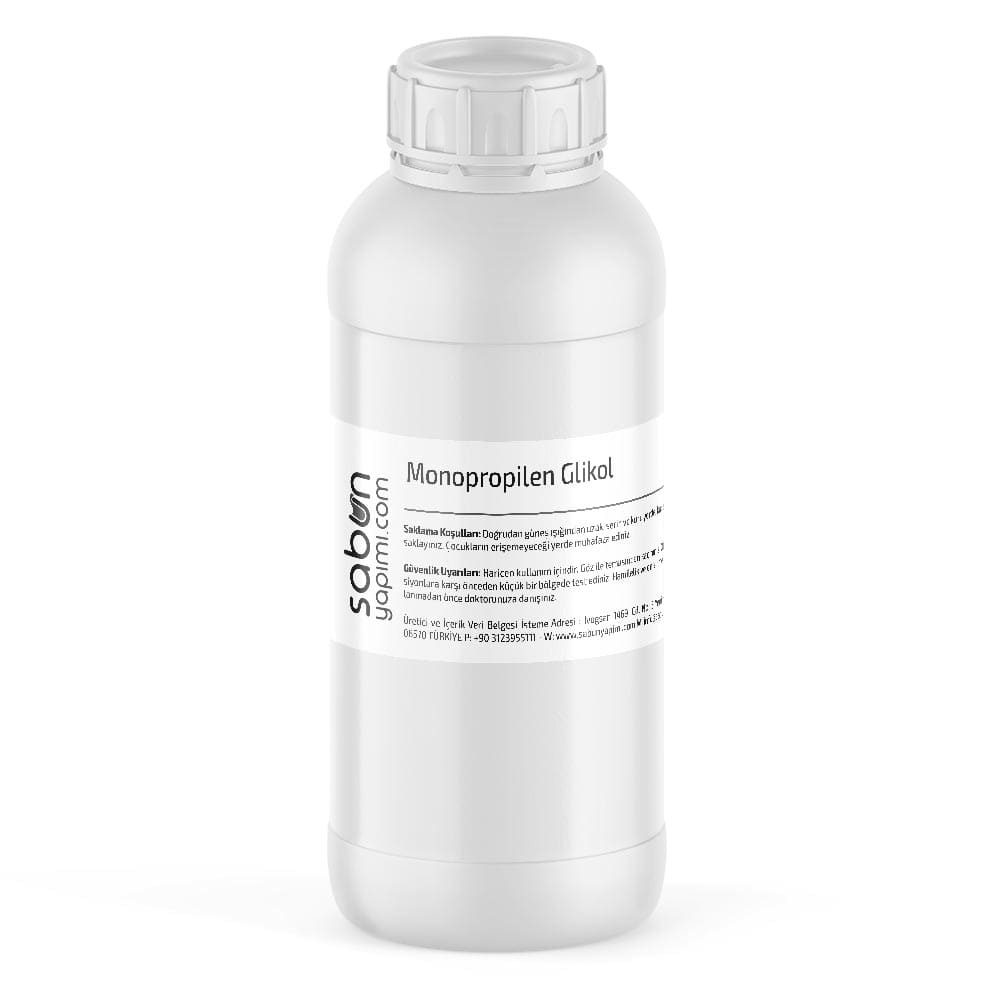
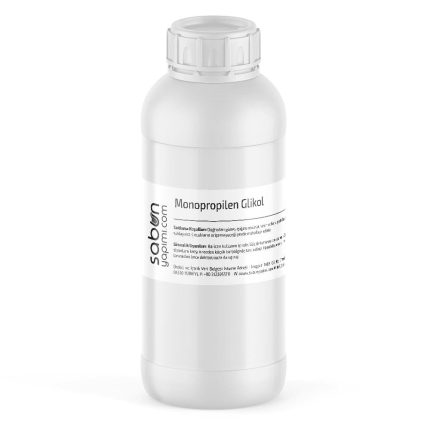
Monopropylene Glycol (Propylene Glycol) 250 g – Cosmetic Humectant & Solvent
$23,00
Monopropylene Glycol (MPG), also known as Propylene Glycol, is a versatile humectant, solvent and carrier used in cosmetic, personal-care and soap-making formulations. This clear, water-miscible liquid helps retain moisture, dissolve compatible ingredients and improve formulation handling. Suitable for creams, lotions, serums, shampoos, liquid cleansers and selected melt and pour soap bases when supplied in an appropriate cosmetic grade.
Monopropylene Glycol (Propylene Glycol) 250 g
Cosmetic Humectant, Solvent & Carrier for Soap Making and Personal-Care Formulations
Monopropylene Glycol (MPG), commonly known as Propylene Glycol, is a versatile cosmetic raw material used as a humectant, solvent, carrier and formulation aid in skincare, hair care, personal-care and selected soap-making applications.
It is a clear, colorless, nearly odorless, slightly viscous liquid that mixes readily with water and many compatible cosmetic solvents.
Monopropylene Glycol is particularly useful in formulations requiring:
- Moisture retention
- Improved ingredient solubility
- Uniform ingredient distribution
- Better formulation handling
- Control of product texture
- Solvent compatibility
- Support for selected active ingredients
It is commonly used in:
- Facial creams
- Body lotions
- Cosmetic serums
- Shampoos
- Hair conditioners
- Shower gels
- Liquid hand cleansers
- Deodorants
- Selected fragrance formulations
- Melt and pour soap bases
- Specialty personal-care formulations
What Is Monopropylene Glycol?
Monopropylene Glycol is a diol, meaning that its chemical structure contains two hydroxyl groups.
It belongs to the glycol family and is widely used in the cosmetic and personal-care industries.
INCI Name: Propylene Glycol
Alternative Names: Monopropylene Glycol, MPG, 1,2-Propanediol
CAS Number: 57-55-6
Chemical Formula: C3H8O2
Molecular Weight: Approximately 76.09 g/mol
Ingredient Type: Humectant / Solvent / Carrier
The prefix “mono” is commonly used in industry to distinguish Monopropylene Glycol from other glycols, including Dipropylene Glycol.
Main Cosmetic Functions
Monopropylene Glycol can serve several purposes in personal-care formulations.
Its primary functions include:
- Humectant
- Solvent
- Carrier
- Skin-conditioning agent
- Viscosity modifier
- Formulation compatibility aid
The exact function depends on the formulation and the concentration used.
Humectant Properties
Monopropylene Glycol is hygroscopic, meaning that it can attract and retain moisture.
In suitable cosmetic formulations, it can contribute to improved moisture retention and a more comfortable skin feel.
This makes it useful in products designed for:
- Dry-feeling skin
- Daily moisturizing
- Skin conditioning
- Lightweight hydration
- Water-based skincare
Its performance depends on the complete humectant and emollient system.
Propylene Glycol vs. Glycerin
Both Propylene Glycol and Glycerin are widely used humectants.
However, they have different sensory and formulation characteristics.
Propylene Glycol
- Humectant and solvent
- Lower viscosity than glycerin
- Useful for dissolving selected ingredients
- Can modify product consistency
- Suitable for many water-based formulations
Glycerin
- Strongly hygroscopic humectant
- More viscous
- Common in moisturizing skincare
- Can create tackiness at higher concentrations
- Widely used in soap and cosmetic formulations
These ingredients can be combined in suitable formulas to achieve the desired balance of moisture retention and sensory properties.
Solvent Properties
One of the most valuable functions of Monopropylene Glycol is its ability to act as a solvent.
It can help dissolve selected ingredients that may have limited solubility in water alone.
Examples include certain:
- Fragrance components
- Botanical extract constituents
- Cosmetic actives
- Preservative components
- Other compatible organic ingredients
However, solubility must be evaluated individually.
MPG is not a universal solvent for every cosmetic material.
Use in Facial Creams
Monopropylene Glycol may be incorporated into facial creams as a humectant and solvent.
It can help support:
- Moisture retention
- Ingredient distribution
- Product consistency
- Smooth application
- Formulation performance
It can be used alongside ingredients such as:
- Glycerin
- Panthenol
- Hyaluronic Acid
- Betaine
- Cosmetic emollients
- Suitable emulsifiers
Use in Body Lotions
MPG is also useful in body lotion formulations.
It can help improve the moisture-retaining characteristics of the product while acting as a carrier for selected cosmetic ingredients.
The final lotion should be developed with an appropriate balance of:
- Water
- Humectants
- Emollients
- Emulsifiers
- Preservatives
- Functional additives
Use in Cosmetic Serums
Monopropylene Glycol is often used in water-based and emulsion-type cosmetic serums.
Possible applications include:
- Hydrating facial serums
- Skin-conditioning serums
- Botanical skincare products
- Specialty cosmetic active systems
It may support the incorporation of certain cosmetic ingredients into the water phase.
However, it should not automatically be described as increasing the effectiveness or skin penetration of every active ingredient.
Any influence on ingredient delivery requires appropriate safety evaluation.
Use in Shampoos
Propylene Glycol can be incorporated into suitable shampoo formulations.
Its functions may include:
- Humectancy
- Solvent action
- Ingredient compatibility
- Viscosity modification
It does not replace the cleansing surfactant system.
For example, shampoos may contain surfactants such as:
- Sodium Laureth Sulfate
- Cocamidopropyl Betaine
- Decyl Glucoside
- Coco Glucoside
- Sodium Cocoyl Glutamate
MPG can be used as an auxiliary ingredient within an appropriately developed formulation.
Does Propylene Glycol Increase Foam?
Propylene Glycol is not a primary foaming agent.
It does not produce cleansing foam by itself.
Its presence may alter the physical properties of a surfactant formulation, but it should not automatically be marketed as increasing:
- Foam volume
- Foam stability
- Cleansing power
These properties depend mainly on the surfactant system and complete formulation.
Use in Hair Conditioners
Monopropylene Glycol may also be used in hair conditioners, masks and selected styling products.
It can serve as:
- Humectant
- Solvent
- Carrier for compatible ingredients
- Formulation-processing aid
Its role is different from that of cationic conditioning agents, silicones and film-forming proteins.
Use in Shower Gels & Liquid Cleansers
MPG is compatible with many water-based cleansing systems.
Possible applications include:
- Shower gels
- Body washes
- Facial cleansers
- Liquid hand cleansers
- Specialty hygiene products
In these formulations, it may contribute to humectancy and solubility while influencing the final texture.
The exact dosage must be established through formulation testing.
Monopropylene Glycol in Soap Making
Propylene Glycol is used in certain specialty soap-making processes, particularly transparent and melt and pour soap-base technology.
It is not a primary soap-making oil and does not replace the fats and alkali used in saponification.
Its function is primarily related to:
- Solvent properties
- Humectancy
- Processing
- Transparent soap-base systems
Use in Melt & Pour Soap
Monopropylene Glycol may be part of the solvent system used to manufacture certain transparent melt and pour soap bases.
In these systems, it can help support the desired transparency and processing characteristics.
It may be used alongside other suitable ingredients, including:
- Glycerin
- Sorbitol
- Water
- Soap components
- Other compatible solvents
The composition of transparent soap bases varies by manufacturer.
Adding MPG to a Ready-Made Soap Base
A commercial melt and pour soap base generally already contains a balanced system of solvents, humectants and soap components.
Additional MPG is not automatically necessary.
Excessive additions may affect:
- Bar hardness
- Transparency
- Sweating
- Stickiness
- Texture
- Storage stability
Always follow the manufacturer’s recommended additive limits.
Does Propylene Glycol Cause Soap Sweating?
Propylene Glycol is hygroscopic.
In some soap systems, excessive humectant levels and exposure to humid air can contribute to surface moisture accumulation.
This may create a condition commonly referred to as soap sweating.
The effect depends on:
- Overall soap-base composition
- Humidity
- Packaging
- Humectant concentration
- Storage conditions
Proper formulation and packaging can help control this issue.
Cold Process Soap
Monopropylene Glycol is not normally required in traditional cold process soap.
Cold process soap is produced through the reaction of oils and fats with sodium hydroxide.
MPG is not a conventional triglyceride oil and should not be included in ordinary soap-oil SAP calculations.
Its use in specialty soap systems requires appropriate formulation testing.
Use in Deodorants
MPG may be used as a solvent and carrier in selected deodorant formulations.
It can help incorporate certain compatible fragrance and functional ingredients.
However, it is not itself a conventional antiperspirant active.
It should not automatically be described as preventing perspiration or controlling body odor independently.
Use in Fragrance Formulations
Propylene Glycol has solvent properties and can dissolve certain fragrance materials.
It may be used as a carrier in selected fragrance-containing formulations.
However:
Propylene Glycol does not dissolve every essential oil or fragrance composition.
It also does not guarantee longer fragrance persistence on the skin.
Fragrance performance depends on:
- Composition
- Solvent system
- Volatility
- Product format
- Application surface
- Other formulation ingredients
For certain perfume applications, alternative solvents such as Dipropylene Glycol may be preferred.
Propylene Glycol vs. Dipropylene Glycol
These are different chemical materials.
Monopropylene Glycol (MPG)
- INCI: Propylene Glycol
- CAS: 57-55-6
- Commonly used as a humectant and solvent
- Low-viscosity liquid
- Common in skincare and personal-care formulations
Dipropylene Glycol (DPG)
- INCI: Dipropylene Glycol
- Different molecular structure
- Different solvent and volatility properties
- Commonly used in selected fragrance and cosmetic applications
MPG and DPG should not automatically be substituted without compatibility testing.
Use in Cleaning Products
Monopropylene Glycol can also be used in selected household and professional cleaning formulations.
Possible applications include:
- Multipurpose cleaners
- Surface-cleaning solutions
- Specialty liquid detergents
- Certain solvent-containing cleaning systems
Its role may include:
- Solvent action
- Coupling
- Formulation compatibility
- Physical property modification
It is not a primary detergent surfactant.
Industrial and household uses may require different raw-material specifications from those used in cosmetics.
Typical Usage Levels
The appropriate dosage depends on the intended function and product type.
General formulation starting ranges may include:
Creams & Lotions
1–5%
Facial Serums
1–10%
Shampoos
1–5%
Shower Gels & Liquid Cleansers
1–5%
Hair-Care Products
1–5%
Specialty Solvent Systems
Concentration depends on the ingredients being dissolved and the intended product.
These values are general formulation starting points, not universal legal limits or guarantees of safety.
The supplier TDS and finished-product safety assessment must guide the final concentration.
How to Use Monopropylene Glycol
MPG is generally incorporated into the aqueous phase or used as a premixing solvent.
A typical procedure may include:
- Accurately weigh the required Propylene Glycol.
- Prepare the water phase.
- Add MPG while mixing.
- If required, dissolve a compatible ingredient in a separate MPG premix.
- Incorporate the premix into the main formulation.
- Continue mixing until uniform.
- Complete pH adjustment and final formulation processing.
- Evaluate product stability.
The exact addition method depends on the ingredients and manufacturing process.
Water Solubility
Monopropylene Glycol is fully miscible with water.
It is also miscible with ethanol and compatible with various polar solvents.
However, it is not generally miscible with conventional fixed vegetable oils in all proportions.
Its behavior in oil-containing systems must be evaluated carefully.
Is Propylene Glycol an Emulsifier?
Propylene Glycol is not a direct replacement for a conventional emulsifier.
Although it can help with certain solubilization and compatibility challenges, it does not independently guarantee the formation of a stable oil-in-water emulsion.
Creams and lotions still require an appropriate emulsifying system.
Does MPG Improve Product Stability?
MPG may help improve the solubility and distribution of certain ingredients.
This can contribute to successful formulation design.
However, it cannot independently prevent:
- Emulsion separation
- Oxidation
- Microbial contamination
- Color changes
- Chemical degradation
Finished-product stability must be verified through appropriate testing.
Is Propylene Glycol a Preservative?
Propylene Glycol may affect water activity or contribute to preservation strategies at sufficiently high concentrations.
However, it should not normally be treated as the sole preservative in conventional cosmetic formulations.
Water-containing products may require a suitable preservative system and microbiological testing.
pH Information
Monopropylene Glycol is a substantially anhydrous organic liquid.
A statement such as:
pH 4.0–7.0
is not a meaningful universal specification for the undiluted raw material.
Where relevant, pH should be measured using an appropriate aqueous test method or on the finished water-containing formulation.
Is Propylene Glycol Natural?
Propylene Glycol can be manufactured from petrochemical or bio-based feedstocks, depending on the production process.
Conventional MPG should not automatically be marketed as:
- 100% Natural
- Plant-Derived
- Organic Certified
- COSMOS Approved
Any such claim must be supported by the specific supplier documentation.
Propylene Glycol vs. Ethylene Glycol
Monopropylene Glycol must not be confused with Ethylene Glycol.
These are different chemicals with very different toxicological characteristics.
Propylene Glycol: CAS 57-55-6
Ethylene Glycol: CAS 107-21-1
Ethylene Glycol is toxic and must never be substituted for cosmetic-grade Propylene Glycol.
Always verify the chemical identity before formulation.
Cosmetic Grade vs. Industrial Grade
Monopropylene Glycol is supplied in different commercial grades.
Examples may include:
- Cosmetic grade
- USP/EP grade
- Food grade
- Industrial grade
These grades are not automatically interchangeable.
For skincare and personal-care manufacturing, the raw material must meet the quality requirements of the intended application.
Industrial-grade MPG should not automatically be used in cosmetic products.
Product Details
Product Name: Monopropylene Glycol
INCI Name: Propylene Glycol
Alternative Names: MPG / 1,2-Propanediol
CAS Number: 57-55-6
Chemical Formula: C3H8O2
Weight: 250 g
Typical Appearance: Clear, Colorless Liquid
Odor: Nearly Odorless
Ingredient Type: Diol / Humectant / Solvent
Water Solubility: Completely Miscible
Primary Functions: Humectant / Solvent / Carrier / Viscosity Modifier
Applications: Skincare, Hair Care, Soap Making, Liquid Cleansers and Selected Fragrance Formulations
Purity: Refer to Supplier COA
Grade: Refer to Supplier TDS
Origin: Refer to Supplier Documentation
Purity & Technical Specifications
Only describe the product as:
100% Pure Propylene Glycol
if supported by the actual supplier Certificate of Analysis.
Professional buyers should verify:
- Assay / purity
- Water content
- Specific gravity
- Refractive index
- Appearance
- Acidity
- Relevant impurity limits
- Diethylene Glycol / Ethylene Glycol impurity controls where applicable
- SDS
- TDS
- COA
USP or EP compliance should only be claimed when supported by the supplied grade’s documentation.
Skin Safety
Propylene Glycol is widely used in cosmetics and personal-care products.
However, it can cause irritation or contact sensitivity in some individuals, particularly depending on concentration, formulation and skin condition.
Do not automatically describe MPG as:
- Hypoallergenic
- Non-irritating
- Suitable for every skin type
- Completely risk-free
Finished-product safety must be evaluated for the intended application.
Raw Material Handling
During professional handling:
- Avoid direct eye contact.
- Avoid unnecessary prolonged skin contact with concentrated material.
- Use suitable gloves where appropriate.
- Avoid ingestion.
- Keep packaging tightly closed.
- Prevent contamination.
- Follow the supplier SDS.
This raw material is supplied for formulation use and should not be treated as a ready-to-use skincare product.
Storage
Store Monopropylene Glycol:
- In tightly closed packaging
- In a cool and dry environment
- Away from direct sunlight
- Protected from contamination
- Away from excessive heat
- According to supplier storage recommendations
Because Propylene Glycol is hygroscopic, containers should be kept closed to minimize moisture absorption.
Wholesale, Private Label & Contract Manufacturing
We supply Monopropylene Glycol, Glycerin, cosmetic solvents, humectants, surfactants, emulsifiers and other formulation raw materials in wholesale quantities for cosmetic brands, laboratories, manufacturers, retailers and professional formulators.
We also provide custom cosmetic formulation development services for creams, lotions, serums, shampoos, conditioners and other personal-care products.
Our development services may include:
- Raw-material selection
- Solvent-system optimization
- Humectant-system development
- Formulation compatibility assessment
- Manufacturing procedures
- Technical specifications
- Quality-control recommendations
- Supporting technical documentation
Private label and contract manufacturing services are available for selected liquid soaps, detergents, surface cleaners and other cleansing products within our manufacturing capabilities.
Custom products can be developed with different humectant systems, surfactants, fragrances, viscosities, active ingredients, packaging formats and private label designs.
For bulk Monopropylene Glycol orders, custom formulation development, private label or contract manufacturing inquiries, please contact us with your required raw-material grade, purity, quantity, intended application, packaging requirements, target market and estimated production volume.
KARGO & İADE
SabunYapimi.com olarak müşteri memnuniyetini ön planda tutuyoruz. Siparişlerinizin güvenli ve hızlı bir şekilde size ulaşmasını sağlamak için en iyi lojistik firmalarıyla çalışıyoruz. Ayrıca, herhangi bir sebepten dolayı ürününüzden memnun kalmazsanız, iade ve değişim sürecimizi kolay ve hızlı hale getirdik.
Kargo Firması & Gönderim Süresi
- Siparişleriniz, ödeme onaylandıktan sonra 1-2 iş günü içinde kargoya verilir.
- Kargo firmaları: [Aras & Yurtiçi]
- Ortalama teslimat süresi 2-3 iş günü arasındadır.
Kargo Ücretleri & Ücretsiz Kargo Şartları
- [1000 TL ve üzeri alışverişlerde kargo ücretsizdir.]
- Standart kargo ücreti sipariş aşamasında ödeme sayfasında belirtilir.
Kargo Takibi
Siparişiniz kargoya verildiğinde e-posta veya SMS ile takip numarası paylaşılır. Kargo takip bağlantısını kullanarak siparişinizi kolayca takip edebilirsiniz.
📌 Siparişiniz belirlenen süre içinde ulaşmazsa, bize aşağıdaki iletişim bilgileriyle ulaşabilirsiniz:
📧 E-Posta: sabunyapimi@gmail.com
📞 WhatsApp Destek: +90 532 059 15 71
Geri Ödeme ve İade Süreçleri
Geri Ödeme ve İade Politikası Sayfamızı Okuyun