
 Soap Bases
 Scents
 Oils
Oils Dyes
Dyes Equipment and Accessories
 Cosmetic Clays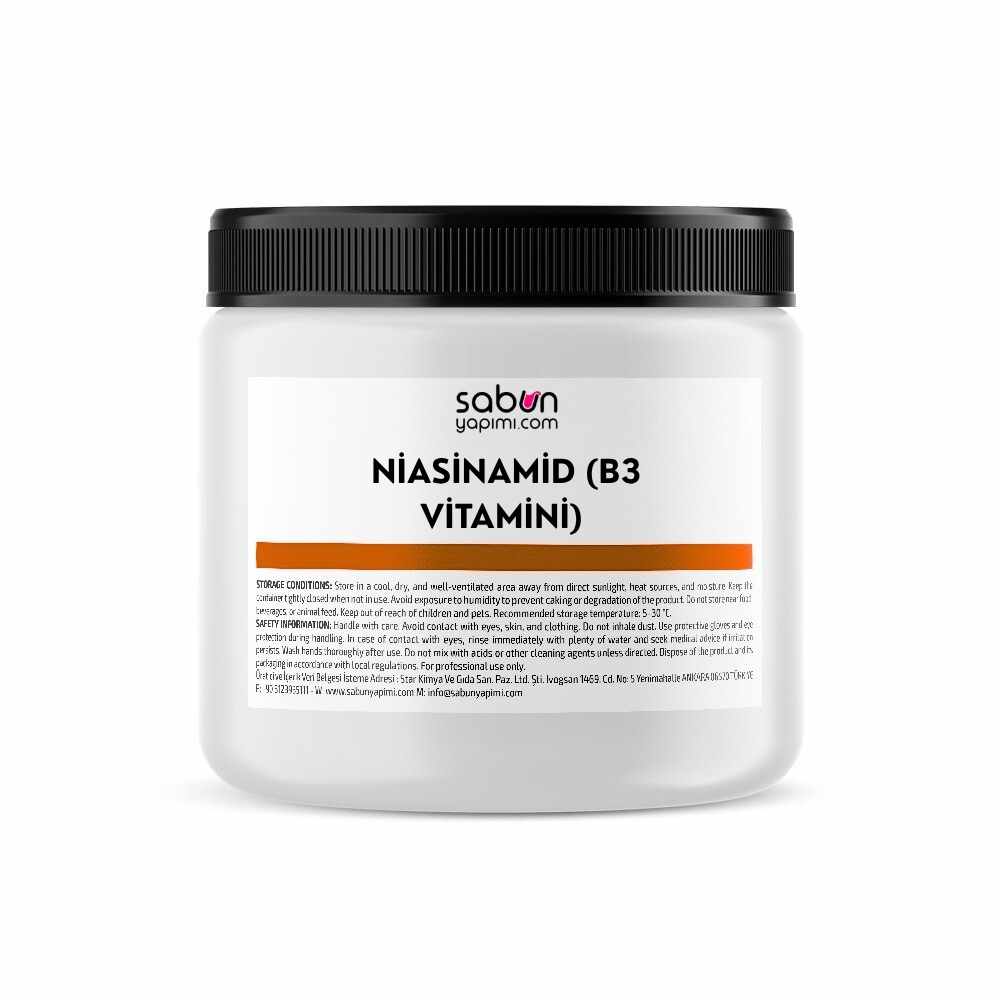
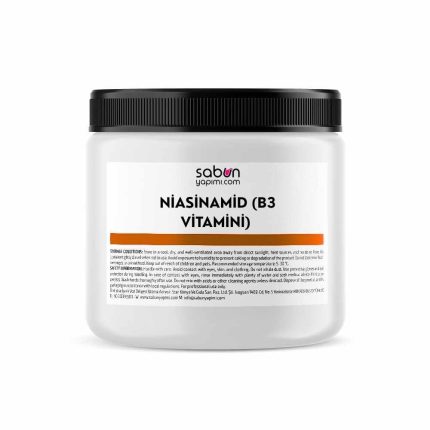
Niacinamide (Vitamin B3) 100 g – Skin Brightening & Barrier Support Active
$33,00
Niacinamide (Vitamin B3) is a versatile water-soluble cosmetic active used in facial serums, creams, lotions and skincare formulations. It helps support the skin’s natural barrier, improve the appearance of uneven skin tone, reduce the look of excess oiliness and promote smoother, more radiant-looking skin. Ideal for professionally developed brightening, moisturizing and skin-conditioning formulations.
Niacinamide (Vitamin B3) 100 g
Multi-Functional Cosmetic Active for Skin Brightening, Barrier Support & Oil Control
Niacinamide, also known as Vitamin B3 or Nicotinamide, is a versatile cosmetic ingredient widely used in modern skincare formulations.
It is especially valued for its ability to support the skin’s natural barrier, improve the appearance of uneven skin tone and contribute to a smoother, healthier-looking complexion.
Niacinamide is commonly incorporated into:
- Facial serums
- Moisturizing creams
- Body lotions
- Skin-brightening formulations
- Products for oily-looking skin
- Barrier-support skincare
- Facial toners
- Gentle facial cleansers
- Anti-aging skincare
- Selected hair-care and scalp-care formulations
Its excellent water solubility and compatibility with many cosmetic ingredients make it suitable for a wide range of formulation systems.
What Is Niacinamide?
Niacinamide is a form of Vitamin B3 belonging to the vitamin B complex.
It plays an important biological role as a precursor of coenzymes such as NAD and NADP, which participate in numerous cellular processes.
In cosmetic formulations, Niacinamide is primarily used as a skin-conditioning ingredient.
INCI Name: Niacinamide
Alternative Names: Nicotinamide, Vitamin B3
CAS Number: 98-92-0
EC Number: 202-713-4
Chemical Formula: C6H6N2O
Molecular Weight: 122.12 g/mol
Primary Cosmetic Function: Skin Conditioning
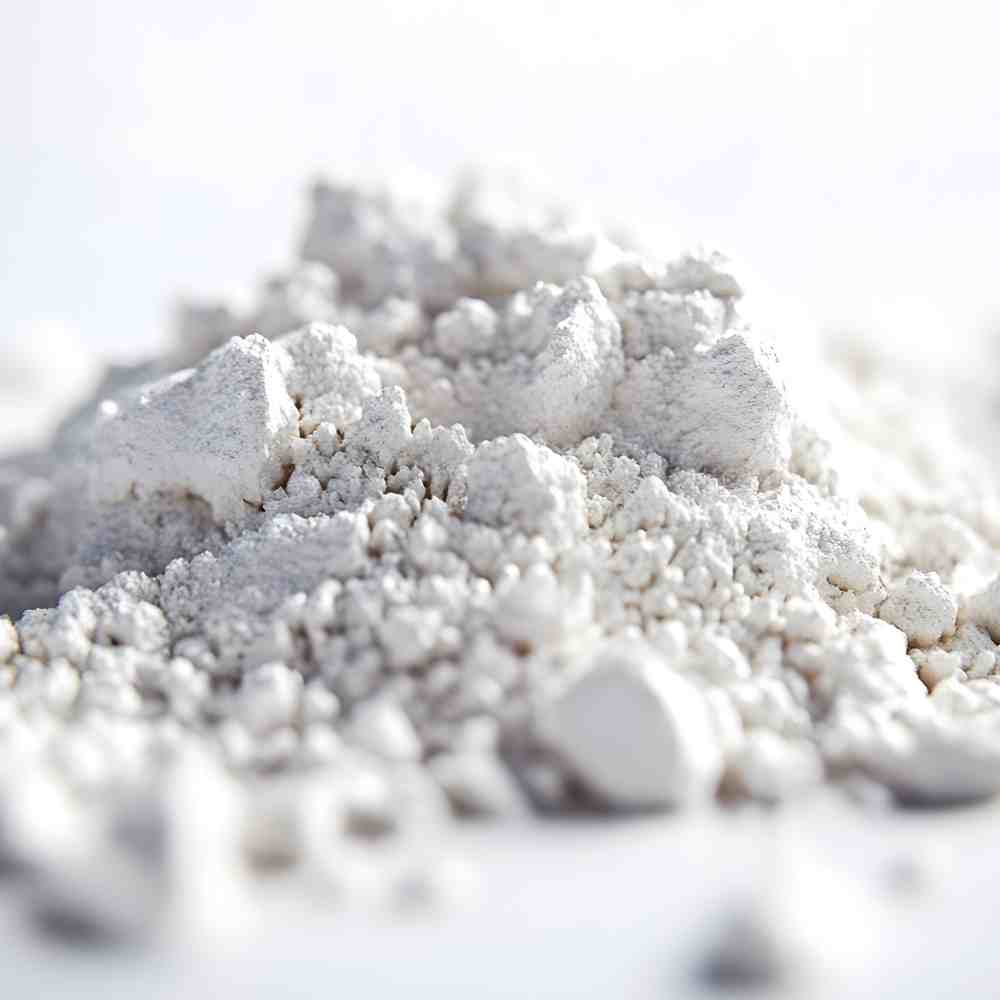
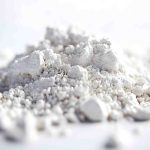
High-purity cosmetic Niacinamide is commonly supplied as a white crystalline powder.
Main Benefits of Niacinamide in Skincare
Niacinamide is frequently selected for formulations designed to support:
- Skin barrier function
- Moisture retention
- More even-looking skin tone
- Reduced appearance of dark spots
- Less visible excess oiliness
- Smoother-looking skin
- Improved appearance of fine lines
- A more radiant complexion
- Comfortable skin feel
The actual benefits depend on concentration, formulation quality, application frequency and finished-product performance.
Skin Barrier Support
One of the best-established cosmetic applications of Niacinamide is skin barrier support.
The outermost layer of the skin provides a protective interface between the body and the surrounding environment.
Niacinamide has been studied for its relationship with the production of important skin lipids, including ceramides.
These lipids contribute to normal barrier function and moisture retention.
Appropriately formulated Niacinamide products may help support:
- Comfortable skin feel
- Reduced moisture loss
- Improved skin softness
- A well-conditioned skin surface
- The appearance of healthy-looking skin
Does Niacinamide Moisturize the Skin?
Niacinamide can support skin hydration indirectly through its effects on barrier function.
However, it is not primarily a conventional humectant like:
- Glycerin
- Panthenol
- Sodium PCA
- Betaine
- Hyaluronic Acid
These ingredients are commonly used to attract or retain water.
Niacinamide can complement them in a complete moisturizing formulation.
Niacinamide for Skin Brightening
Niacinamide is widely used in products designed to improve the appearance of uneven skin tone.
Research suggests that one mechanism involves influencing the transfer of melanosomes between melanocytes and surrounding skin cells.
Melanosomes contain melanin, the natural pigment responsible for skin coloration.
By influencing this process, Niacinamide may contribute to a more even-looking complexion.
Niacinamide for Dark Spot Appearance
Niacinamide is popular in formulations targeting the appearance of:
- Uneven skin tone
- Visible dark spots
- Dull-looking skin
- Uneven pigmentation
- Post-blemish discoloration
Clinical research has investigated Niacinamide formulations, including products containing approximately 4–5% active Niacinamide, for improvements in the appearance of hyperpigmentation.
Results vary according to the formula and individual skin characteristics.
It should not be claimed to permanently remove pigmentation or cure melasma.
Use in Facial Serums
Niacinamide is especially suitable for water-based and emulsion-type facial serums.
Possible product concepts include:
- Brightening serums
- Barrier-support serums
- Hydrating serums
- Serums for oily-looking skin
- Skin-tone balancing serums
- Lightweight daily facial treatments
Its water solubility makes it relatively easy to incorporate into many aqueous cosmetic formulations.
Typical Niacinamide Serum Concentration
Many commercially available Niacinamide serums use concentrations in the range of:
2–5%
Some specialized cosmetic formulations contain higher levels.
However, higher concentration does not automatically mean better performance.
The preferred level should be selected according to:
- Target consumer
- Skin compatibility
- Product purpose
- Other active ingredients
- Finished-product safety assessment
- Supplier recommendations
Niacinamide for Oily-Looking Skin
Niacinamide is frequently used in formulations designed for oily or combination skin.
Some studies have reported reductions in measurable sebum production following topical use.
Possible cosmetic positioning includes:
- Helps reduce the appearance of excess oiliness
- Supports a balanced-looking complexion
- Promotes a less shiny skin appearance
- Supports skincare for oily-looking skin
These claims should be supported by the actual finished product’s performance.
Does Niacinamide Reduce Pore Size?
Niacinamide does not physically or permanently shrink pores.
However, products that improve the appearance of excess oiliness and uneven skin texture may make pores appear less noticeable.
A more accurate cosmetic claim is:
“Helps minimize the appearance of visible pores.”
rather than claiming permanent pore reduction.
Niacinamide for Acne-Prone Skin
Niacinamide is often incorporated into cosmetic products designed for blemish-prone and oily-looking skin.
It may support a more balanced skin appearance.
However, a cosmetic ingredient should not automatically be marketed as:
- Curing acne
- Treating inflammatory acne
- Preventing all breakouts
- Eliminating acne scars
- Replacing dermatological treatment
These claims may require specific clinical evidence and a different regulatory classification.
Use in Moisturizing Creams
Niacinamide is frequently incorporated into creams designed for daily skin conditioning.
It can complement moisturizing ingredients such as:
- Glycerin
- Panthenol
- Ceramides
- Hyaluronic Acid
- Squalane
- Cosmetic emollients
- Fatty alcohols
A properly developed formula can combine humectants, emollients and barrier-support ingredients to achieve the desired sensory performance.
Use in Body Lotions
Niacinamide may also be used in body-care formulations.
Possible applications include:
- Daily body lotions
- Hand creams
- Body moisturizers
- Skin-tone care products
- Specialty barrier-support lotions
The concentration should be selected according to the product’s intended application and target market.
Niacinamide in Anti-Aging Skincare
Niacinamide is commonly used in cosmetic formulations designed to improve the appearance of aging skin.
Potential cosmetic benefits include:
- Smoother-looking skin
- Improved skin texture
- More even-looking complexion
- Reduced appearance of fine lines
- Improved skin-conditioning performance
It should not be described as permanently reversing aging or regenerating skin tissue.
Niacinamide for Fine Lines
Clinical studies have investigated the effects of Niacinamide-containing formulations on the appearance of fine lines and skin texture.
Appropriate cosmetic positioning includes:
“Helps improve the appearance of fine lines and uneven texture.”
The degree of improvement depends on the finished formulation and use conditions.
Use in Facial Toners
Niacinamide may be incorporated into:
- Hydrating toners
- Skin-conditioning toners
- Facial essences
- Lightweight aqueous skincare products
Because it is water-soluble, it can be suitable for many clear or translucent water-based systems.
However, final clarity depends on all ingredients in the formulation.
Use in Facial Cleansers
Niacinamide can also be included in selected cleansing products.
Possible applications include:
- Facial cleansing gels
- Cream cleansers
- Mild foaming cleansers
- Syndet facial washes
However, Niacinamide is not a cleansing surfactant.
It does not replace ingredients such as:
- Cocamidopropyl Betaine
- Decyl Glucoside
- Sodium Cocoyl Glutamate
- Other cosmetic cleansing surfactants
Its primary role remains skin conditioning.
Rinse-Off vs. Leave-On Products
Niacinamide can be incorporated into both rinse-off and leave-on formulations.
However, these applications should not be considered equivalent.
Leave-on products generally provide longer contact with the skin.
Rinse-off cleansers usually remain on the skin for a shorter period.
Therefore, the benefits demonstrated for a Niacinamide serum should not automatically be claimed for a conventional soap or cleansing product.
Niacinamide in Soap Making
Niacinamide is sometimes marketed as an additive for handmade soap.
However, traditional cold process soap is generally not the ideal application for this ingredient.
Traditional soap has a strongly alkaline environment.
Niacinamide is better suited to formulations where pH and ingredient stability can be controlled within the recommended range.
Cold Process Soap
Cold process soap manufacturing involves:
- Sodium hydroxide
- Saponification chemistry
- Strongly alkaline conditions
- Potential heat generation
- Extended curing time
These conditions can affect the stability of specialty cosmetic ingredients.
Niacinamide can undergo hydrolysis under sufficiently harsh acidic or alkaline conditions, potentially forming nicotinic acid.
Therefore, routine addition of Niacinamide to cold process soap is not recommended as a reliable skin-brightening strategy.
Melt & Pour Soap
Niacinamide may be evaluated in selected compatible cleansing bases, but traditional melt and pour soap is still generally alkaline.
Its suitability depends on:
- Base composition
- Finished-product pH
- Processing temperature
- Ingredient stability
- Product appearance
Do not assume that adding Niacinamide to a melt and pour soap base will reproduce the performance of a leave-on serum.
Better Alternatives for Niacinamide Formulations
Niacinamide is generally better suited to:
- Facial serums
- Creams
- Lotions
- Toners
- Facial essences
- Mildly acidic syndet cleansers
- Selected scalp-care formulations
These systems provide better opportunities for controlling pH, concentration and stability.
Typical Usage Levels
The appropriate dosage depends on the raw-material grade and finished-product category.
General formulation starting ranges may include:
Facial Serums
2–5%
Moisturizing Creams
2–5%
Barrier-Support Lotions
1–5%
Skin-Tone Care Products
2–5%
Facial Cleansers
0.5–2%, depending on the formulation concept
Selected Hair & Scalp-Care Products
0.2–1%, depending on the supplier grade and intended application
These are practical formulation starting points, not universal regulatory limits or guaranteed effective concentrations.
Some commercial Niacinamide grades are recommended for skincare use at concentrations up to 10%.
Always consult the actual supplier TDS and complete a finished-product safety assessment.
How to Use Niacinamide
Niacinamide is generally incorporated into the aqueous phase of cosmetic formulations.
A typical manufacturing approach may include:
- Accurately weigh the required Niacinamide.
- Prepare the formulation’s water phase.
- Add Niacinamide gradually while mixing.
- Continue mixing until fully dissolved.
- Incorporate the solution into the remaining formulation.
- Adjust final pH if necessary.
- Verify appearance and compatibility.
- Perform appropriate stability and quality-control testing.
The exact addition procedure depends on the complete formulation.
Water Solubility
Niacinamide is highly soluble in water.
It is also compatible with certain polar solvents, including glycerin and alcohol.
It is not a conventional oil-soluble ingredient.
For anhydrous oil serums, Niacinamide cannot simply be added with the expectation that it will dissolve.
A suitable water-containing system or specialized delivery technology is required.
Processing Temperature
Commercial cosmetic Niacinamide grades can have good processing stability.
For example, certain manufacturer grades permit processing at temperatures up to approximately 70°C.
However, this does not mean every raw-material grade should be subjected to unnecessary prolonged heating.
Follow the supplier’s processing recommendations and the validated manufacturing procedure.
Recommended Formulation pH
Niacinamide is compatible with a relatively broad cosmetic pH range.
For example, certain professional cosmetic grades are recommended for final formulations between:
pH 4.0–8.0
For many conventional facial skincare products, a practical development target may be:
pH 5.0–7.0
The final pH should be selected based on the complete formulation, not Niacinamide alone.
Niacinamide & Nicotinic Acid
Niacinamide and Nicotinic Acid are related but chemically distinct compounds.
Niacinamide: Nicotinamide, CAS 98-92-0
Nicotinic Acid: Niacin, CAS 59-67-6
Excessive conversion of Niacinamide to Nicotinic Acid can be undesirable in cosmetic formulations because Nicotinic Acid may contribute to skin flushing or uncomfortable warming sensations.
Professional cosmetic grades may be manufactured with controlled residual Nicotinic Acid levels.
This is one reason to verify raw-material quality.
Niacinamide & Vitamin C Compatibility
A common misconception is that Niacinamide and Vitamin C cannot be used together.
This is not universally correct.
Modern cosmetic formulations can combine Niacinamide with suitable Vitamin C ingredients when the complete system is developed appropriately.
However, compatibility depends on the Vitamin C form.
Niacinamide With L-Ascorbic Acid
Pure L-Ascorbic Acid is often formulated in relatively acidic conditions.
Because pH and processing conditions influence ingredient stability, the combination requires careful formulation development.
Niacinamide With Vitamin C Derivatives
Certain Vitamin C derivatives can be more suitable for formulation systems with a higher pH.
The exact combination should still be tested.
There is no general requirement to avoid using Niacinamide and Vitamin C in the same skincare routine.
Niacinamide With Panthenol
Niacinamide is frequently combined with Panthenol in skin-conditioning formulations.
These ingredients can complement one another in products designed for:
- Hydration
- Comfortable skin feel
- Barrier support
- Daily skincare
The complete formulation should still be evaluated for stability and consumer tolerance.
Niacinamide With Hyaluronic Acid
Niacinamide may also be combined with Hyaluronic Acid in hydrating cosmetic systems.
In these formulations:
- Niacinamide supports skin-conditioning and barrier-focused objectives.
- Hyaluronic Acid contributes humectant properties.
The combination can be useful in serums, creams and lotions.
Niacinamide With AHA & BHA Ingredients
Niacinamide may be incorporated into selected formulations containing exfoliating ingredients such as:
- Glycolic Acid
- Lactic Acid
- Salicylic Acid
However, these combinations require careful attention to:
- Final pH
- Active concentration
- Skin irritation potential
- Chemical compatibility
- Storage stability
Combining multiple actives is not automatically more effective or suitable for sensitive skin.
Is Niacinamide a Sunscreen?
No.
Niacinamide is not a permitted UV-filter ingredient simply because it has been studied for skin-conditioning and environmental-stress-related benefits.
It does not provide a measurable SPF rating by itself.
Niacinamide may be incorporated into sunscreen formulations as a supporting skincare ingredient, but the finished product must contain permitted UV filters and undergo appropriate testing.
Is Niacinamide a Preservative?
No.
Niacinamide is not an antimicrobial preservative.
It does not replace a preservative system designed to control bacteria, yeasts and molds.
Water-containing skincare products may require:
- Suitable preservatives
- Microbiological testing
- Preservative efficacy testing
- Good Manufacturing Practice
Is Niacinamide Natural?
Niacinamide is a defined chemical compound that may be produced through different manufacturing processes.
Commercial Niacinamide should not automatically be described as:
- 100% Natural
- Plant-Derived
- Organic Certified
- Vegan Certified
- COSMOS Approved
Any origin or certification claims should be verified against the actual supplier documentation.
Niacinamide Powder vs. Niacinamide Solution
Niacinamide may be supplied as a high-purity crystalline material or as part of a prepared solution or blend.
Crystalline Niacinamide
Typically offers:
- High active concentration
- Easy weighing
- Good water solubility
- Convenient incorporation into aqueous formulations
Niacinamide Solutions
May contain:
- Niacinamide
- Water
- Supporting solvents
- Additional formulation ingredients
The concentration must be established before calculating the usage level.
Product Details
Product Name: Niacinamide (Vitamin B3)
INCI Name: Niacinamide
Alternative Name: Nicotinamide
CAS Number: 98-92-0
EC Number: 202-713-4
Chemical Formula: C6H6N2O
Molecular Weight: 122.12 g/mol
Weight: 100 g
Typical Appearance: White Crystalline Powder
Primary Cosmetic Function: Skin Conditioning
Water Solubility: Highly Soluble
Applications: Facial Serums, Creams, Lotions, Toners, Cleansers and Selected Hair-Care Products
Purity: Refer to Supplier COA
Physical Form: Confirm Against Product Specification
Raw Material Origin: Refer to Supplier Documentation
Purity & Cosmetic Grade
Only describe the product as:
100% Pure Niacinamide
if the actual supplied batch supports that claim.
For professional cosmetic manufacturing, important specifications include:
- Niacinamide assay
- Raw-material identification
- Residual Nicotinic Acid
- Appearance
- Moisture content
- Impurity limits
- Solubility
- Heavy metal specifications where applicable
- Safety Data Sheet (SDS)
- Technical Data Sheet (TDS)
- Certificate of Analysis (COA)
Residual Nicotinic Acid is a particularly relevant quality parameter for sensitive-skin formulation projects.
Skin Sensitivity
Niacinamide is generally well tolerated in appropriately developed cosmetic formulations.
However, reactions can occur depending on:
- Concentration
- Raw-material quality
- Product pH
- Other ingredients
- Individual skin sensitivity
Possible reactions include:
- Redness
- Stinging
- Itching
- Temporary discomfort
High concentration does not automatically provide better performance.
The finished product should be formulated to minimize irritation.
Cosmetic vs. Medical Claims
Niacinamide is studied in both cosmetic and medical contexts.
However, a cosmetic ingredient page should not automatically claim that the material:
- Cures acne
- Treats rosacea
- Repairs UV-damaged DNA in a finished product
- Treats eczema
- Permanently removes pigmentation
- Prevents skin disease
Such claims require dedicated scientific substantiation and may change the regulatory classification of the finished product.
Cosmetic Stability Testing
Professional Niacinamide formulations should be evaluated for:
- pH stability
- Appearance
- Color changes
- Chemical compatibility
- Niacinamide content where appropriate
- Nicotinic Acid formation where relevant
- Viscosity
- Temperature stability
- Microbiological quality
- Packaging compatibility
These tests help establish suitable manufacturing conditions and shelf life.
Safety Information
Niacinamide is supplied as a concentrated cosmetic raw material.
During professional handling:
- Avoid direct eye contact.
- Avoid inhaling fine powder.
- Use accurate weighing equipment.
- Wear suitable protective equipment where appropriate.
- Do not ingest unless specifically supplied and approved for an appropriate non-cosmetic application.
- Keep out of reach of children and pets.
- Follow the supplier SDS and TDS.
Pure Niacinamide powder should not be treated as a ready-to-use skincare product.
Storage
Store Niacinamide:
- In tightly closed packaging
- In a cool and dry environment
- Away from direct sunlight
- Protected from moisture
- Away from contamination
- According to the supplier’s recommended storage conditions
Close the container immediately after use.
Wholesale, Private Label & Contract Manufacturing
We supply Niacinamide, cosmetic vitamins, skin-conditioning actives, humectants, botanical ingredients and other cosmetic raw materials in wholesale quantities for cosmetic brands, laboratories, manufacturers, retailers and professional formulators.
We also provide custom cosmetic formulation development services for Niacinamide serums, skin-brightening creams, barrier-support lotions, facial toners and other skincare concepts.
Our formulation development services may include:
- Raw-material selection
- Active ingredient concentration planning
- Formulation compatibility assessment
- pH optimization
- Cosmetic formulation development
- Manufacturing procedures
- Stability recommendations
- Quality-control specifications
- Technical documentation
Private label and contract manufacturing services are also available for selected liquid soaps, detergents and cleansing products within our manufacturing capabilities. Cosmetic formulation development projects can be evaluated separately from physical manufacturing.
Custom formulations can be developed with different Niacinamide concentrations, humectants, botanical extracts, conditioning ingredients, textures, viscosities, fragrances and packaging concepts.
For bulk Niacinamide orders, custom cosmetic formulation development, private label or contract manufacturing inquiries, please contact us with your required raw-material grade, purity, product concept, target active concentration, packaging requirements, target market and estimated quantity.
KARGO & İADE
SabunYapimi.com olarak müşteri memnuniyetini ön planda tutuyoruz. Siparişlerinizin güvenli ve hızlı bir şekilde size ulaşmasını sağlamak için en iyi lojistik firmalarıyla çalışıyoruz. Ayrıca, herhangi bir sebepten dolayı ürününüzden memnun kalmazsanız, iade ve değişim sürecimizi kolay ve hızlı hale getirdik.
Kargo Firması & Gönderim Süresi
- Siparişleriniz, ödeme onaylandıktan sonra 1-2 iş günü içinde kargoya verilir.
- Kargo firmaları: [Aras & Yurtiçi]
- Ortalama teslimat süresi 2-3 iş günü arasındadır.
Kargo Ücretleri & Ücretsiz Kargo Şartları
- [1000 TL ve üzeri alışverişlerde kargo ücretsizdir.]
- Standart kargo ücreti sipariş aşamasında ödeme sayfasında belirtilir.
Kargo Takibi
Siparişiniz kargoya verildiğinde e-posta veya SMS ile takip numarası paylaşılır. Kargo takip bağlantısını kullanarak siparişinizi kolayca takip edebilirsiniz.
📌 Siparişiniz belirlenen süre içinde ulaşmazsa, bize aşağıdaki iletişim bilgileriyle ulaşabilirsiniz:
📧 E-Posta: sabunyapimi@gmail.com
📞 WhatsApp Destek: +90 532 059 15 71
Geri Ödeme ve İade Süreçleri
Geri Ödeme ve İade Politikası Sayfamızı Okuyun