
 Soap Bases
 Scents
 Oils
Oils Dyes
Dyes Equipment and Accessories
 Cosmetic Clays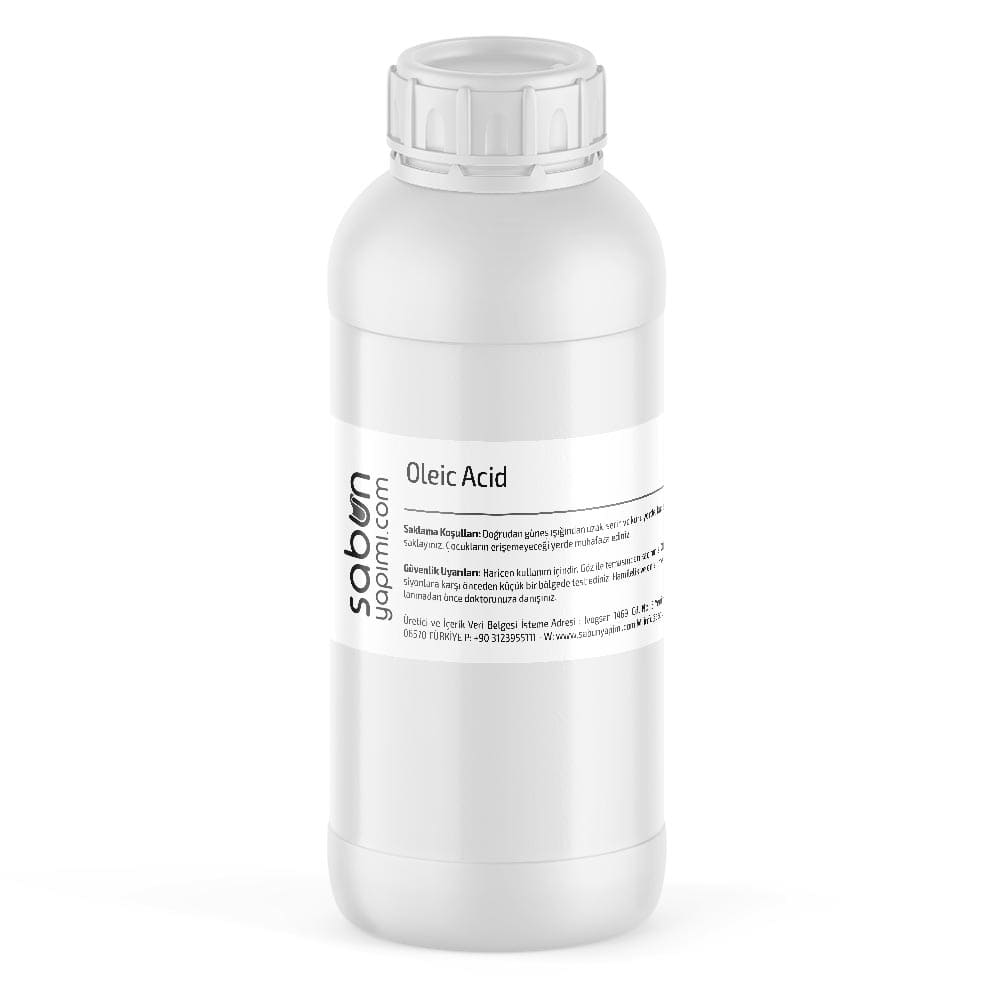
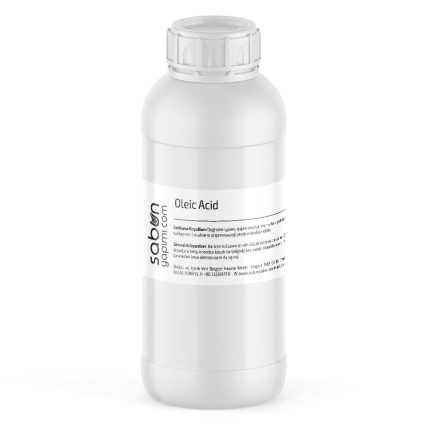
Oleic Acid 250 g – Omega-9 Fatty Acid for Soap Making & Cosmetics
$28,00
Oleic Acid is a monounsaturated omega-9 fatty acid widely used in soap making and cosmetic formulation. Naturally present in oils such as olive, almond and avocado oil, it serves as an emollient, fatty acid component and formulation aid in creams, lotions, cleansing products and specialty soaps.
In soap making, Oleic Acid reacts with sodium or potassium hydroxide to form oleate soaps, influencing the finished product’s texture, solubility and lather characteristics. In cosmetic formulations, it contributes to softness, spreadability and lipid-phase properties. Suitable for professional soap makers and cosmetic formulators using an appropriate raw-material grade.
Oleic Acid 250 g – Omega-9 Fatty Acid for Soap Making & Cosmetics
Cosmetic Emollient and Fatty Acid for Soap Manufacturing
Oleic Acid is a monounsaturated omega-9 fatty acid used in soap manufacturing, cosmetic formulations and personal-care products. It is naturally present in vegetable oils such as olive oil, sweet almond oil, avocado oil and high-oleic sunflower oil.
In cosmetic formulations, Oleic Acid is valued for its emollient properties and ability to influence the texture, spreadability and behavior of lipid-based systems. In soap manufacturing, it serves as a fatty acid raw material that reacts with alkaline ingredients to produce oleate soaps.
Oleic Acid is particularly useful for professional formulators developing traditional soaps, liquid soaps, cleansing products, cosmetic creams, lotions, body oils and selected hair-care formulations.
What Is Oleic Acid?
Oleic Acid is an 18-carbon monounsaturated fatty acid belonging to the omega-9 family. Its chemical structure contains one carbon-carbon double bond, which distinguishes it from saturated fatty acids such as Stearic Acid and Palmitic Acid.
INCI Name: Oleic Acid
CAS Number: 112-80-1
Chemical Name: cis-9-Octadecenoic Acid
Molecular Formula: C18H34O2
Molecular Weight: 282.47 g/mol
Fatty Acid Classification: Omega-9 Monounsaturated Fatty Acid
Commercial Oleic Acid is generally supplied as a colorless to pale-yellow oily liquid. Its exact appearance, purity, odor and fatty acid composition depend on the manufacturing process and commercial grade.
Oleic Acid can be obtained from plant-derived, animal-derived or other suitable industrial feedstocks. The origin of the supplied material should always be verified through supplier documentation.
Main Benefits of Oleic Acid in Cosmetic Formulations
Oleic Acid is used in cosmetic manufacturing because of its ability to contribute to the physical and sensory characteristics of lipid-containing products.
As an emollient ingredient, it can help create a smoother and softer skin feel. It may also influence the spreadability of cosmetic oils and emulsions, making it useful in creams, lotions and selected skin-conditioning products.
Its fatty acid structure also makes it valuable in the development of emulsifying systems and soap-based cleansing products.
However, Oleic Acid should not automatically be described as a deep moisturizer, a universal skin barrier repair ingredient or a guaranteed anti-aging active. Its effects depend on concentration, formulation design and the intended application.
Oleic Acid for Soap Making
Oleic Acid for soap making is an important ingredient because oleate salts contribute to the characteristics of many traditional soap formulations.
Oleic Acid reacts with sodium hydroxide or potassium hydroxide to form the corresponding fatty acid salts.
When reacted with sodium hydroxide, it produces Sodium Oleate. When reacted with potassium hydroxide, it produces Potassium Oleate.
These materials are soap surfactants that contribute to cleansing performance, solubility and lather characteristics.
The choice of alkali influences the finished product’s properties. Sodium-based soaps are commonly used in solid bars, while potassium-based soaps are often used in liquid or paste-type soap formulations.
How Oleic Acid Affects Soap Quality
The fatty acid composition of a soap formula determines many of its physical properties.
Oleate soaps are commonly associated with a smooth, relatively creamy and slippery lather. They provide a different lather profile from soaps rich in Lauric Acid and Myristic Acid, which tend to generate more abundant bubbly foam.
In solid soap formulations, a very high oleate proportion may produce bars that require careful formulation and sufficient curing to develop satisfactory hardness and durability.
For this reason, professional soap makers often balance oleic-rich materials with other fatty acid sources.
A formulation containing the correct balance of Oleic, Palmitic, Stearic, Lauric and other fatty acids can be developed to achieve the desired combination of cleansing, hardness, solubility and lather.
Free Oleic Acid vs. Olive Oil in Soap Making
Although olive oil is rich in oleic acid, pure Oleic Acid and Olive Oil are not interchangeable ingredients.
Olive oil primarily contains triglycerides. These triglycerides undergo saponification when reacted with an alkali, producing fatty acid salts and glycerol.
Free Oleic Acid is already present in its fatty acid form. It reacts directly with alkali through neutralization.
This distinction is important because free fatty acids and triglyceride oils have different processing behavior and alkali requirements.
Replacing olive oil with Oleic Acid at the same percentage without recalculating the formulation can produce an incorrect alkali balance.
Oleic Acid and Sodium Hydroxide
When Oleic Acid reacts with Sodium Hydroxide (NaOH), Sodium Oleate and water are formed.
The reaction is:
Oleic Acid + Sodium Hydroxide → Sodium Oleate + Water
For chemically pure Oleic Acid, complete neutralization theoretically requires approximately 0.1416 g of pure NaOH per gram of Oleic Acid.
This is a stoichiometric reference value rather than a complete soap formulation instruction.
Actual industrial Oleic Acid may contain other fatty acids, so formulators must consider the supplied material’s purity, acid value and fatty acid profile.
Incorrect alkali calculations can affect finished-product quality and safety. Professional soap production requires accurate weighing, appropriate protective equipment and verified manufacturing procedures.
Oleic Acid in Liquid Soap Manufacturing
Oleic Acid may be used in liquid soap systems where it is neutralized with Potassium Hydroxide.
The resulting Potassium Oleate can contribute to the composition of liquid soap formulations.
Its use may influence product viscosity, clarity, solubility and lather characteristics.
However, a successful liquid soap requires more than the neutralization of a single fatty acid.
The formulation must account for the complete fatty acid composition, alkali balance, water content, processing conditions and finished-product stability.
Oleic Acid in Cold Process Soap
Oleic Acid can be incorporated into selected cold process soap formulations, but free fatty acid additions require particular attention.
Because Oleic Acid can react directly with sodium hydroxide, adding it to an alkaline soap mixture may influence the speed of thickening and trace development.
This can reduce available processing time, particularly when working with certain fragrances, additives or concentrated soap mixtures.
Oleic Acid should therefore be incorporated only after the entire alkali calculation and manufacturing method have been adjusted appropriately.
It should not simply be added at trace as an additional moisturizing oil without considering its acid content.
Use in Cosmetic Creams and Lotions
Oleic Acid is also used in the development of cosmetic emulsions.
In suitable concentrations, it can contribute to the oil-phase characteristics of creams and lotions, influencing product spreadability and the skin’s sensory response.
Possible applications include moisturizing creams, body lotions, hand-care products and selected specialty cosmetic emulsions.
Oleic Acid may be combined with ingredients such as Glycerin, Panthenol, Glyceryl Stearate, Cetearyl Alcohol and compatible cosmetic emollients.
Its role depends on the complete emulsion system. It is not necessarily suitable as the main moisturizing ingredient in every skincare formula.
Oleic Acid as an Emulsifying Ingredient
Oleic Acid is recognized in cosmetic ingredient databases for its emulsifying-related properties.
However, free Oleic Acid is not a universal, complete emulsifier capable of stabilizing every oil-and-water mixture on its own.
Its emulsifying behavior can change when it reacts with suitable alkaline ingredients to form oleate salts.
For example, Sodium Oleate, Potassium Oleate and certain other oleate salts exhibit surface-active properties.
Professional cream and lotion development generally requires a carefully selected emulsifying system, appropriate pH control and verified stability.
Oleic Acid in Body Oils and Massage Products
Oleic Acid can be considered as a fatty acid component in selected oil-based body-care formulations.
It may influence the sensory profile of the oil phase and contribute to the smooth application characteristics of the finished product.
Compatible ingredients may include Sweet Almond Oil, Jojoba Oil, Avocado Oil, Caprylic/Capric Triglyceride and selected cosmetic esters.
However, free Oleic Acid is different from a conventional carrier oil. Relatively concentrated topical exposure can influence the skin barrier and may cause irritation.
For this reason, its concentration should be selected conservatively and supported by finished-product safety testing.
Oleic Acid for Hair Care
Oleic Acid may be incorporated into selected hair-conditioning formulations, particularly products containing emulsified oils and lipids.
It can help modify the sensory characteristics of the oil phase and contribute to softer-feeling hair in an appropriately developed product.
Possible applications include conditioning creams, hair masks and certain scalp-care formulations.
Oleic Acid should not automatically be claimed to stimulate hair growth, prevent hair loss or permanently repair damaged hair.
Any conditioning effect depends on the finished formulation, and free Oleic Acid may not be suitable for every scalp type.
Is Oleic Acid Suitable for Sensitive Skin?
Oleic Acid is naturally present in many cosmetic oils, but this does not mean that concentrated free Oleic Acid is automatically ideal for sensitive skin.
Oleic Acid has been studied as a penetration enhancer because it can modify the organization of lipids in the outer skin barrier.
Under certain experimental conditions, topical exposure has increased transepidermal water loss and produced skin irritation.
Therefore, claims such as “repairs the skin barrier,” “non-irritating” or “suitable for all sensitive skin types” require specific finished-product evidence.
Professional formulations should be designed according to the target consumer, product concentration and intended frequency of use.
Is Oleic Acid a Moisturizer?
Oleic Acid functions primarily as an emollient and fatty acid formulation ingredient.
It may contribute to a smoother skin feel, but it is not a conventional water-binding humectant.
Ingredients such as Glycerin, Sodium PCA and Panthenol perform different functions within a moisturizing system.
A well-developed moisturizer can combine humectants, emollients and other appropriate ingredients to achieve the desired hydration and sensory characteristics.
The addition of Oleic Acid alone does not guarantee improved long-term skin hydration.
Typical Usage Levels
The appropriate concentration of Oleic Acid varies significantly according to the intended application.
In selected cosmetic emulsions, formulators may begin laboratory evaluation at approximately 0.5–3%, depending on the emollient system, product concept and irritation potential.
For oil-based skincare and specialty cleansing products, the required concentration must be determined separately according to formulation compatibility and the intended function.
In soap manufacturing, there is no single universal recommended addition percentage for free Oleic Acid. The quantity is determined by the desired fatty acid profile and the alkali-neutralization calculation.
The Oleic Acid content naturally present in vegetable oils must not be confused with the percentage of free Oleic Acid added as an individual raw material.
All concentrations should be supported by supplier technical documentation and appropriate testing.
How to Use Oleic Acid in Cosmetic Formulations
Oleic Acid is generally incorporated into the oil phase of suitable cosmetic formulations.
In creams and lotions, it is combined with compatible oil-phase ingredients according to the selected emulsification procedure.
The phases are then processed using the appropriate emulsifying system, mixing conditions and temperature profile.
In soap manufacturing, Oleic Acid must be included in the total fatty acid and alkali calculations before production.
If it is used in a neutralized surfactant system, the selected alkali and final pH must be controlled carefully.
A precision balance, calibrated pH meter and suitable mixing equipment are recommended for professional formulation work.
Solubility and Physical Properties
Oleic Acid is practically insoluble in water.
It is compatible with many oils and selected organic solvents, but its exact behavior depends on the solvent system and temperature.
Pure Oleic Acid has a melting point in the region of approximately 13–16°C, depending on crystalline form and reference conditions.
It is generally liquid at normal room temperatures, although it can become cloudy or partially solidify under cooler storage conditions.
Gentle warming may restore a uniform liquid appearance when permitted by the supplier’s instructions.
Oleic Acid and Formulation pH
Oleic Acid is an organic fatty acid, but the undiluted raw material does not have a meaningful conventional aqueous pH specification.
Therefore, a statement such as “pH 4.5–7.0” should not be presented as a universal specification for the pure ingredient.
In cosmetic emulsions, the finished-product pH depends on the complete formula.
In soap manufacturing, the pH is strongly influenced by the resulting soap salts, residual alkali and overall formulation.
Oleic Acid and Oxidative Stability
Oleic Acid contains one carbon-carbon double bond, making it susceptible to oxidative degradation under unfavorable conditions.
Exposure to oxygen, excessive heat and unsuitable storage may contribute to odor and color changes.
For professional cosmetic manufacturing, oxidation-related quality parameters may be important, particularly in products expected to have a long shelf life.
Antioxidants may be incorporated into selected formulations when appropriate, but their effectiveness must be verified through stability testing.
Oleic Acid is not an antimicrobial preservative and does not replace the preservation system required for suitable water-containing cosmetic products.
Oleic Acid vs. Stearic Acid
Oleic Acid and Stearic Acid are both long-chain fatty acids, but they have significantly different physical properties.
Oleic Acid is monounsaturated and generally liquid at room temperature. It is useful in soap formulations where oleate salts contribute to solubility and a smooth lather, and in cosmetic formulations where a liquid fatty acid is required.
Stearic Acid is saturated and normally solid at room temperature. It is commonly used to increase consistency, provide structure and contribute to hardness in selected soap and cosmetic formulations.
These fatty acids are often combined indirectly through natural oils or through carefully designed fatty acid blends to achieve a specific product profile.
They should not be substituted at identical percentages without evaluating processing, alkali demand and final-product characteristics.
Oleic Acid vs. Olive Oil
Olive Oil and Oleic Acid are chemically related but serve different formulation roles.
Olive Oil is a complex mixture of triglycerides containing several fatty acids.
Oleic Acid is an individual free fatty acid, although commercial grades may also contain related fatty acids.
Consequently, the two ingredients differ in chemical behavior, skin feel, soap processing and formulation calculations.
High-oleic vegetable oils can be useful when the goal is to introduce an oleic-rich triglyceride oil, while isolated Oleic Acid may be selected for more specific fatty acid or neutralization requirements.
Product Details
Product Name: Oleic Acid
INCI Name: Oleic Acid
CAS Number: 112-80-1
Chemical Name: cis-9-Octadecenoic Acid
Chemical Formula: C18H34O2
Molecular Weight: 282.47 g/mol
Package Size: 250 g
Ingredient Family: Monounsaturated Omega-9 Fatty Acid
Typical Appearance: Colorless to Pale-Yellow Oily Liquid
Water Solubility: Practically Insoluble
Primary Cosmetic Functions: Emollient / Emulsifying-Related Formulation Aid
Soap Manufacturing Function: Fatty Acid for Alkali Neutralization
Applications: Solid Soap, Liquid Soap, Cosmetic Creams, Lotions, Cleansing Products and Selected Oil-Based Formulations
Purity: Refer to Supplier COA
Origin: Refer to Supplier Documentation
Acid Value: Refer to Supplier Specification
Cosmetic Grade: Confirm with Supplier
Purity and Commercial Grades
Commercial Oleic Acid is available in different grades and purity levels.
Some materials contain a relatively high proportion of Oleic Acid, while others contain measurable amounts of Palmitic Acid, Stearic Acid, Linoleic Acid and additional fatty acids.
The precise composition can influence product performance, oxidation behavior and alkali requirements.
Before using the ingredient in professional production, formulators should verify its Oleic Acid assay, fatty acid composition, acid value, iodine value, appearance and relevant impurity specifications.
Only describe the product as 100% Pure Oleic Acid when the actual batch documentation supports that claim.
Quality Control and Technical Documentation
Professional cosmetic and soap manufacturers should select Oleic Acid according to the intended application and required quality standards.
Relevant documentation includes a Technical Data Sheet (TDS), Safety Data Sheet (SDS) and Certificate of Analysis (COA).
For soap-making applications, acid value and fatty acid composition are especially important because they influence the correct neutralization calculation.
For cosmetic applications, attention should also be given to oxidation stability, raw-material origin, impurity levels and the suitability of the grade for skin-contact products.
Safety Information
Oleic Acid is supplied as a concentrated chemical raw material.
It should not automatically be applied directly to the skin or used as a finished cosmetic product.
Concentrated Oleic Acid may cause irritation depending on the exposure conditions, and direct contact with the eyes should be avoided.
Professional handling should follow the supplier SDS, including appropriate protective gloves and eye protection where required.
When Oleic Acid is used with Sodium Hydroxide or Potassium Hydroxide, additional precautions are essential because these alkalis are strongly corrosive.
Finished cosmetic products should undergo appropriate stability and safety assessment before commercial release.
Storage
Store Oleic Acid in tightly closed, compatible packaging in a cool, dry environment.
Protect the material from unnecessary exposure to air, direct sunlight and excessive heat to help limit oxidative deterioration.
Because Oleic Acid may become cloudy or partially solidify at lower temperatures, its appearance should be evaluated according to the supplier’s specified storage and handling conditions.
The actual shelf life should be determined from supplier documentation rather than assumed from the ingredient’s general chemical identity.
Wholesale, Private Label & Contract Manufacturing
We supply Oleic Acid, Stearic Acid, Palmitic Acid, cosmetic fatty acids, vegetable oils, emulsifiers, surfactants and other soap-making and cosmetic formulation raw materials in wholesale quantities.
Our raw-material supply services are suitable for soap manufacturers, cosmetic brands, research laboratories, professional formulators, retailers and industrial customers.
We also provide custom soap and cosmetic formulation development services, including fatty acid selection, soap composition design, alkali calculations, raw-material compatibility assessment, manufacturing procedures and technical documentation.
For customers developing specialty cleansing products, we can evaluate formulations designed around specific requirements for foam, viscosity, texture, appearance and product performance.
Private label and contract manufacturing services are available for selected liquid soaps, cleaning products, detergents and other products within our existing manufacturing capabilities. Custom cosmetic formulation development is offered separately from finished cosmetic manufacturing.
For bulk Oleic Acid orders, custom soap formulation development, private label or contract manufacturing inquiries, please contact us with your required quantity, raw-material grade, purity requirements, intended application, packaging preferences and target market.
KARGO & İADE
SabunYapimi.com olarak müşteri memnuniyetini ön planda tutuyoruz. Siparişlerinizin güvenli ve hızlı bir şekilde size ulaşmasını sağlamak için en iyi lojistik firmalarıyla çalışıyoruz. Ayrıca, herhangi bir sebepten dolayı ürününüzden memnun kalmazsanız, iade ve değişim sürecimizi kolay ve hızlı hale getirdik.
Kargo Firması & Gönderim Süresi
- Siparişleriniz, ödeme onaylandıktan sonra 1-2 iş günü içinde kargoya verilir.
- Kargo firmaları: [Aras & Yurtiçi]
- Ortalama teslimat süresi 2-3 iş günü arasındadır.
Kargo Ücretleri & Ücretsiz Kargo Şartları
- [1000 TL ve üzeri alışverişlerde kargo ücretsizdir.]
- Standart kargo ücreti sipariş aşamasında ödeme sayfasında belirtilir.
Kargo Takibi
Siparişiniz kargoya verildiğinde e-posta veya SMS ile takip numarası paylaşılır. Kargo takip bağlantısını kullanarak siparişinizi kolayca takip edebilirsiniz.
📌 Siparişiniz belirlenen süre içinde ulaşmazsa, bize aşağıdaki iletişim bilgileriyle ulaşabilirsiniz:
📧 E-Posta: sabunyapimi@gmail.com
📞 WhatsApp Destek: +90 532 059 15 71
Geri Ödeme ve İade Süreçleri
Geri Ödeme ve İade Politikası Sayfamızı Okuyun