
 Soap Bases
 Scents
 Oils
Oils Dyes
Dyes Equipment and Accessories
 Cosmetic Clays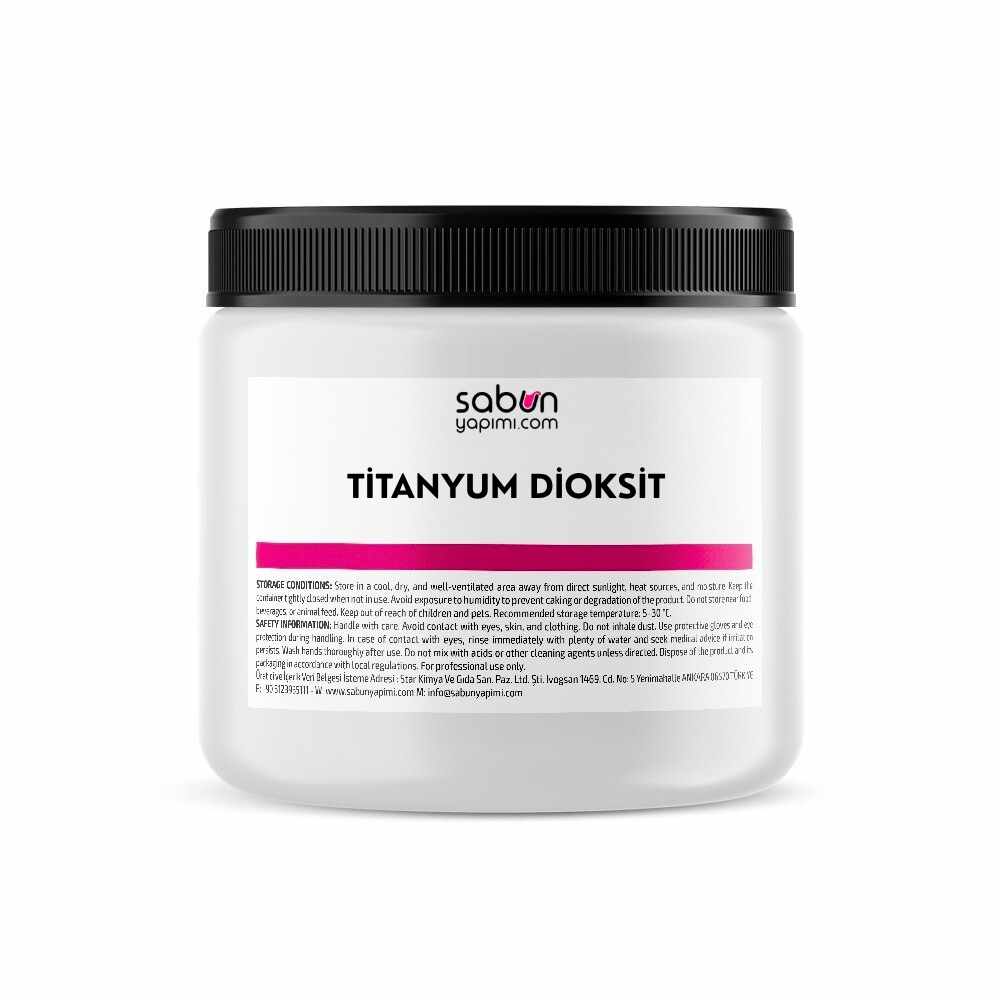
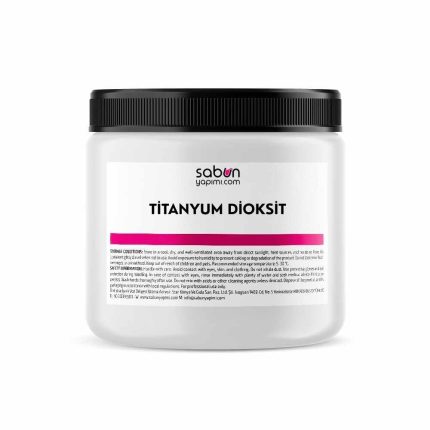
Titanium Dioxide (TiO₂) 100 g – White Pigment for Soap Making & Cosmetics
$16,00
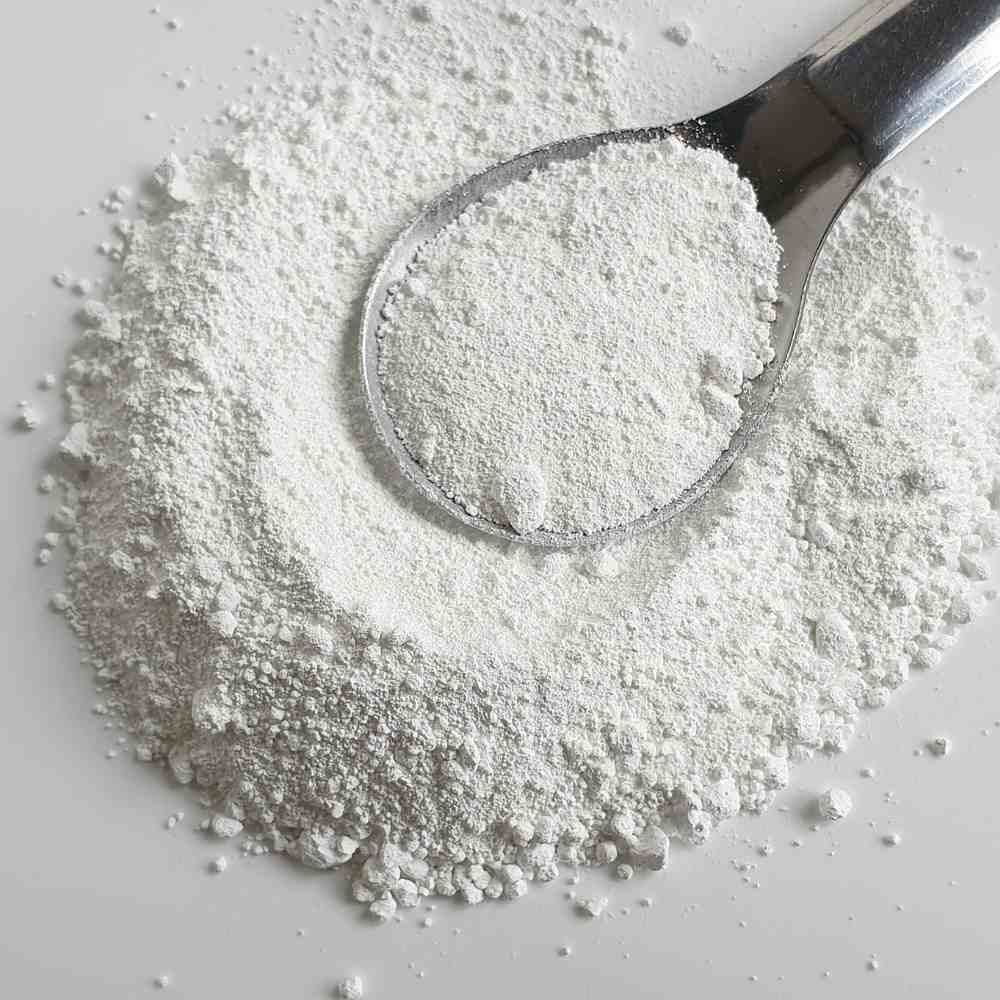
Titanium Dioxide (TiO₂) is a white mineral pigment used in handmade soap making and cosmetic formulations to provide opacity, brightness and consistent white coloration. Ideal for cold process soap, melt and pour soap and compatible cosmetic products, it also helps create soft pastel shades when blended with other pigments. Cosmetic and sunscreen applications require the appropriate raw-material grade and regulatory compliance.
Titanium Dioxide (TiO₂) 100 g
White Mineral Pigment & Opacifier for Soap Making and Cosmetic Formulations
Titanium Dioxide (TiO₂) is a white inorganic pigment widely used in handmade soap, cosmetic and personal-care formulations.
It is particularly valued for its excellent whitening, light-scattering and opacifying properties.
In soap making, Titanium Dioxide helps create:
- Bright white soap bars
- Creamy opaque appearances
- Soft pastel colors
- White soap layers
- Decorative swirls
- More consistent color effects
It is also used in selected cosmetic products such as foundations, BB creams, lotions and other pigmented formulations.
Titanium Dioxide is primarily recommended here as a white pigment and opacifier. Use as a sunscreen UV filter requires a specifically suitable grade, appropriate formulation and regulatory compliance.
What Is Titanium Dioxide?
Titanium Dioxide is an inorganic compound consisting of titanium and oxygen.
INCI Name: Titanium Dioxide
Colour Index: CI 77891
Chemical Formula: TiO₂
CAS Number: 13463-67-7
EC Number: 236-675-5
Ingredient Type: Inorganic Mineral Pigment
It is commonly supplied as a fine white powder.
Commercial Titanium Dioxide is manufactured and purified to meet the technical requirements of its intended application.
The exact specifications vary according to the grade.
Main Functions of Titanium Dioxide
In cosmetic and soap formulations, Titanium Dioxide can function as a:
- White pigment
- Opacifier
- Color modifier
- Light-scattering ingredient
- Mineral UV filter, when supplied in an appropriate grade and used in compliant sunscreen formulations
Its intended function must be consistent with the actual raw-material specification.
Titanium Dioxide for Soap Making
One of the most popular applications of Titanium Dioxide is handmade soap coloring.
Titanium Dioxide can help create a lighter and more opaque soap appearance.
It is especially useful for:
- Cold process soap
- Hot process soap
- Melt and pour soap
- White soap designs
- Pastel soap coloring
- Decorative soap swirls
- Layered soap designs
The final whitening effect depends on the natural color of the soap base, the dosage and the quality of pigment dispersion.
White Pigment for Handmade Soap
Titanium Dioxide is commonly selected when soap makers want a brighter white appearance.
It can be particularly helpful when a soap formula contains oils that naturally produce a cream or yellowish color.
However, Titanium Dioxide cannot always completely eliminate the natural color of strongly colored oils or fragrances.
The result depends on the complete soap formula.
How to Use Titanium Dioxide in Cold Process Soap
For cold process soap making, Titanium Dioxide should generally be pre-dispersed before being added to the soap batter.
General Method
- Prepare the soap according to a validated formulation.
- Measure the required Titanium Dioxide.
- Pre-disperse the powder in a suitable medium recommended for the supplied pigment grade.
- Mix thoroughly until visible clumps disappear.
- Add the dispersion to the soap batter at light trace.
- Blend or stir until the color is evenly distributed.
- Pour into the soap mold.
- Allow the soap to saponify and cure normally.
For oil-dispersible pigment grades, a small amount of liquid oil may be used.
Suitable oils for pigment pre-dispersion can include:
- Sweet Almond Oil
- Sunflower Oil
- Olive Oil
- Other compatible lightweight vegetable oils
Any additional oil should be considered in the overall formulation design.
Water-Dispersible vs. Oil-Dispersible Titanium Dioxide
Not every Titanium Dioxide grade has the same dispersion properties.
Commercial products may be designed for:
- Oil dispersion
- Water dispersion
- Glycerin dispersion
- Specialized cosmetic dispersion systems
Always follow the supplier’s recommendations for the specific grade.
Titanium Dioxide does not dissolve in water or oil. It is dispersed as fine solid particles.
This is an important distinction for successful soap and cosmetic formulation.
Avoiding White Specks in Soap
Poor dispersion can cause visible white spots or clumps.
To reduce these problems:
- Pre-disperse the powder.
- Mix thoroughly.
- Avoid adding large amounts of dry pigment directly to thick soap batter.
- Use suitable mixing equipment.
- Test the desired color in a small batch first.
Fine and even dispersion helps produce a more consistent finished appearance.
Titanium Dioxide in Melt & Pour Soap
Titanium Dioxide can also be used in compatible melt and pour soap bases.
General Method
- Melt the soap base gently.
- Prepare the Titanium Dioxide dispersion separately.
- Allow the melted base to reach an appropriate working temperature.
- Add the pigment dispersion gradually.
- Stir thoroughly.
- Pour into the mold.
- Allow the soap to cool and harden.
In transparent melt and pour soap, Titanium Dioxide can create a cloudy, milky or opaque effect.
The final result depends on the pigment level and soap-base composition.
White & Pastel Soap Colors
Titanium Dioxide is frequently combined with compatible soap colorants to create softer shades.
Examples include:
Titanium Dioxide + Pink Pigment
Soft pastel pink soap
Titanium Dioxide + Blue Pigment
Light blue or pastel blue soap
Titanium Dioxide + Green Pigment
Mint green or pastel green soap
Titanium Dioxide + Purple Pigment
Lavender or lilac soap
Titanium Dioxide + Yellow Pigment
Cream or pale yellow soap
These combinations are particularly suitable for decorative cold process soap designs.
Titanium Dioxide in Decorative Soap Designs
Titanium Dioxide is useful for:
- White swirls
- Marble effects
- Layered soap bars
- Geometric soap designs
- Pastel color combinations
- Luxury handmade soaps
- Decorative embeds
A white soap portion can create contrast with darker colorants such as activated charcoal, copper pigments or blue cosmetic pigments.
Typical Usage in Soap
The correct usage level depends on:
- Pigment grade
- Desired whiteness
- Natural soap color
- Soap base
- Dispersion method
- Other pigments
- Finished-product appearance
For small-batch soap making, start with a low quantity and gradually adjust the color.
There is no universal dosage suitable for every Titanium Dioxide grade and soap formulation.
Excessive use may affect appearance, texture and processing behavior.
Always follow the supplier TDS and perform small-batch testing.
Can Titanium Dioxide Cause Glycerin Rivers?
In cold process soap, Titanium Dioxide can make a visual effect known as glycerin rivers more noticeable.
These may appear as:
- Translucent streaks
- Irregular white patterns
- Mottled areas
- Vein-like discoloration
The effect is associated with soap-processing conditions, including heat, water content and pigment distribution.
To reduce this effect:
- Avoid unnecessary overheating.
- Control gel-phase temperatures.
- Use appropriate water levels.
- Disperse the pigment evenly.
- Follow a validated manufacturing process.
Glycerin rivers are primarily an appearance issue rather than automatically indicating an unsafe soap.
Titanium Dioxide in Cosmetics
Titanium Dioxide is also used as a white pigment and opacifier in selected cosmetic formulations.
Possible applications include:
- Foundations
- BB creams
- Concealers
- Cosmetic creams
- Body lotions
- Pigmented skincare products
- Pressed powders
- Selected makeup products
The pigment grade and particle characteristics must be appropriate for the intended product.
Use in Foundations & Makeup
Titanium Dioxide can contribute to:
- White pigmentation
- Opacity
- Coverage
- Color adjustment
- Light scattering
- A more uniform cosmetic appearance
It is frequently combined with other permitted cosmetic pigments, including iron oxides, to produce different makeup shades.
Is Titanium Dioxide a Skin-Brightening Active?
Titanium Dioxide should not be confused with ingredients designed to influence skin pigmentation.
Its whitening effect in cosmetics is primarily optical.
It changes the visible appearance of the finished formula by scattering light and providing white coloration.
It does not permanently lighten skin pigmentation or remove dark spots.
Therefore, it is more technically correct to describe it as a:
White Pigment / Opacifier
rather than a skin-whitening treatment.
Titanium Dioxide in Sunscreen Products
Certain specifically manufactured Titanium Dioxide grades are used as mineral UV filters in sunscreen formulations.
These grades may help attenuate ultraviolet radiation through absorption and scattering.
However:
Not every Titanium Dioxide pigment is suitable for use as a sunscreen filter.
UV-filter grades require appropriate specifications related to:
- Particle size
- Crystal structure
- Surface treatment
- Purity
- Dispersion characteristics
- Photocatalytic activity
- Regulatory compliance
The commercial raw material must be selected for its intended sunscreen application.
European Union UV Filter Regulation
Under the European Union Cosmetics Regulation, Titanium Dioxide is listed in Annex VI as a permitted UV filter.
The general maximum concentration is:
25% in the finished cosmetic product.
Additional conditions apply to certain grades, including nano materials and products that may lead to inhalation exposure.
This regulatory limit is not a recommended formulation percentage for all cosmetic products.
Can Titanium Dioxide Alone Determine SPF?
No.
The percentage of Titanium Dioxide in a formula does not directly determine the finished product’s SPF.
Sun protection depends on:
- Particle size
- Particle dispersion
- Surface treatment
- Film formation
- Product uniformity
- Other UV filters
- Complete formulation
- Photostability
A professionally developed sunscreen requires appropriate finished-product SPF and UVA testing.
Titanium Dioxide Does Not Make Soap a Sunscreen
Adding Titanium Dioxide to soap does not create a reliable sunscreen.
Soap is a rinse-off product and is not designed to leave a controlled, uniform UV-protective film on the skin.
Therefore, handmade soap containing Titanium Dioxide should not automatically be marketed as:
- SPF Soap
- Sunscreen Soap
- UV-Protective Soap
- Sunblock Soap
Titanium Dioxide used for whitening soap should be described as a pigment, not as proof of sunscreen performance.
Nano vs. Non-Nano Titanium Dioxide
Titanium Dioxide is available in different particle-size grades.
These may include:
- Pigmentary Titanium Dioxide
- Micronized Titanium Dioxide
- Nano Titanium Dioxide
- Surface-Treated Titanium Dioxide
- Uncoated Titanium Dioxide
The performance and safety considerations of each grade can differ.
Non-nano Titanium Dioxide should not automatically be described as universally safer than nano Titanium Dioxide.
The appropriate choice depends on:
- Intended application
- Exposure route
- Particle-size distribution
- Surface characteristics
- Applicable regulations
- Finished-product safety assessment
Inhalation Safety
Titanium Dioxide is a fine mineral powder.
Inhalation exposure is an important safety consideration when working with powdered material.
Avoid:
- Breathing airborne powder
- Uncontrolled dust generation
- Unnecessary aerosol formation
- Using unassessed powder in spray applications
Professional handling should use suitable ventilation and appropriate respiratory protection when needed.
Products intended to create inhalable aerosols require particularly careful safety and regulatory evaluation.
Titanium Dioxide Crystal Forms
Titanium Dioxide may be supplied in different crystal structures, including:
Rutile
Rutile Titanium Dioxide is widely used in white pigments and selected sunscreen applications.
Anatase
Anatase Titanium Dioxide is another crystalline form with different optical and photocatalytic properties.
These grades are not automatically interchangeable.
Crystal form, purity, particle size and surface coating should be confirmed from supplier documentation.
Natural Mineral Origin
Titanium Dioxide occurs naturally in several mineral forms.
However, commercial Titanium Dioxide pigment is manufactured and purified to achieve specific physical and chemical characteristics.
For technical product descriptions, terms such as:
- Mineral Pigment
- Inorganic White Pigment
- Titanium Dioxide Powder
are generally more accurate than claiming that every commercial grade is 100% natural.
Solubility
Titanium Dioxide is practically insoluble in:
- Water
- Vegetable oils
- Conventional cosmetic solvents
It is incorporated into cosmetic formulations through dispersion technology.
The appropriate dispersion medium depends on the commercial grade.
pH Information
Titanium Dioxide is an insoluble mineral powder.
It should not automatically be assigned a universal pH compatibility statement such as:
pH 4.5–7.0
The stability and behavior of a specific grade depend on surface treatment, dispersion medium and finished-product chemistry.
Always refer to the supplier TDS.
Does Titanium Dioxide Act as a Preservative?
No.
Titanium Dioxide is not a conventional antimicrobial preservative.
It does not replace the preservation system required for water-containing cosmetic formulations.
Finished products may still require:
- Appropriate preservatives
- Microbiological testing
- Preservative efficacy testing
- Stability testing
depending on product type.
Product Details
Product Name: Titanium Dioxide
INCI Name: Titanium Dioxide
Colour Index: CI 77891
CAS Number: 13463-67-7
EC Number: 236-675-5
Chemical Formula: TiO₂
Weight: 100 g
Typical Form: Fine White Powder
Color: White
Primary Functions: White Pigment / Opacifier
Water Solubility: Practically Insoluble
Applications: Soap Making, Cosmetic Pigmentation, Opacifying Formulations
Purity: Refer to Supplier COA
Particle Size: Refer to Supplier Specification
Crystal Form: Refer to Supplier Specification
Nano Status: Refer to Supplier Documentation
Dispersion Type: Refer to Supplier TDS
Cosmetic Grade Requirements
For cosmetic use, the raw material should comply with the applicable purity and safety requirements.
Relevant documentation may include:
- Certificate of Analysis (COA)
- Technical Data Sheet (TDS)
- Safety Data Sheet (SDS)
- Purity specification
- Particle-size distribution
- Crystal structure
- Heavy metal limits
- Surface-treatment information
- Nano/non-nano declaration
- Cosmetic-use suitability
A material intended for paint or ceramics should not automatically be considered appropriate for cosmetic use.
White Pigment vs. Sunscreen Grade
This distinction is particularly important.
White Pigment Grade
Primarily selected for:
- White coloration
- Opacity
- Cosmetic coverage
- Soap coloring
UV Filter Grade
Specifically selected and evaluated for:
- UV attenuation
- Appropriate particle characteristics
- Photostability
- Sunscreen formulation compatibility
- Regulatory compliance
A cosmetic white pigment should not automatically be promoted as a ready-to-use sunscreen ingredient.
Safety Information
Titanium Dioxide is supplied as a raw material for professional formulation and suitable small-batch manufacturing applications.
During handling:
- Avoid inhaling fine powder.
- Avoid unnecessary airborne dust.
- Wear suitable eye protection.
- Use appropriate gloves when required.
- Use suitable respiratory protection if dust exposure cannot be adequately controlled.
- Avoid direct eye contact.
- Do not ingest.
- Keep out of reach of children.
- Follow supplier SDS and TDS.
Storage
Store Titanium Dioxide:
- In tightly closed packaging
- In a cool and dry place
- Protected from moisture
- Away from contamination
- Away from excessive dust exposure
- According to supplier storage recommendations
Keep the container tightly closed after dispensing.
Wholesale, Private Label & Contract Manufacturing
We supply Titanium Dioxide, cosmetic pigments, mineral powders, soap-making additives and other formulation raw materials in wholesale quantities for soap makers, cosmetic formulators, laboratories, manufacturers, retailers and professional buyers.
We also provide custom formulation development services for selected cosmetic and personal-care products.
Our services can include:
- Raw material selection
- Pigment system development
- Product formulation
- Manufacturing procedures
- Quality-control specifications
- Stability recommendations
- Technical documentation
Private label and contract manufacturing services are also available for selected liquid soaps, cleansing products and other products within our manufacturing capabilities.
Customized products may include different colors, fragrances, formulation systems, packaging formats, product sizes and private label designs.
For bulk Titanium Dioxide orders, cosmetic pigment supply, custom formulation development, private label or contract manufacturing inquiries, please contact us with your required raw-material grade, intended application, packaging requirements, target market and estimated quantity.
KARGO & İADE
SabunYapimi.com olarak müşteri memnuniyetini ön planda tutuyoruz. Siparişlerinizin güvenli ve hızlı bir şekilde size ulaşmasını sağlamak için en iyi lojistik firmalarıyla çalışıyoruz. Ayrıca, herhangi bir sebepten dolayı ürününüzden memnun kalmazsanız, iade ve değişim sürecimizi kolay ve hızlı hale getirdik.
Kargo Firması & Gönderim Süresi
- Siparişleriniz, ödeme onaylandıktan sonra 1-2 iş günü içinde kargoya verilir.
- Kargo firmaları: [Aras & Yurtiçi]
- Ortalama teslimat süresi 2-3 iş günü arasındadır.
Kargo Ücretleri & Ücretsiz Kargo Şartları
- [1000 TL ve üzeri alışverişlerde kargo ücretsizdir.]
- Standart kargo ücreti sipariş aşamasında ödeme sayfasında belirtilir.
Kargo Takibi
Siparişiniz kargoya verildiğinde e-posta veya SMS ile takip numarası paylaşılır. Kargo takip bağlantısını kullanarak siparişinizi kolayca takip edebilirsiniz.
📌 Siparişiniz belirlenen süre içinde ulaşmazsa, bize aşağıdaki iletişim bilgileriyle ulaşabilirsiniz:
📧 E-Posta: sabunyapimi@gmail.com
📞 WhatsApp Destek: +90 532 059 15 71
Geri Ödeme ve İade Süreçleri
Geri Ödeme ve İade Politikası Sayfamızı Okuyun