
 Soap Bases
 Scents
 Oils
Oils Dyes
Dyes Equipment and Accessories
 Cosmetic Clays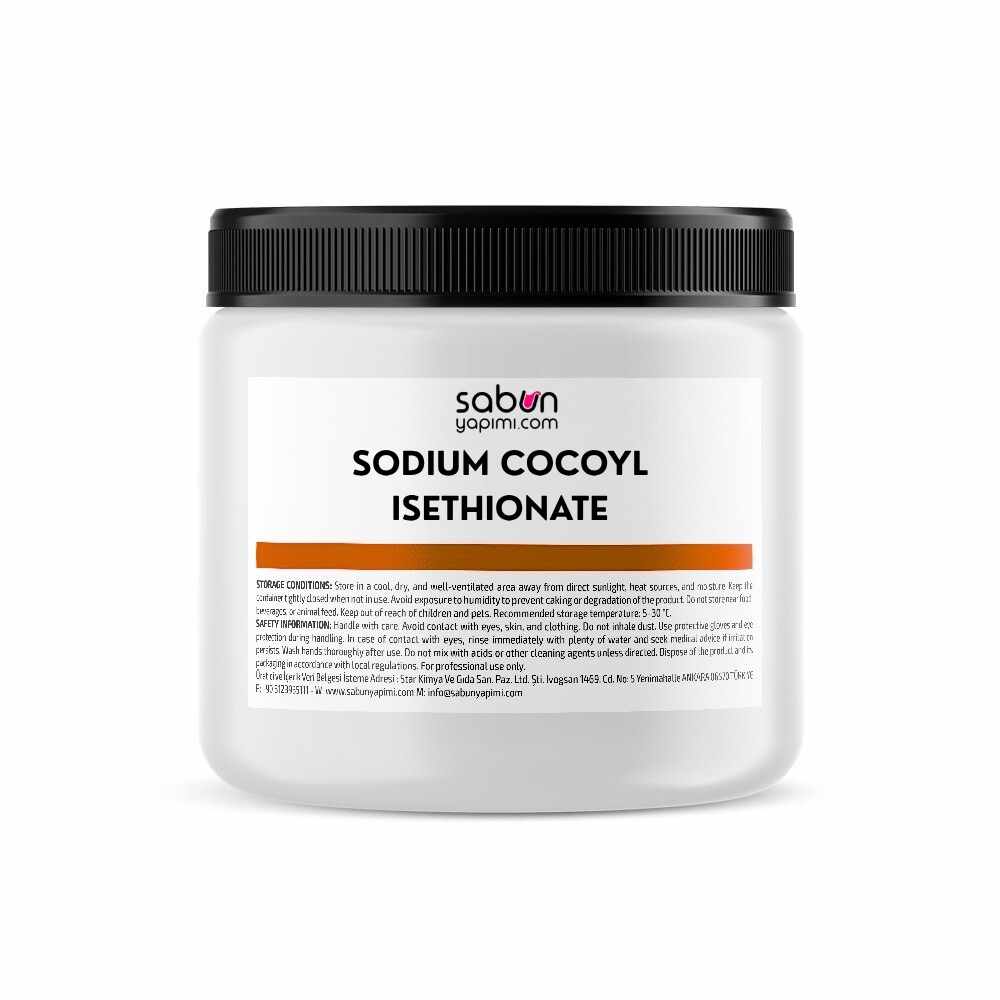
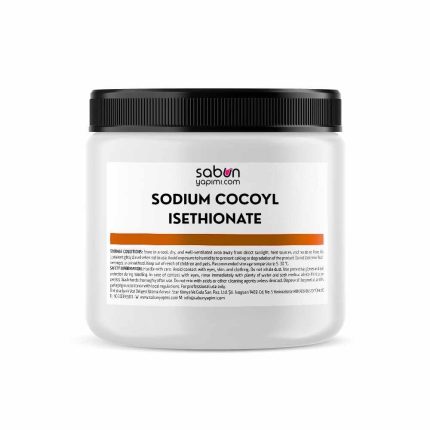
Sodium Cocoyl Isethionate (SCI) Granules 100 g – Sulfate-Free Surfactant for Shampoo Bars
$38,00
Sodium Cocoyl Isethionate (SCI) Granules is a sulfate-free anionic surfactant used in solid shampoo bars, syndet cleansing bars and personal-care formulations. Derived partly from coconut fatty acids, SCI offers effective cleansing with rich, creamy foam and a smooth after-wash feel.
Its granular form is particularly useful for developing solid cleansing products and premium sulfate-free shampoo bars. SCI can also be combined with compatible surfactants in selected facial cleansers, body washes and hair-care products. The active matter content, processing conditions and optimal usage level depend on the commercial grade.
Sodium Cocoyl Isethionate (SCI) Granules 100 g
Sulfate-Free Surfactant for Solid Shampoo Bars, Syndet Soap and Gentle Cleansing Formulations
Sodium Cocoyl Isethionate (SCI) is a mild anionic surfactant widely used in solid shampoo bars, syndet cleansing bars and modern personal-care formulations. Known for its rich, creamy foam and pleasant after-wash feel, SCI is particularly popular among formulators developing sulfate-free hair and skin cleansing products.
SCI Granules offer a practical raw-material format for manufacturing concentrated solid cleansing products. They can be incorporated into suitable surfactant blends to produce shampoo bars, facial cleansing bars, body cleansing bars and selected liquid cleansing systems.
Unlike conventional soap made by reacting vegetable oils with sodium hydroxide, SCI-based cleansing products can be developed using synthetic detergent technology. This allows greater flexibility in adjusting the finished product’s cleansing performance, foam characteristics and pH.
SCI is especially valued by manufacturers seeking a sulfate-free surfactant that combines effective cleansing with a smooth and creamy sensory profile.
What Is Sodium Cocoyl Isethionate?
Sodium Cocoyl Isethionate is an anionic surfactant produced from fatty acid derivatives and isethionate chemistry.
The fatty acid portion is commonly obtained from coconut-derived materials, while the complete ingredient is manufactured through chemical processing.
This combination produces a surfactant with both hydrophilic and lipophilic characteristics, enabling it to interact with water, oils and other substances during cleansing.
INCI Name: Sodium Cocoyl Isethionate
Abbreviation: SCI
CAS Number: 61789-32-0
EC Number: 263-052-5
Ingredient Family: Isethionate Surfactant
Surfactant Type: Anionic
Typical Appearance: White to Off-White Granules
Primary Cosmetic Functions: Cleansing, Foaming and Hair Conditioning
SCI is not a single pure molecular compound with a uniform fatty acid chain. Commercial grades contain mixtures of cocoyl-derived components and may include free fatty acids and other grade-dependent constituents.
How Does SCI Work?
Sodium Cocoyl Isethionate works by reducing the surface tension between water and oily substances.
Its surfactant structure allows it to interact with sebum, dirt and other materials present on the skin and hair.
During washing, these substances can be dispersed into the cleansing solution and removed through rinsing.
SCI is particularly valued because it can provide effective cleansing while producing a dense, creamy and pleasant foam.
The final cleansing performance depends on the concentration of SCI, the accompanying surfactants and the complete formulation.
SCI for Solid Shampoo Bars
SCI for shampoo bars is one of its most important applications.
Solid shampoo bars have become a popular alternative to conventional liquid shampoos, especially among brands developing compact and concentrated personal-care products.
SCI can function as the primary surfactant in these formulations, contributing cleansing performance and a rich lather when the bar is used with water.
Its granular form can be processed into suitable solid shampoo systems with compatible binders, co-surfactants and conditioning ingredients.
A well-developed SCI shampoo bar can provide effective cleansing while maintaining an appropriate balance between foam performance, mechanical strength and hair feel.
However, producing a successful shampoo bar requires more than compressing or melting SCI granules. The structure of the finished bar depends on the entire formulation and processing method.
What Is a Syndet Bar?
The term syndet refers to a synthetic detergent-based cleansing product.
A syndet bar may resemble a traditional bar soap in appearance, but its chemistry is different.
Traditional soap is generally produced through saponification using fatty materials and an alkali such as Sodium Hydroxide.
SCI-based syndet bars instead obtain their cleansing properties from formulated surfactants.
This distinction is particularly important because a syndet bar can be developed within a mildly acidic or approximately neutral pH range, depending on the formulation.
A traditional soap bar is normally alkaline.
For this reason, SCI is commonly selected for cleansing products where formulators want greater control over the finished product’s pH and sensory characteristics.
SCI vs. Traditional Soap
SCI and conventional soap both perform cleansing functions, but they have different chemical structures and formulation characteristics.
Traditional soap is composed primarily of fatty acid salts. Its performance depends on the fatty acid profile of the oils and fats used during saponification.
SCI is an isethionate-based anionic surfactant that does not require saponification to provide cleansing performance.
Traditional soap generally has a relatively high pH, while SCI-based syndet products can be formulated at lower pH values.
SCI may also offer advantages in hard-water conditions compared with some conventional soaps, which can form insoluble deposits with calcium and magnesium ions.
The final performance of either product still depends on its complete formulation.
Rich and Creamy Foam
One of the most recognizable characteristics of Sodium Cocoyl Isethionate is its foam quality.
SCI can produce a rich, dense and creamy lather in compatible cleansing formulations.
This makes it particularly suitable for premium shampoo bars, body cleansing bars and facial cleansing products.
Unlike surfactants selected mainly for rapid production of large bubbles, SCI is often valued for a softer, more luxurious foam texture.
Its performance may be adjusted by combining it with suitable co-surfactants.
For example, Cocamidopropyl Betaine may be used in certain formulations to modify foam characteristics and improve processing.
The exact surfactant balance should be established through formulation development.
Is SCI Sulfate-Free?
Yes. Sodium Cocoyl Isethionate is not a sulfate surfactant such as Sodium Lauryl Sulfate (SLS) or Sodium Laureth Sulfate (SLES).
SCI belongs to the isethionate family of anionic surfactants.
Although its chemical structure contains a sulfur-bearing sulfonate group, this does not make it a sulfate surfactant.
Therefore, SCI can be used in formulations marketed as sulfate-free, provided the complete finished product does not contain other sulfate surfactants.
It is important to distinguish between sulfate-free and surfactant-free. SCI is still an active cleansing surfactant.
SCI vs. SLS and SLES
Sodium Cocoyl Isethionate, Sodium Lauryl Sulfate and Sodium Laureth Sulfate all belong to the broader category of anionic surfactants.
However, their chemical structures and formulation characteristics differ.
SLS is commonly associated with strong detergency and abundant foam.
SLES is widely used in liquid shampoos, body washes and household cleansing products because of its versatility and processing characteristics.
SCI is especially popular in syndet bars and mild-feeling cleansing formulations.
Research has indicated that SCI can interact less aggressively with certain skin barrier structures than Sodium Dodecyl Sulfate under specific experimental conditions.
However, the actual mildness of a cleansing product depends on its complete surfactant system and not simply on the absence of sulfates.
SCI for Facial Cleansing Bars
SCI is also suitable for developing selected facial cleansing bars.
These products are designed to provide effective cleansing in a compact solid format.
A facial syndet bar may combine SCI with other surfactants, cosmetic emollients, humectants and structuring agents.
Depending on the formulation, it may produce a creamy lather while helping remove excess surface oil and ordinary daily impurities.
The concentration of active surfactants should be selected carefully because facial skin may be more sensitive to cleansing products than other areas of the body.
For this reason, the finished formulation should be evaluated for pH, irritation potential and cleansing performance.
SCI for Body Cleansing Bars
SCI is widely used in premium body-cleansing formulations.
Its creamy foam and smooth after-wash feel make it a popular ingredient in solid body washes and syndet bars.
These products may contain SCI alongside suitable fatty alcohols, binders, co-surfactants and emollient ingredients to improve bar structure and consumer experience.
SCI itself is a cleansing surfactant, not a conventional moisturizing active.
A body cleansing product may include additional ingredients such as Glycerin, Panthenol or selected emollients to improve the overall sensory profile.
The complete formulation determines whether the finished product produces a comfortable after-wash feel.
SCI in Liquid Shampoos and Shower Gels
Although SCI is especially suitable for solid formulations, it may also be incorporated into selected liquid shampoos and shower gels.
However, its processing behavior is more challenging than that of many common liquid surfactants.
SCI granules do not necessarily dissolve rapidly in room-temperature water, particularly at higher concentrations.
Formulators may need a compatible co-surfactant system, controlled heating and sufficient mixing time.
The finished product may also be opaque or pearlescent rather than completely transparent.
For liquid products, the maximum practical SCI concentration depends on solubility, viscosity, temperature and formulation stability.
SCI should not automatically be added to an existing shampoo recipe as a direct replacement for an equivalent quantity of SLES.
Water Solubility of SCI Granules
SCI is a water-compatible surfactant, but granular commercial grades have limited practical solubility in cold water.
This distinction is important when preparing formulations.
A small amount of SCI may dissolve or disperse in an appropriate aqueous system, while concentrated mixtures may require a different manufacturing approach.
In many solid shampoo formulations, SCI is processed into a cohesive surfactant mass rather than being completely dissolved in water.
Heating may help soften the processing mixture, particularly in the presence of compatible ingredients.
However, SCI should not be treated like a simple wax that melts into a clear liquid at a universally defined temperature.
The correct method depends on the commercial grade and complete formula.
How to Process SCI Granules
The manufacturing process for SCI Granules depends primarily on whether the finished product is a solid bar or a liquid cleanser.
For solid shampoo bars, the granules may be combined with a suitable liquid surfactant, humectant or other formulation component to create a workable mass.
Controlled warming and mixing may be used to improve the uniformity of the mixture.
Other ingredients are then incorporated according to their processing and temperature requirements.
The resulting mass can be shaped or pressed into the desired format before undergoing the necessary setting and quality-control procedures.
The exact processing conditions must be validated according to the SCI grade, equipment and desired finished-product characteristics.
Processing Temperature
There is no single processing temperature that applies to every SCI formulation.
Certain shampoo-bar manufacturing methods use controlled heating to help incorporate SCI into a workable paste or mass.
However, prolonged excessive heat may create processing difficulties or contribute to undesirable changes in the formulation.
The correct temperature should be selected according to the supplier’s Technical Data Sheet and the other formulation ingredients.
Heat-sensitive fragrances, preservatives and cosmetic actives should be added only at appropriate processing stages.
A commercial SCI formulation should also be evaluated for stability under the selected processing conditions.
SCI Granules vs. SCI Powder
Sodium Cocoyl Isethionate is available in several physical forms, including fine powder, granules, flakes and noodles.
These forms may have similar chemical functions but different handling characteristics.
SCI Granules are frequently selected for solid cleansing products because they can offer convenient dosing and handling.
SCI Powder provides smaller particles that may disperse differently during manufacturing, but its fine particle size can increase the potential for airborne dust.
The two forms may also have different active matter and free fatty acid specifications.
Therefore, a formulation developed with one SCI grade should be evaluated before substituting another.
Typical Usage Levels
The amount of SCI required depends on the finished product and the active matter of the supplied commercial grade.
For solid shampoo bars, a preliminary laboratory range of approximately 30–60% SCI granules may be evaluated, depending on the surfactant system, desired bar structure and supplier recommendations.
For facial and body syndet bars, SCI may also be used as a principal surfactant, with the appropriate concentration determined by the complete formula and its mildness requirements.
For liquid shampoos and body washes, concentrations are often lower because solubility, viscosity and processing limitations become more important. Preliminary evaluations may begin around 2–8% of the supplied SCI grade, but this range is highly formulation-dependent.
These values are experimental starting points rather than universal usage limits.
The finished product should be evaluated for active surfactant content, skin compatibility, pH, stability and performance.
Understanding Active Matter
Commercial SCI is not necessarily supplied as 100% active surfactant.
For example, a commercial granule grade containing 85% active SCI contributes 8.5 g of active surfactant when 10 g of the product is incorporated into a formulation.
The remaining portion may include free fatty acids, moisture and other constituents permitted by the grade specification.
This distinction is especially important when comparing SCI from different manufacturers.
If a formula is developed using an 85% active grade, replacing it with a lower-active grade may change the product’s cleansing performance, texture and overall solids balance.
Professional formulations should therefore specify the commercial grade and active matter rather than using the ingredient name alone.
SCI and Formulation pH
The pH of a finished SCI-based cleanser is determined by the complete formulation.
Many syndet shampoo bars are developed around a mildly acidic pH, often approximately 5.0–6.5, depending on product requirements.
However, dry SCI granules do not have a meaningful standalone pH value.
Manufacturers commonly measure the pH of a prepared aqueous solution or dispersion using a defined test method.
For solid shampoo bars, pH measurement should be performed using a standardized dilution or dispersion procedure.
The test concentration should remain consistent between batches to ensure reliable quality-control results.
A pH target should not be selected solely because the raw material is described as mild.
SCI With Cocamidopropyl Betaine
Cocamidopropyl Betaine is frequently used as a co-surfactant in cleansing formulations containing anionic surfactants.
When combined appropriately with SCI, it may help modify foam characteristics, processing behavior and the overall sensory performance of the finished product.
In solid shampoo bars, liquid Cocamidopropyl Betaine can also contribute moisture and influence the workability of the surfactant mass.
However, excessive liquid content can reduce bar hardness or prolong drying and setting.
The surfactant ratio must therefore be optimized according to the desired product structure.
SCI With Conditioning Ingredients
SCI-based shampoo bars may incorporate compatible conditioning ingredients to improve the after-wash feel.
These can include selected cationic polymers, Panthenol, suitable silicone ingredients and cosmetic emollients.
For example, Polyquaternium-10 may be evaluated in a conditioning shampoo-bar concept.
However, polymer-surfactant compatibility must be verified because cationic and anionic ingredients may interact.
The presence of a conditioning ingredient does not automatically guarantee improved detangling or reduced irritation.
Professional evaluation of the finished product is required.
SCI for Sensitive Skin Formulations
SCI is frequently described as a mild surfactant.
Its chemical structure and performance characteristics make it useful in products intended to provide effective cleansing with a comfortable sensory profile.
Nevertheless, a sulfate-free formulation is not automatically suitable for everyone with sensitive skin.
The total surfactant concentration, formulation pH, fragrance, preservatives and other ingredients may influence the irritation potential.
Appropriate cosmetic positioning includes:
“A mild anionic surfactant suitable for the development of gentle cleansing formulations.”
Claims such as “non-irritating for all skin types” or “guaranteed suitable for eczema-prone skin” should not be made without relevant evidence.
SCI in Baby-Care Products
SCI may be evaluated in professionally developed cleansing products intended for specific consumer groups.
However, its use in baby-care products requires particular care.
Infant and young-child formulations have different safety requirements, including considerations relating to skin tolerance, eye irritation and accidental exposure.
The ingredient’s reputation as a mild surfactant does not establish that every SCI-containing product is suitable for infants.
Baby-care applications should only be developed after completing an appropriate product-specific safety assessment.
Does SCI Moisturize the Skin?
SCI is primarily a cleansing surfactant.
Its mildness characteristics may help formulators develop products that feel less harsh than certain conventional cleansing systems.
However, SCI does not function as a primary moisturizing ingredient in the same way as Glycerin or other humectants.
A finished shampoo or body cleanser can contain additional moisturizing and conditioning ingredients to improve sensory performance.
The statement “helps maintain a comfortable after-wash feel” is more appropriate than guaranteeing deep or long-lasting skin hydration.
Is SCI Natural?
SCI is often described as coconut-derived because its fatty acid components can originate from coconut oil.
However, the complete material is chemically manufactured.
It is therefore more accurate to describe SCI as a coconut-derived synthetic anionic surfactant or a surfactant produced partly from vegetable-derived fatty acids, subject to the supplier’s actual raw-material origin.
SCI should not automatically be marketed as 100% natural, organic-certified or chemical-free.
Similarly, certifications relating to natural origin, vegan status or biodegradability should be supported by valid documentation for the exact supplied grade.
Environmental Considerations
SCI is frequently used in compact personal-care products such as shampoo bars.
These products may reduce the need for certain types of plastic packaging and can support concentrated product concepts.
However, the environmental performance of a finished shampoo bar depends on its complete formulation, packaging, manufacturing process, transport and disposal.
The use of SCI alone does not guarantee that a product is environmentally friendly, zero-waste or biodegradable.
Any environmental marketing claims should be supported by appropriate evidence.
Product Details
Product Name: Sodium Cocoyl Isethionate (SCI) Granules
INCI Name: Sodium Cocoyl Isethionate
Abbreviation: SCI
CAS Number: 61789-32-0
EC Number: 263-052-5
Package Size: 100 g
Ingredient Family: Isethionate Surfactant
Surfactant Type: Anionic
Typical Physical Form: Granules
Typical Appearance: White to Off-White
Primary Functions: Cleansing / Foaming / Hair Conditioning
Sulfate-Free: Yes, as an ingredient
Water Compatibility: Limited Practical Solubility in Cold Water
Main Applications: Solid Shampoo Bars, Syndet Cleansing Bars, Facial Cleansers and Selected Liquid Cleansing Formulations
Active Matter: Refer to Supplier COA
Free Fatty Acid Content: Refer to Supplier TDS
pH: Refer to Defined Aqueous Test Method
Raw Material Origin: Confirm with Supplier Documentation
Cosmetic Grade: Confirm with Supplier Documentation
Raw Material Quality
Professional cosmetic manufacturers should verify the quality and identity of the SCI grade used in production.
Important specifications include active surfactant content, free fatty acid content, moisture, appearance, particle size and pH under defined test conditions.
The active matter is particularly important in solid shampoo manufacturing because it directly influences the total surfactant concentration of the finished product.
The particle size and physical form can also affect the manufacturing process.
Only describe the product as 100% Pure Sodium Cocoyl Isethionate when the exact supplied composition supports that statement.
Commercial grades containing approximately 80–85% active surfactant should not be mislabeled as 100% active material.
Stability Testing
SCI-containing cleansing formulations should undergo appropriate physical, chemical and microbiological evaluation.
For solid shampoo bars, manufacturers should assess hardness, crumbling, cracking, lather, weight changes, fragrance compatibility and storage stability.
Liquid formulations require additional attention to viscosity, solubility, precipitation, pH and phase stability.
The final product should also be tested under relevant temperature and humidity conditions.
A shampoo bar that performs well immediately after production may develop texture or storage problems if the surfactant and binder system is not properly balanced.
Preservation Requirements
SCI is not an antimicrobial preservative.
Although low-water solid shampoo bars may have different preservation requirements from conventional liquid shampoos, the presence of SCI does not automatically make a finished product microbiologically safe.
Preservation requirements should be determined through an appropriate microbiological risk assessment.
Water-containing shampoos, facial cleansers and body washes may require a suitable preservative system and preservative efficacy testing.
Safety and Handling
SCI Granules are supplied as a concentrated surfactant raw material and should not be applied directly to the skin as a ready-to-use cosmetic product.
During manufacturing, avoid inhaling airborne particles and prevent direct eye contact.
Fine dust can form when granules are crushed, ground or mixed aggressively.
Appropriate ventilation, dust control and personal protective equipment should be used according to the supplier’s Safety Data Sheet.
Although SCI is widely used in mild cleansing products, the concentrated raw material can still cause irritation.
Finished cosmetic formulations must undergo suitable safety assessment before commercial release.
Storage
Store SCI Granules in tightly closed packaging in a cool, dry environment.
Protect the material from moisture, contamination and excessive heat.
Moisture exposure may contribute to clumping and changes in handling properties.
The recommended storage temperature and shelf life should follow the commercial manufacturer’s Technical Data Sheet.
Wholesale, Private Label & Contract Manufacturing
We supply Sodium Cocoyl Isethionate (SCI), Sodium Lauryl Sulfoacetate (SLSA), Cocamidopropyl Betaine, cosmetic surfactants, conditioning polymers and other soap-making and personal-care formulation raw materials in wholesale quantities for cosmetic brands, laboratories, retailers, manufacturers and professional formulators.
We also provide custom cosmetic formulation development services for solid shampoo bars, syndet cleansing bars, facial cleansing products, body washes and other personal-care concepts.
Our formulation development services may include surfactant-system selection, active matter calculations, foam optimization, bar structure development, conditioning ingredient compatibility, manufacturing procedures, stability recommendations and technical documentation.
For manufacturers developing sulfate-free cleansing products, we can evaluate alternative surfactant combinations according to the desired cleansing performance, foam characteristics, pH and product texture.
Private label and contract manufacturing services are available for selected liquid soaps, detergents and cleansing products within our manufacturing capabilities. Solid shampoo-bar and other cosmetic formulation development projects can be evaluated separately from physical manufacturing.
For bulk SCI Granules orders, custom shampoo-bar formulation development, sulfate-free cleansing projects, private label or contract manufacturing inquiries, please contact us with your required quantity, SCI grade, active matter specification, target product, packaging requirements and intended market.
KARGO & İADE
SabunYapimi.com olarak müşteri memnuniyetini ön planda tutuyoruz. Siparişlerinizin güvenli ve hızlı bir şekilde size ulaşmasını sağlamak için en iyi lojistik firmalarıyla çalışıyoruz. Ayrıca, herhangi bir sebepten dolayı ürününüzden memnun kalmazsanız, iade ve değişim sürecimizi kolay ve hızlı hale getirdik.
Kargo Firması & Gönderim Süresi
- Siparişleriniz, ödeme onaylandıktan sonra 1-2 iş günü içinde kargoya verilir.
- Kargo firmaları: [Aras & Yurtiçi]
- Ortalama teslimat süresi 2-3 iş günü arasındadır.
Kargo Ücretleri & Ücretsiz Kargo Şartları
- [1000 TL ve üzeri alışverişlerde kargo ücretsizdir.]
- Standart kargo ücreti sipariş aşamasında ödeme sayfasında belirtilir.
Kargo Takibi
Siparişiniz kargoya verildiğinde e-posta veya SMS ile takip numarası paylaşılır. Kargo takip bağlantısını kullanarak siparişinizi kolayca takip edebilirsiniz.
📌 Siparişiniz belirlenen süre içinde ulaşmazsa, bize aşağıdaki iletişim bilgileriyle ulaşabilirsiniz:
📧 E-Posta: sabunyapimi@gmail.com
📞 WhatsApp Destek: +90 532 059 15 71
Geri Ödeme ve İade Süreçleri
Geri Ödeme ve İade Politikası Sayfamızı Okuyun