
 Soap Bases
 Scents
 Oils
Oils Dyes
Dyes Equipment and Accessories
 Cosmetic Clays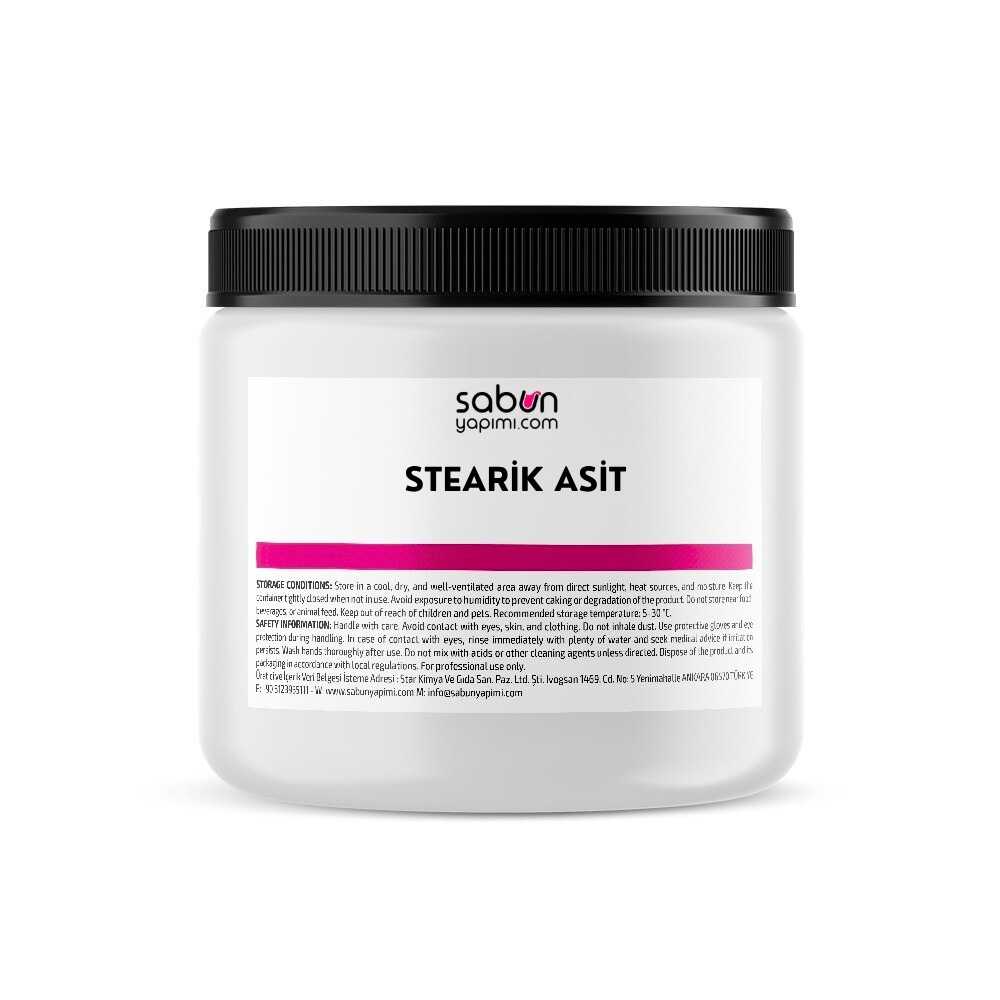
Stearic Acid 100 g – Soap Hardener, Emulsifier & Cosmetic Thickener
$18,00
Stearic Acid is a versatile saturated fatty acid used in soap making, cosmetics, candle production and specialty formulations. It helps increase the hardness and durability of handmade soap, supports creamy lather through stearate soap formation, and contributes body, thickness and structure to creams and lotions.
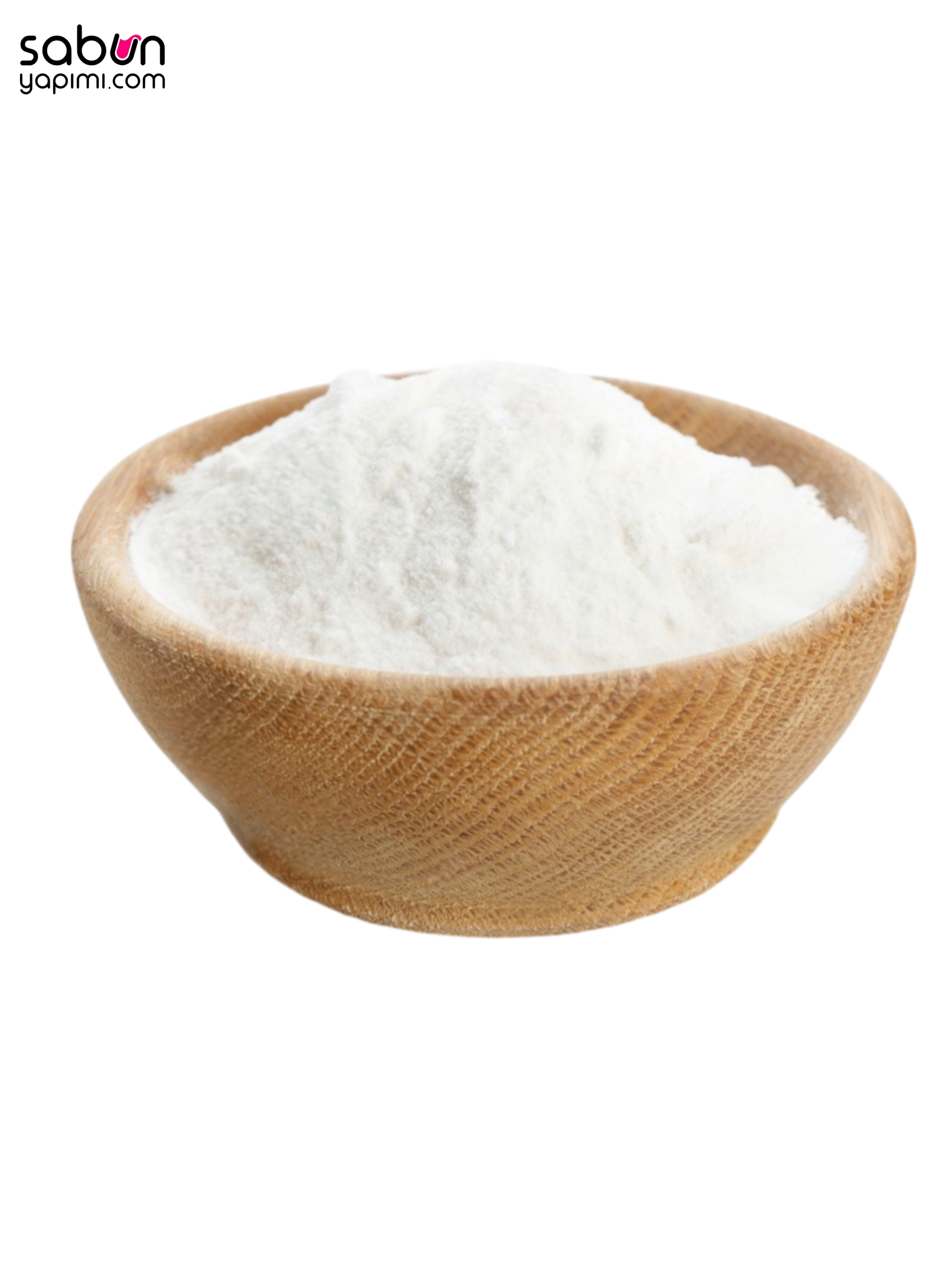
Commonly supplied as white flakes, beads or powder, Stearic Acid is an oil-phase formulation ingredient that can also support emulsification when combined with suitable emulsifiers or neutralizing agents. Its purity, vegetable or animal origin, and fatty acid composition depend on the commercial grade.
Stearic Acid 100 g – Soap Hardener, Emulsifier & Cosmetic Thickener
Versatile Fatty Acid for Soap Making, Skincare and Candle Formulations
Stearic Acid is a saturated fatty acid widely used in handmade soap, cosmetic creams, lotions, shaving products, candle making and specialty industrial formulations. It is especially valued for its ability to improve hardness, increase consistency, support emulsion stability and modify the texture of finished products.
In soap making, Stearic Acid contributes to the formation of hard stearate soaps with characteristic dense, creamy lather. In cosmetic emulsions, it serves as a structuring ingredient that can create richer textures and improve the physical properties of creams and lotions.
Stearic Acid is also used in candle formulations to modify wax hardness, opacity and melting characteristics.
Its versatility makes it a useful raw material for professional formulators, cosmetic laboratories, handmade soap manufacturers and specialty product developers.
What Is Stearic Acid?
Stearic Acid, also known as Octadecanoic Acid, is an 18-carbon saturated fatty acid naturally present in many vegetable and animal fats.
It is found in materials such as Cocoa Butter, Shea Butter, Palm Oil and certain animal fats. Commercial Stearic Acid can be produced through the processing, hydrolysis and separation of suitable fatty acid sources.
Unlike liquid unsaturated fatty acids such as Oleic Acid, Stearic Acid has a straight, saturated hydrocarbon structure that gives it a relatively high melting point.
This physical characteristic is responsible for many of its applications in solid soap, creams, balms and candles.
INCI Name: Stearic Acid
Chemical Name: Octadecanoic Acid
CAS Number (Pure Substance): 57-11-4
Molecular Formula: C18H36O2
Molecular Weight: 284.48 g/mol
Chemical Family: Saturated Fatty Acids
Primary Functions: Consistency Agent, Emulsion Stabilizer, Soap Hardener and Formulation Structurant
Commercial materials may contain other fatty acids, particularly Palmitic Acid. The exact composition depends on the supplied grade.
Main Benefits of Stearic Acid
Stearic Acid is valued because it can influence several important physical characteristics of a finished product.
Its solid, wax-like structure makes it useful for increasing the firmness of soaps, creams and anhydrous balms. In emulsions, it can contribute to body and viscosity while supporting a more consistent texture.
When neutralized with suitable alkaline ingredients, Stearic Acid forms stearate salts with cleansing and emulsifying properties.
In traditional soap and shaving formulations, these salts contribute to a dense, creamy lather.
However, Stearic Acid should not automatically be described as a complete emulsifier, a powerful moisturizing active or a universal foam booster. Its performance depends on the complete formulation.
Stearic Acid for Soap Making
Stearic Acid for soap making is one of the most established applications of this ingredient.
Soap makers use Stearic Acid to modify bar hardness, durability and lather characteristics.
In traditional soap, Stearic Acid reacts with alkaline ingredients to form fatty acid salts.
When Sodium Hydroxide is used, the reaction produces Sodium Stearate. When Potassium Hydroxide is used, Potassium Stearate is formed.
These compounds contribute to the properties of the finished soap.
Sodium Stearate is particularly relevant to solid soap formulations because it forms comparatively hard soap structures.
As a result, Stearic Acid can be useful when developing soap bars that require greater firmness or better resistance to becoming excessively soft during use.
How Stearic Acid Increases Soap Hardness
The hardness of a traditional soap bar is influenced by the composition of the fatty acids present in the formulation.
Saturated fatty acids such as Stearic Acid and Palmitic Acid tend to contribute to firmer soap structures.
When Stearic Acid is neutralized with Sodium Hydroxide, the resulting Sodium Stearate has physical characteristics that support bar hardness.
This can be useful in soap recipes containing relatively high proportions of softer oils.
However, increasing Stearic Acid does not always improve soap quality.
Excessive amounts can produce bars that are difficult to process, overly hard or less desirable in their overall lather and sensory characteristics.
A well-balanced soap formulation should consider the complete fatty acid profile rather than focusing on one ingredient.
Stearic Acid and Creamy Soap Lather
Stearic Acid is frequently associated with the development of dense, creamy and relatively stable soap lather.
This differs from the large, rapidly forming bubbles commonly associated with Lauric Acid and Myristic Acid-rich soaps.
A soap formula containing an appropriate balance of Stearic, Palmitic, Lauric, Myristic and Oleic Acid components can be developed to provide a combination of hardness, cleansing and foam characteristics.
Stearic Acid is especially useful in products where a rich, creamy foam is preferred over large, airy bubbles.
However, it does not independently guarantee increased total foam volume.
Foam characteristics depend on the complete soap composition, water quality and formulation conditions.
Stearic Acid in Cold Process Soap
Cold process soap is manufactured by reacting oils and fats with Sodium Hydroxide.
Stearic Acid may be included as a free fatty acid to modify the final product’s characteristics.
Unlike triglyceride oils, free Stearic Acid reacts directly with Sodium Hydroxide through neutralization.
This reaction must be included in the total alkali calculation.
Stearic Acid should generally be melted and blended with the appropriate oil phase according to the validated soap-making procedure.
Because it solidifies at a relatively high temperature, it can also contribute to rapid thickening during processing.
Soap makers should pay close attention to mixing temperature, concentration and the time available for pouring.
Does Stearic Acid Accelerate Soap Trace?
Stearic Acid can make cold process soap mixtures thicken more rapidly.
There are two important reasons for this behavior.
First, free fatty acids can react directly with alkaline ingredients.
Second, the high melting point of Stearic Acid means that it may begin to crystallize as the mixture cools.
This crystallization can create an appearance of thickening that may be confused with normal soap trace.
For this reason, formulas containing significant amounts of free Stearic Acid require careful temperature management.
Premature thickening can make decorative swirls and complicated soap designs more difficult.
Small laboratory batches are recommended when evaluating a new formulation.
Stearic Acid and Sodium Hydroxide Calculation
The chemical reaction between pure Stearic Acid and Sodium Hydroxide produces Sodium Stearate and water.
Stearic Acid + Sodium Hydroxide → Sodium Stearate + Water
The theoretical neutralization requirement of chemically pure Stearic Acid is approximately 0.1406 g of pure NaOH for each gram of Stearic Acid.
However, commercial Stearic Acid may be a mixture containing Stearic Acid, Palmitic Acid and other fatty acids.
These mixtures can have different alkali requirements.
For this reason, soap makers should use the actual supplier’s acid value, saponification value and fatty acid composition.
A general soap calculator value should not automatically be assumed correct for every commercial grade.
The complete formula must be recalculated whenever Stearic Acid is added or its concentration is changed.
Stearic Acid for Shaving Soap
Stearic Acid is particularly useful in traditional shaving soap formulations.
Shaving products often require a dense, creamy foam that can remain on the skin long enough to support comfortable shaving.
Stearate soaps can contribute to this type of lather.
In certain formulations, Stearic Acid is neutralized with Potassium Hydroxide, Sodium Hydroxide or carefully selected combinations of alkaline ingredients.
The choice of alkali affects product consistency, solubility and foam performance.
Professional shaving-soap formulations may also contain other fatty acid sources, humectants and suitable conditioning ingredients.
The final product should be evaluated for lather quality, stability, pH and skin compatibility.
Stearic Acid in Melt and Pour Soap
Stearic Acid may be evaluated in selected melt and pour soap bases to modify firmness and texture.
However, commercial melt and pour bases already contain a carefully balanced combination of soap, solvents, humectants and structuring ingredients.
Adding additional Stearic Acid may change transparency, melting behavior and lather.
An excessive concentration may produce cloudiness, graininess or an undesirably hard bar.
For this reason, the manufacturer’s additive limits should be followed, and small trials should be completed before commercial production.
Stearic Acid for Creams and Lotions
Stearic Acid for cosmetics is particularly valuable in creams and lotions where a richer consistency is desired.
It contributes structure to the oil phase and can influence the physical organization of the finished emulsion.
When properly incorporated, Stearic Acid may help create a creamier texture, increase viscosity and improve product body.
It can be combined with ingredients such as Glyceryl Stearate, Cetearyl Alcohol, Cetyl Alcohol and other suitable emulsifiers.
These ingredients work together to establish the desired texture and emulsion stability.
The final concentration should be selected according to the formulation’s required viscosity, spreadability and sensory profile.
Is Stearic Acid an Emulsifier?
Stearic Acid is associated with emulsifying and emulsion-stabilizing functions in cosmetic formulations.
However, its actual role depends on how it is used.
In many modern creams and lotions, free Stearic Acid primarily acts as a consistency agent, structuring ingredient and co-emulsifier.
It can help support an existing emulsification system but should not automatically be expected to stabilize every oil-and-water mixture independently.
When Stearic Acid is neutralized with an appropriate alkaline ingredient, stearate salts are formed.
These salts can function as surface-active emulsifying agents.
The neutralization method and resulting stearate composition must be controlled carefully because they can influence pH, viscosity and emulsion behavior.
Stearic Acid and Triethanolamine
Stearic Acid can be used in certain classic cosmetic emulsification systems involving Triethanolamine, commonly abbreviated as TEA.
The reaction between Stearic Acid and Triethanolamine produces an amine stearate that can contribute to emulsification.
This type of chemistry has historically been used in certain cosmetic creams and shaving products.
However, the amount of neutralizing agent must be calculated and controlled according to the desired formulation.
The finished-product pH, applicable ingredient restrictions, nitrosamine-related precautions and overall cosmetic safety must also be considered.
Modern cosmetic manufacturers may choose alternative emulsifier systems depending on the product requirements and target market.
Stearic Acid as a Cosmetic Thickening Agent
Stearic Acid is commonly used to increase the consistency of oil-containing cosmetic products.
As the formulation cools, its crystalline and wax-like characteristics can help create a more structured texture.
This makes it useful in rich creams, body butters, cleansing creams and selected cosmetic sticks.
The degree of thickening depends on the concentration, fatty acid composition, emulsifier system and cooling conditions.
Too much Stearic Acid can make a product excessively firm, waxy or difficult to spread.
The desired consistency should therefore be established through controlled laboratory development.
Stearic Acid for Body Butters and Balms
Stearic Acid may also be incorporated into anhydrous cosmetic formulations.
In body butters, balms and cosmetic sticks, it can contribute firmness and improve resistance to softening at elevated temperatures.
It can be combined with compatible oils, butters and waxes to obtain a particular melting profile.
However, Stearic Acid is not interchangeable with Beeswax, Cetyl Alcohol or Cetearyl Alcohol.
Each ingredient produces different crystalline structures and sensory characteristics.
A professionally developed balm should be tested for application feel, hardness, graininess and temperature stability.
Stearic Acid for Candle Making
Stearic Acid is also widely used in candle formulation as a wax-modifying ingredient.
It may be incorporated into compatible paraffin and selected vegetable wax systems to modify hardness, opacity and melting characteristics.
In certain candle formulations, Stearic Acid can help produce a firmer candle with a more opaque appearance.
However, the results depend on the base wax, fragrance load, wick and finished candle geometry.
Increasing wax hardness does not automatically guarantee a longer or safer burn.
Manufacturers should complete appropriate candle performance and burn testing before commercial production.
Industrial candle-grade material should not automatically be considered suitable for cosmetic use.
Stearic Acid in Industrial Manufacturing
Beyond cosmetics and handmade soap, Stearic Acid and related commercial fatty acid mixtures are used in plastics, rubber, textiles and other industrial sectors.
In plastics manufacturing, Stearic Acid can function as a processing aid or lubricant in certain systems.
In rubber processing, it may be used as part of vulcanization-related formulations.
These applications require technical grades and specifications appropriate to the intended manufacturing process.
Cosmetic-grade requirements and industrial-grade requirements should be assessed separately.
Stearic Acid vs. Oleic Acid
Stearic Acid and Oleic Acid are both long-chain fatty acids, but their chemical structures differ significantly.
Stearic Acid is a saturated C18 fatty acid and is normally solid at room temperature.
Oleic Acid is a monounsaturated C18 fatty acid and is generally liquid at room temperature.
In traditional soap making, Stearic Acid contributes to harder soap structures and dense, creamy lather characteristics.
Oleic Acid contributes to a different soap profile, often associated with greater solubility and a smoother lather.
In cosmetic emulsions, Stearic Acid is particularly useful when a solid structuring ingredient is required.
Oleic Acid is more appropriate for selected formulations requiring a liquid fatty acid component.
These ingredients should not be substituted at identical percentages without evaluating the complete formulation.
Stearic Acid vs. Palmitic Acid
Stearic Acid and Palmitic Acid are saturated fatty acids with different carbon-chain lengths.
Stearic Acid contains 18 carbon atoms, while Palmitic Acid contains 16.
Both contribute to soap hardness and can influence the consistency of cosmetic formulations.
Commercial Stearic Acid grades often contain significant amounts of Palmitic Acid.
For example, materials marketed as Stearic Acid 50 may contain approximately equal proportions of Stearic and Palmitic Acid, depending on the manufacturer’s specifications.
This distinction is important because a stearic-palmitic blend can behave differently from highly purified Stearic Acid.
The actual composition should be verified through the supplier’s Certificate of Analysis.
Stearic Acid vs. Cetearyl Alcohol
Stearic Acid and Cetearyl Alcohol are both used to modify cosmetic texture, but they are chemically different.
Stearic Acid is a fatty acid containing a carboxylic acid group.
Cetearyl Alcohol is a mixture of long-chain fatty alcohols.
Cetearyl Alcohol is frequently used as a consistency agent, co-emulsifier and emulsion stabilizer.
Stearic Acid can also contribute to structure and emulsification, particularly when neutralized.
However, their melting behavior, processing characteristics and interactions with other ingredients differ.
Substituting one for the other may produce significant changes in the finished product.
Typical Usage Levels
The required concentration of Stearic Acid depends on its commercial grade and intended application.
For cold process soap, approximately 2–5% of the soap-making oil and fatty material phase may be evaluated as a preliminary formulation range.
For creams and lotions, approximately 1–5% of the total formula may be considered when Stearic Acid is used as a structuring or co-emulsifying ingredient.
In selected body butters, balms and sticks, higher concentrations may be appropriate depending on the desired firmness.
For candle manufacturing, the required concentration depends on the base wax and desired candle characteristics.
These values are preliminary development ranges rather than universal concentration limits.
Higher percentages are not automatically more effective.
The final usage level should be determined through supplier technical guidance, laboratory testing and finished-product safety evaluation.
How to Use Stearic Acid
Stearic Acid is generally incorporated into the heated oil phase of a cosmetic formulation.
Because it is a solid fatty acid, it must be melted sufficiently to obtain a uniform mixture.
For creams and lotions, the material is commonly combined with other compatible oil-phase ingredients and heated according to the selected emulsification procedure.
Once the Stearic Acid has dissolved or melted uniformly, the oil and water phases can be combined using the validated manufacturing method.
During cooling, Stearic Acid contributes to the development of the finished texture.
Careful cooling and mixing are important because an unsuitable process may produce graininess or inconsistent viscosity.
In soap manufacturing, the addition method must also account for alkali neutralization and rapid thickening.
Melting Point and Processing Temperature
Chemically pure Stearic Acid has a melting point of approximately 69–70°C.
However, commercial Stearic Acid grades may contain other fatty acids and exhibit different melting ranges.
Some commercial materials soften or melt at temperatures below that of pure Stearic Acid.
The correct processing temperature should therefore be based on the actual supplier’s Technical Data Sheet.
When preparing cosmetic emulsions, Stearic Acid must be fully melted and uniformly incorporated.
Unnecessary overheating should be avoided because prolonged high temperatures can influence color, odor and the stability of other ingredients.
Water Solubility
Stearic Acid is practically insoluble in water.
Its long hydrocarbon chain makes it predominantly lipophilic.
It can be incorporated into suitable heated oil phases and compatible fatty materials.
However, solid Stearic Acid should not be expected to dissolve simply by stirring it into cold water.
When neutralized with suitable alkalis, it forms stearate salts with different solubility and surface-active properties.
These chemical differences are especially important in soap manufacturing and certain emulsification systems.
Does Stearic Acid Have a pH?
Pure Stearic Acid is a solid, water-insoluble fatty acid.
A conventional aqueous pH value cannot be directly assigned to the dry material.
Although Stearic Acid contains an acidic functional group, this does not mean the raw material has a universal pH specification.
The pH of a finished cream, lotion or soap depends on its complete composition and manufacturing process.
If the supplier provides a pH measurement, the specific aqueous preparation and testing method should be identified.
Is Stearic Acid a Moisturizer?
Stearic Acid can contribute to the skin feel and lipid-related properties of cosmetic formulations.
However, it is not a conventional primary humectant like Glycerin, Sodium PCA or Hyaluronic Acid.
Its principal value is in product structure, consistency and the development of certain emulsifying systems.
In a moisturizing cream, Stearic Acid can complement humectants and emollients to create a rich texture.
The finished formulation may help reduce moisture loss depending on its complete composition.
Claims of intensive hydration, skin barrier repair or long-lasting moisturization require appropriate product-specific evidence.
Is Stearic Acid Natural or Vegan?
Stearic Acid occurs naturally in both vegetable and animal fats.
Commercial products may be manufactured from palm-derived fatty acids, other vegetable sources or animal-based materials.
Therefore, the INCI name Stearic Acid does not independently establish that a specific product is vegetable-derived.
A supplier may provide documentation confirming that its Stearic Acid is produced entirely from vegetable sources.
Such material may be appropriate for vegan cosmetic formulations, provided the complete supply chain and any applicable certification requirements are satisfied.
Without supporting documentation, claims such as 100% Vegetable, Vegan Certified, Palm-Free or Organic Certified should not be made.
Product Details
Product Name: Stearic Acid
INCI Name: Stearic Acid
Chemical Name: Octadecanoic Acid
CAS Number (Pure Substance): 57-11-4
Molecular Formula (Pure Substance): C18H36O2
Molecular Weight (Pure Substance): 284.48 g/mol
Package Size: 100 g
Ingredient Family: Saturated Fatty Acid
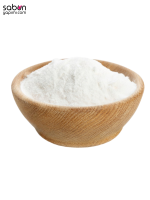
Typical Appearance: White to Off-White Flakes, Beads or Powder
Water Solubility: Practically Insoluble
Pure Substance Melting Point: Approximately 69–70°C
Primary Functions: Soap Hardener, Consistency Agent and Emulsion Stabilizer
Applications: Soap, Shaving Products, Creams, Lotions, Balms, Candles and Specialty Industrial Formulations
Fatty Acid Composition: Refer to Supplier COA
Vegetable or Animal Origin: Confirm with Supplier
Acid Value: Refer to Supplier Specifications
Saponification Value: Refer to Supplier Specifications
Melting Range: Grade-Dependent
Cosmetic Grade: Confirm with Supplier Documentation
Raw Material Purity and Commercial Grades
Commercial Stearic Acid is available in different grades.
Some products contain a high percentage of C18 Stearic Acid, while others are mixtures of C18 Stearic Acid and C16 Palmitic Acid.
These differences can influence melting behavior, hardness, soap-making calculations and cosmetic texture.
Manufacturers should therefore verify the fatty acid profile and not rely exclusively on the product name.
For professional soap and cosmetic production, relevant documentation includes the Technical Data Sheet (TDS), Safety Data Sheet (SDS) and Certificate of Analysis (COA).
Quality Control and Stability
Professional manufacturers should evaluate the finished formulation after incorporating Stearic Acid.
For soap bars, important characteristics include hardness, processing behavior, lather, appearance and curing performance.
For cosmetic creams and lotions, the manufacturer should assess viscosity, emulsion stability, texture, pH and temperature resistance.
For candles, wax compatibility, appearance, burn performance and wick selection require separate evaluation.
Stearic Acid can help modify the physical characteristics of these products, but it cannot guarantee stability or shelf life independently.
Safety Information
Stearic Acid should be handled according to the supplier’s Safety Data Sheet.
During manufacturing, avoid inhaling airborne powder and prevent unnecessary eye exposure.
When melting Stearic Acid, take precautions against burns caused by heated raw materials and processing equipment.
In soap production, Sodium Hydroxide and Potassium Hydroxide are strongly corrosive and require appropriate protective gloves and chemical splash goggles.
The raw material is not a ready-to-use cosmetic product.
Finished products must undergo appropriate quality-control and safety evaluation before commercial release.
Storage
Store Stearic Acid in tightly closed packaging in a cool, dry and well-ventilated environment.
Protect the material from contamination, excessive heat and direct sunlight.
Avoid unnecessary exposure to moisture and incompatible chemicals.
The recommended shelf life should be determined from the actual supplier’s technical documentation.
Wholesale, Private Label & Contract Manufacturing
We supply Stearic Acid, Oleic Acid, Palmitic Acid, cosmetic fatty acids, emulsifiers, surfactants, soap-making ingredients and other specialty chemical raw materials in wholesale quantities for cosmetic brands, soap makers, laboratories, manufacturers and professional formulators.
We also provide custom soap and cosmetic formulation development services, including fatty acid selection, alkali calculations, surfactant system development, emulsion design, viscosity optimization and manufacturing process documentation.
Our formulation development services can support projects involving handmade soap, liquid soap, shaving products, creams, lotions, cleansing products and specialty personal-care formulations.
Private label and contract manufacturing services are available for selected liquid soaps, detergents, cleaning products and other products within our manufacturing capabilities. Cosmetic formulation development is offered separately from finished cosmetic manufacturing.
For bulk Stearic Acid orders, custom soap formulation development, cosmetic R&D, private label or contract manufacturing inquiries, please contact us with your required quantity, fatty acid grade, purity specifications, intended application, packaging requirements and target market.
KARGO & İADE
SabunYapimi.com olarak müşteri memnuniyetini ön planda tutuyoruz. Siparişlerinizin güvenli ve hızlı bir şekilde size ulaşmasını sağlamak için en iyi lojistik firmalarıyla çalışıyoruz. Ayrıca, herhangi bir sebepten dolayı ürününüzden memnun kalmazsanız, iade ve değişim sürecimizi kolay ve hızlı hale getirdik.
Kargo Firması & Gönderim Süresi
- Siparişleriniz, ödeme onaylandıktan sonra 1-2 iş günü içinde kargoya verilir.
- Kargo firmaları: [Aras & Yurtiçi]
- Ortalama teslimat süresi 2-3 iş günü arasındadır.
Kargo Ücretleri & Ücretsiz Kargo Şartları
- [1000 TL ve üzeri alışverişlerde kargo ücretsizdir.]
- Standart kargo ücreti sipariş aşamasında ödeme sayfasında belirtilir.
Kargo Takibi
Siparişiniz kargoya verildiğinde e-posta veya SMS ile takip numarası paylaşılır. Kargo takip bağlantısını kullanarak siparişinizi kolayca takip edebilirsiniz.
📌 Siparişiniz belirlenen süre içinde ulaşmazsa, bize aşağıdaki iletişim bilgileriyle ulaşabilirsiniz:
📧 E-Posta: sabunyapimi@gmail.com
📞 WhatsApp Destek: +90 532 059 15 71
Geri Ödeme ve İade Süreçleri
Geri Ödeme ve İade Politikası Sayfamızı Okuyun